EasyManua.ls Logo

RBR CncGcoder HD - User Manual

RBR CncGcoder HD
28 pages
Print Icon
To Next Page IconTo Next Page
Loading...
CncGcoder
®
Models HD & HDx Manual

Table of Contents

Question and Answer IconNeed help?

Do you have a question about the RBR CncGcoder HD and is the answer not in the manual?

Summary

Welcome

In the Box

Optional Accessories

Lists optional accessories like SD Card Reader and ActiveSync Cable.

Handheld Overview

Overview

General overview of the CncGcoder handheld device.

Using the Handheld

Charging the Battery

Instructions on connecting the AC adapter and charging the battery.

Turning On and Off

How to turn the CncGcoder device on and off, including suspend mode.

Plugging in Cable

Steps for connecting the CncGcoder serial cable to the device and CNC.

Inserting SD Cards

Procedure for inserting and ejecting SD cards into the device's SDIO slot.

Using the Stylus

Explains how to use the stylus for tapping, double-tapping, and dragging.

Using the Keypad

Details the function of the CncGcoder's numeric and function keypad.

Using File Explorer

How to navigate folders and files using the File Explorer application.

Important Directory Icons

Description of key icons used in the File Explorer's directory structure.

Navigation Icons

Explanation of icons used for navigating through directories and files.

Device Desktop

Overview of the device's desktop icons and their functions.

Device Preferences

How to configure device settings like display, volume, and battery.

Setting Date and Time

Step-by-step guide to setting the date and time on the device.

Setting Backlight and Contrast

Adjusting screen backlight and contrast for optimal viewing.

Configuring Stylus

Calibrating the stylus for accurate touch screen input.

Setting the power

Monitoring battery level and configuring power saving schemes.

Using the CncGcoder

Opening the Program

Methods for launching the CncGcoder application on the handheld.

Viewing On-Screen Keyboard

How to use the on-screen keyboard for text input and editing.

Setting up Machines

Configuring communication settings for different CNC machines.

Adding a New Machine

Steps to add new machine profiles with specific communication settings.

Selecting a Machine

How to choose an existing machine profile for communication.

Editing an Existing Machine

Procedure to modify the settings of an already added machine.

Deleting a Machine

How to remove a machine profile from the device.

Setting the Advanced Settings

Adjusting advanced settings for communication troubleshooting.

Managing CNC Programs

Accessing and managing G-Code programs on the handheld.

Navigating the File Screen

Tips for navigating and understanding the file management screen.

Loading a G-Code File

Steps to load a G-Code program into the CncGcoder for use.

Saving a G-Code File

Instructions on how to save a G-Code program from the device.

Deleting a G-Code File

Procedure for deleting G-Code programs from the device.

File Transfer between Computer

Methods for transferring files between the CncGcoder and a computer.

Transferring using the SD Card

Guide to transferring files using an SD card and reader.

Transferring using ActiveSync

Instructions for transferring files using a USB ActiveSync® cable.

File Transfer between CNC

Procedures for transferring files between the CncGcoder and CNC machines.

Sending a Program to the CNC

Steps to send a G-Code program from the CncGcoder to a CNC machine.

Receiving a Program from the CNC

Steps to receive a G-Code program from a CNC machine to the CncGcoder.

On-Screen Help

How to access the built-in help system for the CncGcoder.

About CncGcoder Screen

Locating version and serial number information for the CncGcoder.

Exit Program

Procedure for safely exiting the CncGcoder application.

Battery Precautions

Disposing of the Battery

Guidelines for the proper and safe disposal of used batteries.

Troubleshooting

Resetting the Device

Instructions for performing soft and hard resets on the device.

Blank Screen

Tips for resolving issues when the device screen is not visible.

Recalibrate Screen

Procedure for recalibrating the touch screen for accurate input.

Trouble Communicating with the CNC

Tips for resolving communication problems between CncGcoder and CNC machines.

Revisions

Tech Note 1: CncGcoder HD to Computer File Transfer

Recommended Setups

Overview of recommended setups for file transfer.

Option A: Transfer from Newer Computer using SD Card

Steps for transferring files using an SD card with a newer computer.

Option B: Transfer from Older Computer using SD Card

Instructions for transferring files from an older computer using an SD card.

Option C: Transfer using Microsoft ActiveSync Cable

Steps for transferring files using the ActiveSync® cable and software.

Option D: Transfer using DNC Software

Guidance on transferring files using DNC software.

Overview

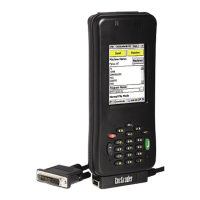
The CncGcoder® HD and HDx are shop-hardened handheld units designed to facilitate communication with Machine Tool CNCs directly on the shop floor, enabling easy transfer and management of G-Code programs.

Function Description

The primary function of the CncGcoder® HD/HDx is to act as an interface between a computer and a CNC machine tool for transferring G-Code programs. It allows users to send programs to CNC machines and receive programs from them. The device also supports managing G-Code files, including loading, saving, editing, and deleting programs directly on the handheld unit. It features an on-screen keyboard for text entry and editing, and provides options for configuring machine-specific serial communication settings.

Important Technical Specifications

Models: CncGcoder® HD and CncGcoder® HDx. Operating System: Windows® CE OS. Power: AC Power Adapter for charging. Battery recharges in four hours. Connectivity:

  • Serial Communication: RS-232 Serial Cable (Heavy Duty for HD, Extreme Duty with USB Jack for HDx) for connecting to CNC machines. Supports 25-pin serial ports.
  • Data Transfer (Computer):
    • SD Card: Uses SDIO slot for SD Cards, enabling file transfer between the handheld and a computer via an external USB SD Card Reader.
    • ActiveSync® (Optional): USB Microsoft® ActiveSync® Cable (not recommended for HDx users) for mounting the CncGcoder® as a drive on a computer and transferring files. Requires Microsoft® ActiveSync® software and driver.
    • DNC Software (Optional): CncGcoder® 25-pin to 9-pin Serial Adapter for connecting to a computer's serial port, allowing DNC software to communicate with the CncGcoder® as if it were a machine tool CNC. Storage:
  • On-Board Flash: Non-volatile storage for files, ensuring data is not lost if the device loses power or resets.
  • SD Card: Supports SD Cards for additional non-volatile storage and file transfer. Display: Touch Screen. Input:
  • Stylus: Used for screen interaction (tap, double-tap, drag).
  • Keypad: CNC-style keypad with arrow keys for navigation, number keys (white), and letter keys (yellow, accessed with Shift). Includes Power, Tab, Shift, Enter, and Reset buttons. Memory: Internal RAM (for temporary data, can be corrupted, leading to need for Hard Reset). File Support: .txt, .nc, or .g file extensions for G-Code programs. Serial Communication Settings: Configurable Baud Rate, Stop Bits, Handshaking (XON/XOFF), and Data Format (ISO - 7 data bits, even parity; ASCII - 8 data bits, no parity). Advanced Settings:
  • Strip CRs: Removes excess carriage returns from G-Code programs received from CNC.
  • Leader: Sends nulls at the beginning and end of programs to fix sending problems.
  • Send Delay: Adjustable delay (50 to 2,000,000 units) between data packets sent to CNC to prevent buffer overflow errors. Revisions (Version 1.1.0.2):
  • File name length increased to 50 characters.
  • File list defaults to "All Files."
  • Machine switching does not auto-switch to default directory.
  • Directory/file not found defaults to root/last entered path.
  • File name not erased during navigation.
  • File name editable on main screen.
  • New SD card write protect error handling.
  • Receiving characters timeout increased from 2 to 4 seconds.

Usage Features

Handheld Operation:

  • Stylus Interaction: Tap to select, close applications, or launch menus; double-tap to launch applications, open files/folders; drag to select text/images.
  • Keypad Interaction: Arrow keys for navigation/scrolling; number keys for direct input; Shift + key for yellow letters; Enter key for OK/new line.
  • Power Management: Power key to turn on/off (enters Suspend mode to prolong battery life).
  • SD Card Insertion: Insert with connectors down into SDIO slot; press to eject.

File Management (Using File Explorer):

  • Browse contents of folders (My Device, On-Board Flash, Storage Card).
  • Icons for navigating backward/forward, up one directory, deleting, viewing properties, and changing view (large/small icons, detailed list).
  • On-Board Flash and Storage Card provide non-volatile storage.

Device Preferences:

  • Date/Time: Set date and time.
  • Display: Adjust backlight (on/off duration, brightness) and contrast.
  • Stylus Configuration: Calibrate double-tap sensitivity and screen position.
  • Power Settings: Monitor battery level, configure power schemes (device idle time before switching states).

CncGcoder® Program Usage:

  • Opening: Launch from desktop icon or by opening a .txt, .nc, or .g file.
  • On-Screen Keyboard: Available for text entry and editing G-Code.
  • Machine Setup:
    • View/edit existing machines (Default, Fanuc, Siemens, Haas).
    • Add new machines with custom names and serial communication settings (baud rate, stop bits, handshaking, data format).
    • Select a machine for communication.
  • CNC Program Management:
    • Loading: Select File > Load File, navigate to the program, and load.
    • Saving: Select File > Save File, enter a program name, and save to On-Board Flash or SD Card.
    • Deleting: Select File > Delete File, navigate to the program, and delete.
  • File Transfer with CNC:
    • Sending: Select machine, load program, connect serial cable, set CNC to receive, tap Send. Characters Sent counter displays progress.
    • Receiving: Select machine, connect serial cable, tap Receive. Waiting... message appears. Send program from CNC. Characters Received counter displays progress. Save received program.
    • Abort: ABORT button available during transfer.
  • On-Screen Help: Access program help topics for guidance.
  • About Screen: View CncGcoder® HD version and serial number.
  • Exit Program: Save program, then tap Close icon.

Maintenance Features

Battery Precautions:

  • Uses Lithium-Ion battery.
  • Avoid damage, puncture, mutilation, disassembly, soldering, or alteration.
  • Keep away from heat sources above 140° F.
  • Handle leaking batteries with extreme caution: avoid contact, wash affected area immediately, seek medical advice if residue enters eyes.
  • Disposal: Do not dispose of in fire. Discard according to local regulations; contact waste management officials for environmentally sound disposal.

Troubleshooting:

  • Resetting the Device:
    • Soft Reset: Press and hold Reset button for 2 seconds. Re-launches OS, preserves saved data.
    • Hard Reset: Hold Power key, press Reset button for 2 seconds, release Reset, release Power. Confirm Erase dialog appears (up arrow for YES). Reinstalls CncGcoder® program, then perform soft reset. Files on On-Board Flash are NOT erased.
  • Blank Screen:
    • Charge battery (plug in AC adapter).
    • Adjust contrast and backlight.
    • Perform Soft Reset or Hard Reset.
  • Recalibrate Screen: If touch screen is unresponsive, recalibrate stylus (via Stylus Properties > Calibration tab or by holding Shift + Power keys for ~4 seconds).
  • Trouble Communicating with CNC:
    • Send to Palm first (if odd characters, check parity/baud rate).
    • Ensure CNC and CncGcoder® are set to ISO data format (7 data bits, even parity).
    • Match baud rates.
    • Match handshaking settings (different settings may cause timeout).
    • Check cabling if timeout occurs after 30 seconds.
    • If receiving works but sending fails, try turning on "Leader" and increasing "Send Delay" in Advanced Settings.
    • Ensure receiving end (CNC) is always ready first.

RBR CncGcoder HD Specifications

General IconGeneral
BrandRBR
ModelCncGcoder HD
CategoryHandhelds
LanguageEnglish