Rev 19 Page17
3.2.1 Site Specific Frog Transfer Operating Parameters
The operating parameters recommended above are based on the calculation method extracted from
EN 13852 Offshore Crane Standard and uses data representative of the North Sea. The chart also
assumes the Frog is loaded with the maximum allowable passenger load (APL). Operators may
develop site specific parameters with an evaluation of relative velocity. Such a study should
consider the motion behaviour of the offshore installation, the offshore crane and the supply vessel.
Further considerations may be given to the effects of shock absorbers, motion compensators and
lee-side effect where sea state is reduced. Such localised conditions may also be taken into account.
It is ALWAYS advised that for personnel transfer in marginal sea states, a dry-run without passengers
must be performed to verify the parameters are suitable for safe transfer.
In the event an Operator deduces site specific operating parameters, these must be carefully
embedded into the operating procedures in use and well communicated to all parties involved in the
transfer.
3.3 Operating Parameters - Additional Factors
Note 1: It is emphasised that users must not rely on these recommendations alone. Persons best placed to judge
the risk of specific transfers are the onsite personnel that have experience of the local conditions and
equipment to be used. All factors must be evaluated together in their pre-transfer risk assessment.
Note 2: Crews must conduct dry runs without passengers if there are any concerns about conditions to help assess
risk of transfer.
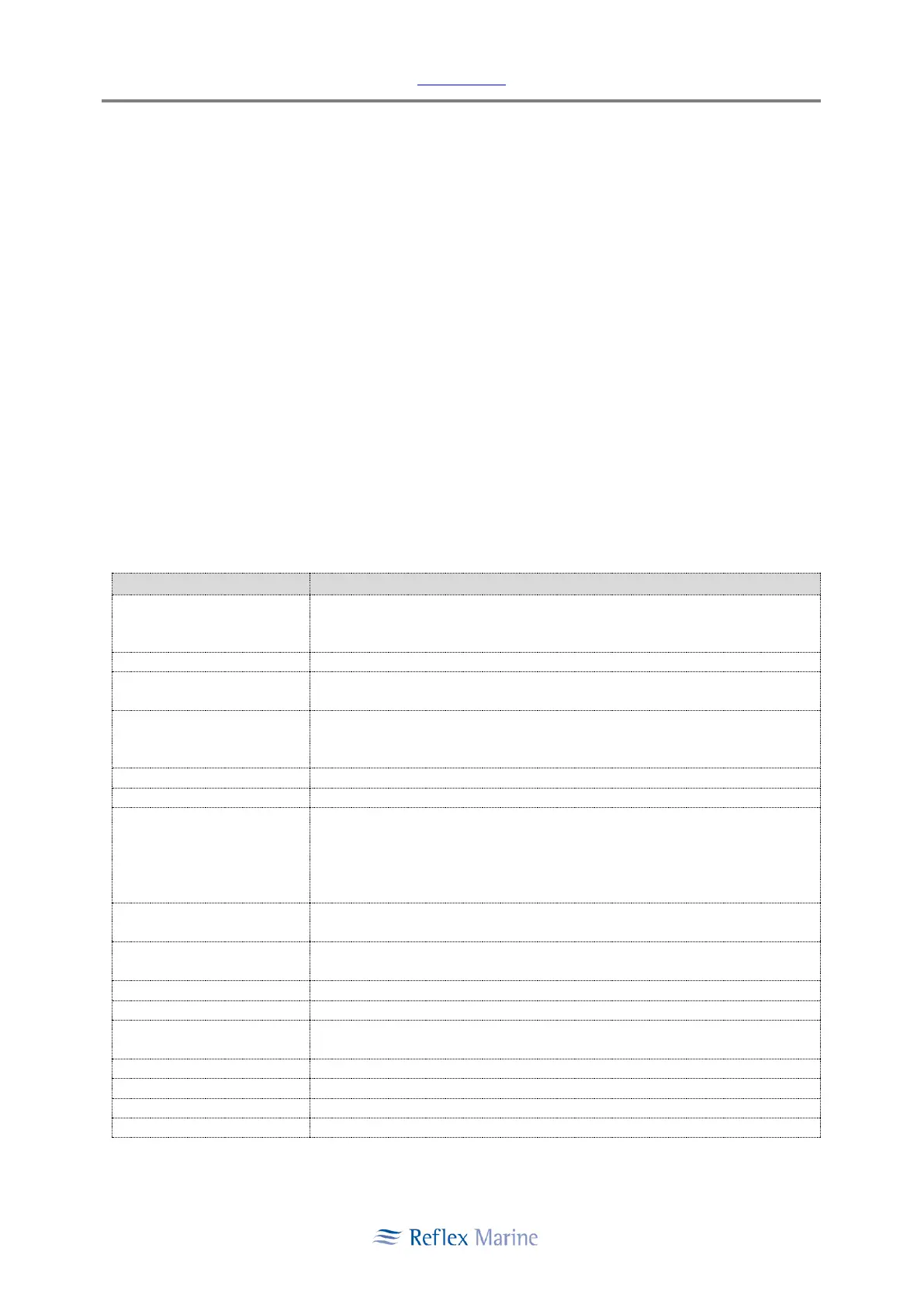
Table 2: Other Operating Parameters
40 knot (equivalent to 20 m/s).
The FROG-3 is very stable in high wind.
Limiting factor is usually crane operability or control of load.
Crane Operator should have a clear view of the pickup and set down areas.
Vessel Motion / FROG-3
Stability
Pitch 10⁰, Roll 10⁰. (FROG-3 stable up to 35⁰ for a load of 1-3 Passengers in
static test).
Able to maintain position within a 5 m (15 ft) radius.
If a high risk of the vessel losing position exists, recommend disconnecting
FROG-3 for passenger embarkation.
Clear of obstructions, protrusions, trip and fall hazards.
Landing Area – Ice / Spills
Ice and spills must be cleaned from landing area prior to transfer.
The FROG is 2179mm x 2516mm and RML recommends keeping ample space
around the unit for embarkation/disembarkation (1m entry and exit path).
Operators should take into consideration sea state, weather, vessel station
keeping. A risk assessment should be carried out by the operator but a clear
space of 6m x 6m is preferable.
Landing Area on Installation
Recommended minimum 4.0 m x 4.0 m clear space (13 ft x 13 ft) based on + 1
m entry and exit path all-round the FROG-3.
Crane Operator Experience
Briefing video within 1 month.
Local authority requirements for personnel transfer must be adhered to.
Briefing video within 1 month.
Briefing video within 1 month.
Radio communication must be established between the Crane Operator and
the vessel Deck Crew and Master.
Crane must be certified for lifting personnel and properly maintained.
Standard FS-01 -320 Units: +50 deg C to -20 deg C.
Arctic FS-01 (340) Units: +50 deg C to -40 deg C.
Tropical FS-01 (370) Units : +50 deg C to + 20 deg C


 To Next Page