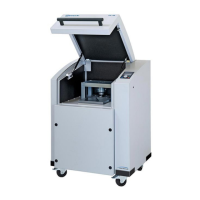
Thereby, the grinding material is hardly heated, so that the SK 300 is also suitable for
temperature-sensitive materials. Depending on the mesh size of the bottom sieve and the
fracture properties of the grinding material, the achievable final fineness can be < 100 µm.
The Cross Beater Mill of the Retsch GmbH is universally deployed in almost all areas of industry
and research, from sample preparation in the laboratory to larger sample volumes in a technical
centre or plant.
Only grinding sets from Retsch GmbH may be used. This device is generally not designed for
the grinding of wet or moist materials.
Handling foodstuffs, pharmaceuticals and cosmetic products
Products processed
− Foodstuffs, pharmaceuticals and cosmetic products that have been
processed on the device may no longer be eaten, used or put into
circulation,.
• Dispose of these substances according to applicable directives.
Range of application of the device
Long-term operation
− This laboratory device is designed for eight-hour single-shift operation
with a duty cycle of 30 %.
• This device may not be used as a production machine nor is it
intended for continuous operation.
6.2 Principle of Operation
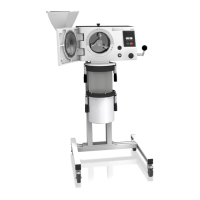
The grinding and deagglomeration in the SK 300 is achieved by impact and collision effects.
The feed material passes through the feed hopper into the grinding chamber where it is
comminuted between the baffle plates of the rotor and the serrated grinding insert. As soon as
the grinding material is smaller than the mesh size of the selected bottom sieve, it enters the
collecting receptacle.


 To Next Page