
 Need help?
Do you have a question about the Rockwell Automation 9300-ENA and is the answer not in the manual?
Summarizes safety warnings, cautions, and hazard identification for safe operation.
Instructions for mounting and removing the module using DIN rail.
Steps to connect the module to a computer and configure network settings for operation.
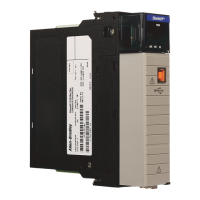
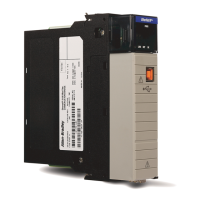
This document provides installation instructions for the Rockwell Automation Ethernet Network Appliance (with Network Address Translation), Catalog Number 9300-ENA. It covers essential information for safe and effective deployment, including user information, hazardous location approvals, electrostatic discharge prevention, physical installation, wiring, and initial module usage.
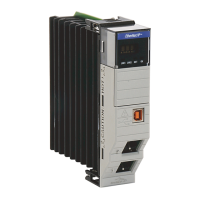
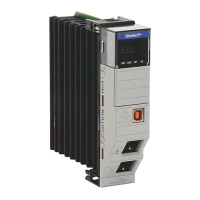
The 9300-ENA is an Ethernet network appliance designed to facilitate network address translation (NAT) within industrial environments. It acts as a bridge between different Ethernet networks, allowing devices on one network to communicate with devices on another, while potentially masking the internal network's structure. This is particularly useful in industrial settings where it's necessary to isolate control networks from enterprise networks for security or addressing reasons. The module features multiple Ethernet ports, including uplink, local, and a dedicated configuration port, enabling flexible network architectures. Its core function revolves around managing IP addresses and facilitating communication across network boundaries, ensuring that industrial control systems can operate securely and efficiently within a broader network infrastructure. The device is designed for use in Pollution Degree 2 industrial environments and overvoltage Category II applications, at altitudes up to 2000 meters without derating. It is classified as Group 1, Class A industrial equipment according to IEC/CISPR Publication 11, meaning it may require precautions to ensure electromagnetic compatibility in other environments.
The 9300-ENA is designed for straightforward installation and operation. It supports both DIN rail and panel mounting, offering flexibility in enclosure integration. For optimal thermal performance, vertical mounting is recommended, with a minimum of 50 mm (2 inches) of space on all sides for heat dissipation. The module requires a low voltage DC power supply (12-48V DC, Class 2/SELV) connected via screw terminals on the power connector. Wiring involves preparing 0.82...0.52 mm² (18...20 AWG) copper wire, stripping it to a precise length, and securing it into the DC+ and DC- terminals with a ratcheting-torque screwdriver to 0.23 N•m (2.0 lb in.). The module's copper Ethernet ports are RJ-45 10/100 full/half duplex, supporting TCP/IP, EtherNet/IP, HTTP, DHCP, BootP, and FTP protocols.
Initial configuration is performed by connecting a computer to the module's dedicated configuration port using an Ethernet patch or cross-over cable. Users then access the module's web-based interface by setting their computer's IP address to 192.168.1.3 and subnet mask to 255.255.255.0, then navigating to 192.168.1.1 in a web browser. The default password for access is "PASSWORD," with the username left blank. The web interface provides comprehensive configuration instructions through embedded help tabs. The module includes several status indicators (OK, NET, LINK, UPL, ALM) that provide visual feedback on its operational status, including booting, device operational status (heartbeat), unrecoverable faults, network cable connection, IP address configuration, SD card connection, firmware/configuration uploading, and error/alarm codes.
Maintenance aspects of the 9300-ENA primarily involve handling the Secure Digital (SD) card and adhering to safety guidelines. The SD card slot is designated for maintenance purposes only. It is crucial to disconnect power or ensure the area is nonhazardous (free of ignitable concentrations of flammable gases or vapors) before inserting or removing the SD card to prevent electrical arcs and potential explosions in hazardous locations. The SD card status indicator should be off, confirming the card is not in use, before removal. Rockwell Automation recommends using their specified SD cards (catalog numbers 1784-SD1 or 1784-SD2) to avoid potential data corruption or loss, as other SD cards may not have been tested for compatibility or possess the same industrial, environmental, and certification ratings. The SD card can be locked or unlocked according to user preference.
The device's design emphasizes safety, with warnings regarding electrostatic discharge (ESD) sensitivity. Users are advised to touch a grounded object, wear a grounding wrist strap, avoid touching connectors, pins, or circuit components, use a static-safe workstation, and store the equipment in appropriate static-safe packaging when not in use. Compliance with CE Low Voltage Directive (LVD) and UL restrictions mandates that all connections be powered from a Safety Extra Low Voltage (SELV) or Protected Extra Low Voltage (PELV) source, or a Class 2 source, respectively. Proper grounding is essential for each device in the application, achieved through mounting to a well-grounded surface like a metal panel and connecting the functional earth ground to the specified pin on the DC connection terminals. The manual references additional publications like "Industrial Automation Wiring and Grounding Guidelines" (1770-4.1) for detailed installation and grounding requirements, and "NEMA Standards publication 250" and "IEC publication 60529" for enclosure type ratings. These resources are critical for ensuring long-term reliability and safety during maintenance and operation.
 General
| Model Number | 9300-ENA |
|---|---|
| Series | 9300 |
| Communication Protocol | Ethernet/IP |
| Communication Port | RJ45 |
| Number of Ports | 1 |
| Data Rate | 10/100 Mbps |
| Power Supply | 24V DC |
| Mounting Type | DIN Rail |
| Certifications | CE, UL, cUL |
| Product Type | EtherNet/IP Network Adapter |
| Port Type | 10/100 Mbps |


 To Next Page