Motor components and options
4.2 Brake
1FT2 synchronous motors for SINAMICS S120
50 Configuration Manual, 03/2021, A5E50645584B AA
4.2 Brake
4.2.1 Type of holding brake
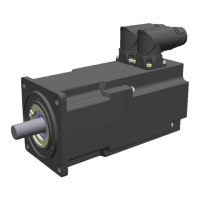
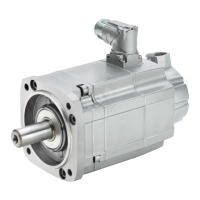
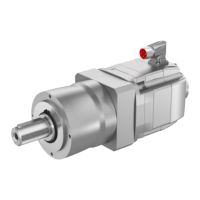
The type of holding brake installed depends on the size of the motor.
Type of the holding brake
The spring exerts a tensile force on
the brake armature disk. This
means that in the no-current condi-
tion, the brake is closed and the
motor shaft is held.
When 24 V DC rated voltage is
applied to the brake, the current-
carrying coil produces an opposing
field. This neutralizes the force of
the spring and the brake opens
without any residual torque.
The spring-loaded brake has a tor-
sional backlash less than 1°.
The magnetic field of the per-
manent magnets exerts a pulling
force on the brake armature
disk. This means that in the no-
current condition, the brake is
closed and the motor shaft is
held.
When 24 V DC rated voltage is
applied to the brake, the cur-
rent-carrying coil produces an
opposing field. This neutralizes
the force of the permanent
magnets and the brake opens
without any residual torque.
The permanent magnet brake
has a torsionally stiff connection
Damage to the motor due to axial forces on the shaft extension
Axial forces on the shaft extension can damage motors with an integrated holding brake.
• Avoid impermissible forces on the shaft extension. Detailed information is provided in
Chapter "Axial forces (Page 36)".
• The holding brake is used to clamp the motor shaft when the motor is at a standstill. The
holding brake is not a working brake for braking the rotating motor. When the motor is at
a standstill, the holding brake is designed for at least 5 million switching cycles.
• A limited number of EMERGENCY STOP operations is permissible.



 To Next Page