AFTER SALES SUPPORT
1300 7 77 137
service@unclebills.com.au
MODEL: EA2476 PRODUCT CODE: 715222 03/2024
17
GETTING STARTED (CONT.)
Charging the Wildlife Camera
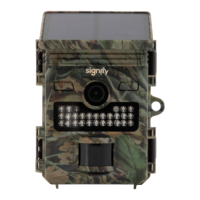
The Wildlife Camera has a built-in rechargeable lithium battery which can be charged
either by solar power or with the USB-A to USB-C cable (supplied).
Charging via Solar Power
The solar panel charging temperature is between 0˚C to 50˚C. The sunlight intensity
and the ambient temperature all affect the charging efficiency. The solar panel
requires around 7 to 14 days to fully charge the built-in battery. If the shooting
frequency is too high during the charging time, this will in turn cause the battery
power to drain faster than the charging speed.
To ensure the Wildlife Camera is set up for optimal charging via solar power, consider
the following when setting the camera up.
• Ensure the solar panel on the Wildlife Camera is angled directly towards the sun.
• Ensure there are no overhanging branches or leaves that could potentially block
the sun from hitting the solar panel.
NOTE: It is recommended to face the solar panel NORTH to ensure the optimum
output from the solar panel across the course of the day, no matter what season.
NOTE: The built-in battery will come partially charged. It is recommended to fully
charge the camera using the USB-A to USB-C cable (supplied) prior to setting up
outdoors for solar charging.
Charging via USB-A to USB-C Cable
To achieve the maximum charge (100%), we recommend charging the built-in battery
with the USB-A to USB-C cable (supplied) and then use solar power to maintain the
built-in battery charge.
Insert the USB-C end into the USB-C port located on the bottom of the Wildlife
Camera. Connect the USB-A into the USB-A port of the power source.
You can monitor the built-in battery power % within the SETUP mode on the bottom
left-hand side of the screen. Refer to page 9 for an overview of the viewing screen
indicators.
NOTE: The built-in battery comes partiality charged. However, it is recommended
to fully charge the camera via the USB-A to USB-C cable (supplied), before first use.


 To Next Page