6
|
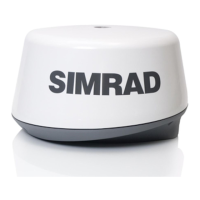
Welcome | Broadband 3G™ Radar Installation Guide
Welcome
Congratulations of your purchase of the latest technology available in recreational marine
radar. The special features designed into this radar are:
“Revolutionary improvement in situational awareness” Provides unprecedented ability to
distinguish hazards and other objects
Radar is fi nally easy enough for casual users – identifi es targets clearly with out complicated
tuning adjustments.
Navigation with unparalleled resolution and clarity at close ranges, where traditional radar
completely obscures targets.
“Start faster, go longer” - 100% solid state design – no powerful microwave transmitter re-
quired! – provides InstantOn™ power up capability and low power consumption
Eliminate the 2-3 minute warm-up time typical of traditional radars
Conserve power with a standby drain less than one tenth of the best existing radars – espe-
cially great for sailboats and smaller power boats
No expensive magnetron replacement is ever required
“Incredibly approachable” - practically imperceptible transmit emissions are extremely safe,
allowing you to mount it anywhere
Less than 1/10th the transmitted emissions of a mobile phone, can be safely mounted in
proximity to passengers
Compatible with a wide range of Navico multi-function displays and heading sensors
What is Broadband radar?
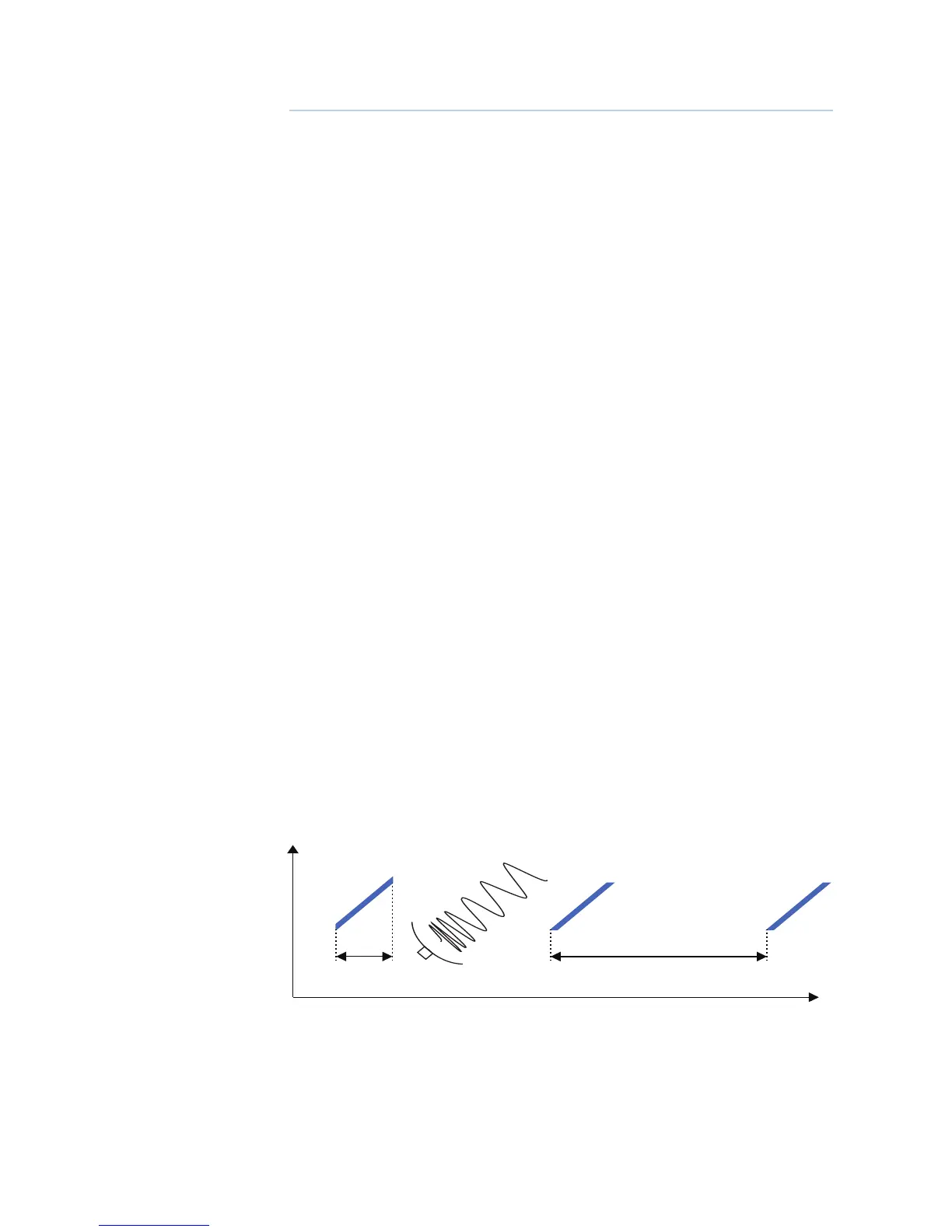
The Navico Broadband radar uses FMCW (Frequency Modulated Continuous Wave) radar
technology.
FMCW radar is di erent:
Firstly it is solid state – i.e. the transmitter is a semiconductor device, not based on magnetron
technology. Secondly, it transmits a 1ms long signal of increasing frequency, rather than a
short duration pulse. Thirdly, it measures the distance to a target not by timing the returned
echoes, but by measuring the diff erence between the current transmitted frequency and
echoed frequency. Hence FMCW – Frequency Modulated Continuous Wave.
The building up of the image over 360 degrees and the processing of the radar data is the
same as for a magnetron radar.
How does FMCW radar work?
1ms 5ms
Time
9.41 GHz
9.4 GHz
Frequency
1


 To Next Page