MN.00273.E - 004 63
In general different criteria can be defined for each port/VLAN/priority. Up to 64 Ingress Filtering Policy
resources can be defined and each bandwidth profile defined on the basis either of LAN port, VLAN or
VLAN+priority consumes 1 of such resources.
In order to define the bandwidth profile, the following parameters must be configured:
• CIR (Committed Information rate): it is the admitted ingress rate (“green” coloured), with values
between 0 kbit/s and 1 Gbit/s
• CBS (Committed Burst Rate): it is the maximum size of the token bucket of the green packets, with
values between 0 byte and 128 kbyte.
• EIR (Excess Information Rate): it is maximum ingress rate admitted when possible (“yellow” col-
oured), with values between 0kbit/s and 1Gbit/s.
• EBS (Excess Burst Rate): it is maximum size of the token bucket of the yellow packets, with values
between 0 byte and 128 kbyte.
• CF (Coupling Flag): if enabled, the excess token (if any) charged into the green bucket are moved
into the yellow packet bucket.
Red packets, i.e. the ones exceeding the CIR+EIR rate, are automatically discarded. In other words, the
rate obtained with the sum of CIR+EIR is the maximum rate allowed to be transmitted.
The combination of CIR and EIR rates is typically referred to as PIR, or Peak Information Rate, which
represents the total burstable bandwidth sold to the customer.
According to MEF 10.2 (Metro Ethernet Forum) specifications, the “bandwidth profile” service attribute (In-
put Filter Policing), which includes some or all of the above categories, can be defined per UNI, per EVC or
per CoS identifier (CoS ID; EVC.CoS). For any given frame, however, only one such model can apply. The
service provider meets the bandwidth guarantees by reserving appropriate network resources and employ-
ing a two-rate/three-colour (trTCM) rate-limitation methodology as part of its traffic engineering policy to
ensure compliance by user traffic.
• Green = Trasmitted: CIR and CBS.
• Yellow = Low Priority (dropped in case of congestion): EIR and EBS.
• Red = Dropped: traffic exceeding EIR and EBS is dropped.
For any port it is possible to add a Input Filter Policy table with this selections:
• Disable
• Uni Port Based
• EVC C_Vid Based
• COS C_Vid + Priority Based
• EVC S_Vid/C_Vid Based
• COS S_Vid/C_Vid + Priority Based
According the status of 802.1q Management> 802.1q settings =
• Disable: you can select only Uni Port Based with CIR, EIR, CBS and EBS; Cf disable is ok.
• Fallback: two selections 1) EVC C_Vid Based: applied to a CVLAN C_Vid with CIR, EIR, CBS and
EBS; Cf disable is ok. 2) COS C_Vid + Priority Based: applied to a CVLAN C_Vid with priority range,
CIR, EIR, CBS and EBS; Cf disable is ok.
• Secure: two selections 1) EVC S_Vid/C_Vid Based: applied to a SVLAN S_Vid and a CVLAN C_Vid
with CIR, EIR, CBS and EBS; Cf disable is ok. 2) COS S_Vid/C_Vid + Priority Based: applied to a
SVLAN S_Vid and CVLAN C_Vid with priority range, CIR, EIR, CBS and EBS; Cf disable is ok.
Into switch there is a total of 64 instances of Input Filter Policing for all the four ports into any radio port.
Any CVID can be used into only one port.
Into same port same CVID can be reused but with different priority.
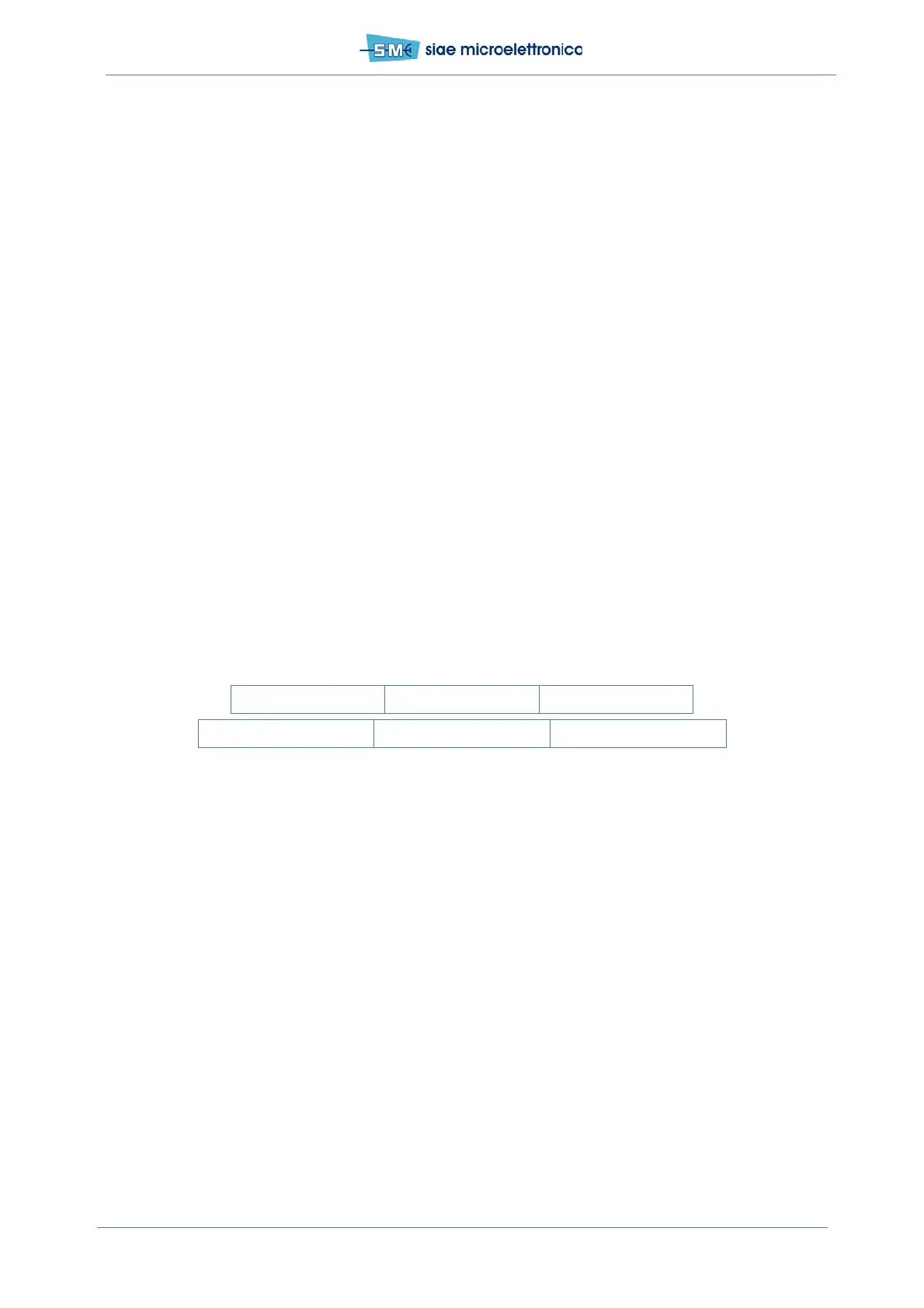
CIR (green) EIR (yellow) dropped (red)
CBS (green) EBS (yellow) dropped (red)



 To Next Page