Paramount MX User Guide
66 | Page
1
Use the bubble level (page 61) to level the base of the mount.
For German equatorial mounts in general, the base of the mount does not need to be
“perfectly level” to achieve extremely precise pointing and tracking. However, to get
the optimal polar alignment using the quick polar alignment procedure, the base of the
mount should be within one degree or so of horizontal.
Step 2
Adjust the height of Paramount MX’s altitude axis to match the latitude of your
observing site.
See “Altitude Adjuster” on page 54 for details about how to adjust the altitude of the
polar axis. Use a GPS or your favorite Earth-based mapping software to determine the
latitude of your observing site.
Step 3
Adjust the azimuth axis as close to the celestial pole as possible.
Finding true north (or south) any at observing site can be tricky. If you do not have the
aid of a polar alignment scope, or the pole is not currently visible, one sure-fire method
is to use a shadow cast by the transiting Sun.
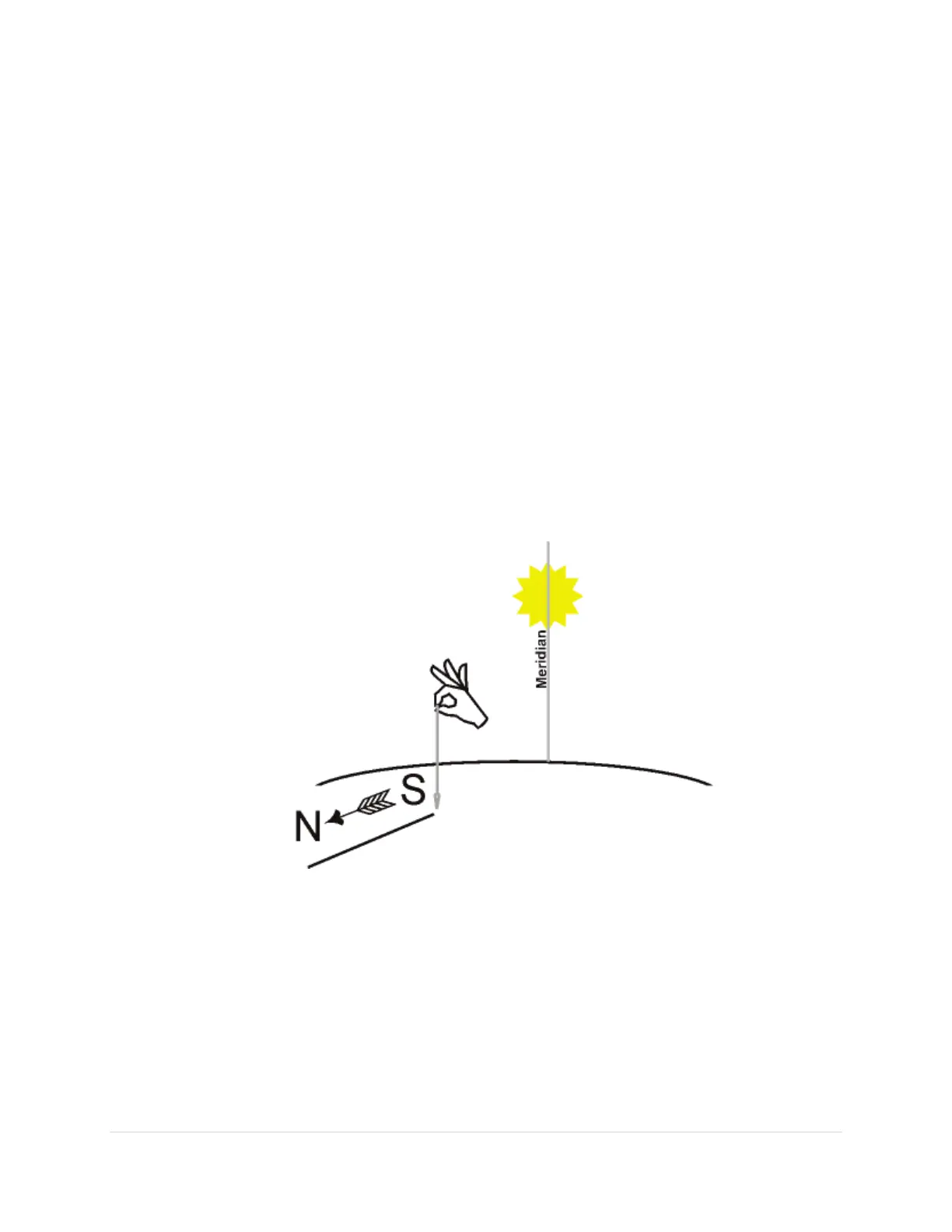
Figure 33: Using the Sun's shadow and TheSkyX to locate true north or south.
The Sun’s shadow points due north (or south in the southern hemisphere) when it
crosses the meridian, or transits. Click on the Sun in TheSkyX Professional Edition to
determine its transit time for today (the Sun’s transit time varies throughout the year).
The shadow cast by a plumb bob or other vertical object defines true north at the Sun’s
transit time.
See “Azimuth Adjuster Knobs” on page 51 for details how to adjust the azimuth of the
polar axis.


 To Next Page