Warm up fully. Operating the handles and switches when the
engine is cold will cause the machine to be drowsy and may cause
accidents.
Avoid sharp acceleration within a short period of time after the
initial ignition of the engine.
By using the operating lever to release the oil pressure (by raising
the pressure above the set pressure of the hydraulic circuit, allowing
the pneumatic oil to escape to the hydraulic oil tank) to increase the oil
temperature of the hydraulic circuit. Doing so can improve machine
response and prevent improper operation.
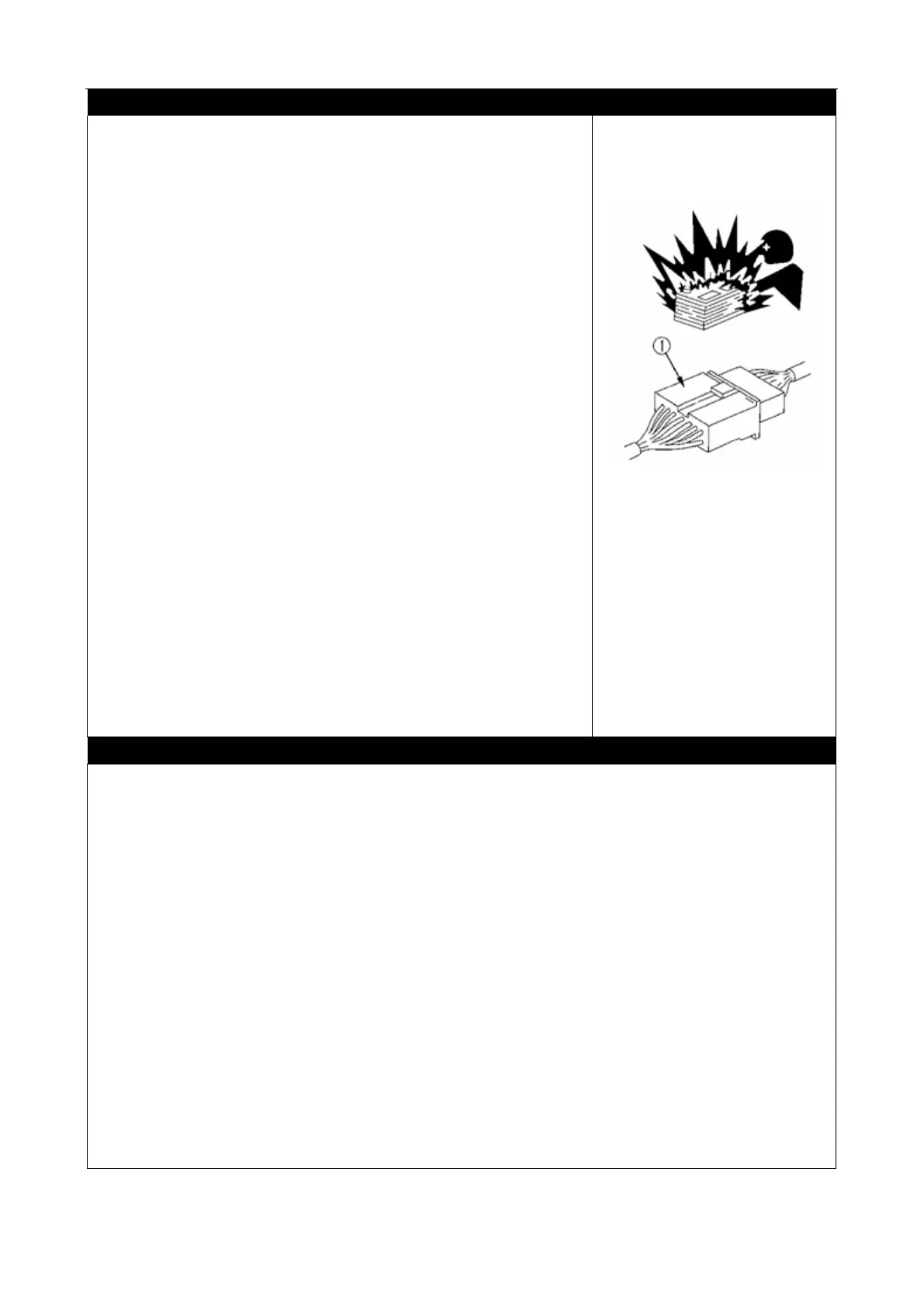
If the battery fluid freezes, do not charge the battery or use
other power sources to start the engine. This behavior may cause the
battery to catch fire. Before recharging or starting the engine, defrost
the battery fluid and check for leaks.
After the work is over, if condensate, snow, or dirt sticks to the
wiring harness, connector (1), switch, sensor, or similar components,
wipe and paste the wrapper.
If the infiltrated condensate or similar material freezes, the
machine may not operate normally when it is used next time, causing
an accident.
(1) Confirm that there is no danger at the work site before starting work.
(2) Check the ground and road conditions at the work site to determine the best working method.
(3) Flatten the slope of the work site as much as possible before starting work. Also, if there is too
much sand and gravel, spray with water before working.
(4) When working on the road, forcibly stop by setting up guidance or fences to ensure the safety of
traffic vehicles and pedestrians.
(5) Forcibly prohibit personnel from entering the work site, and take measures to prevent personnel
from approaching.
(6) Attempting to approach a moving machine may result in a violent collision due to contact or
crushing, and may result in serious personal accident and death.
(7) When driving in water or crossing shallow water, you should check the ground condition, depth
and water speed in advance, and make sure not to exceed the allowable water depth (not higher than the
center of the driving wheel).



 To Next Page