. SYSTEM OVERVIEW & OPERATION
Static Transfer Switch (STS) provides seamless switching between two power sources to provide
iSTS continuously monitors the supply sources for failure or degeneration and switches automatically to
source as required to protect the load against failure. The break in the supply transition is so short
is not seen by the critical load. This switching process is undertaken as a break before make
overlapping which can cause large and unpredictable currents. In 2 and 4-pole models, all the
and the neutral are switched. In 3-pole models, only the active phases are switched. Thyristors
to undertake the switching process.
the case of downstream load fault conditions, the fault current drawn from the supply may degrade or
supply sources; as a consequence should a fault current exist in the load the iSTS will inhibit a transfer to
source even if this causes source supply degradation or loss. This is to ensure that the fault will not
to the alternate supply with the possibility of degrading both sources.
current threshold for isolation is pre-set to approx. 300% of the rated current.
unit contains fuses. The fuses are to provide for safe operation even in high fault capacity environments.
be noted that the fuses are for the protection of the semiconductor switches (SCRs/ Thyristors), not
. The iSTS does not have any automatic tripping devices, so load discrimination is undertaken in the
secondary supply networks.
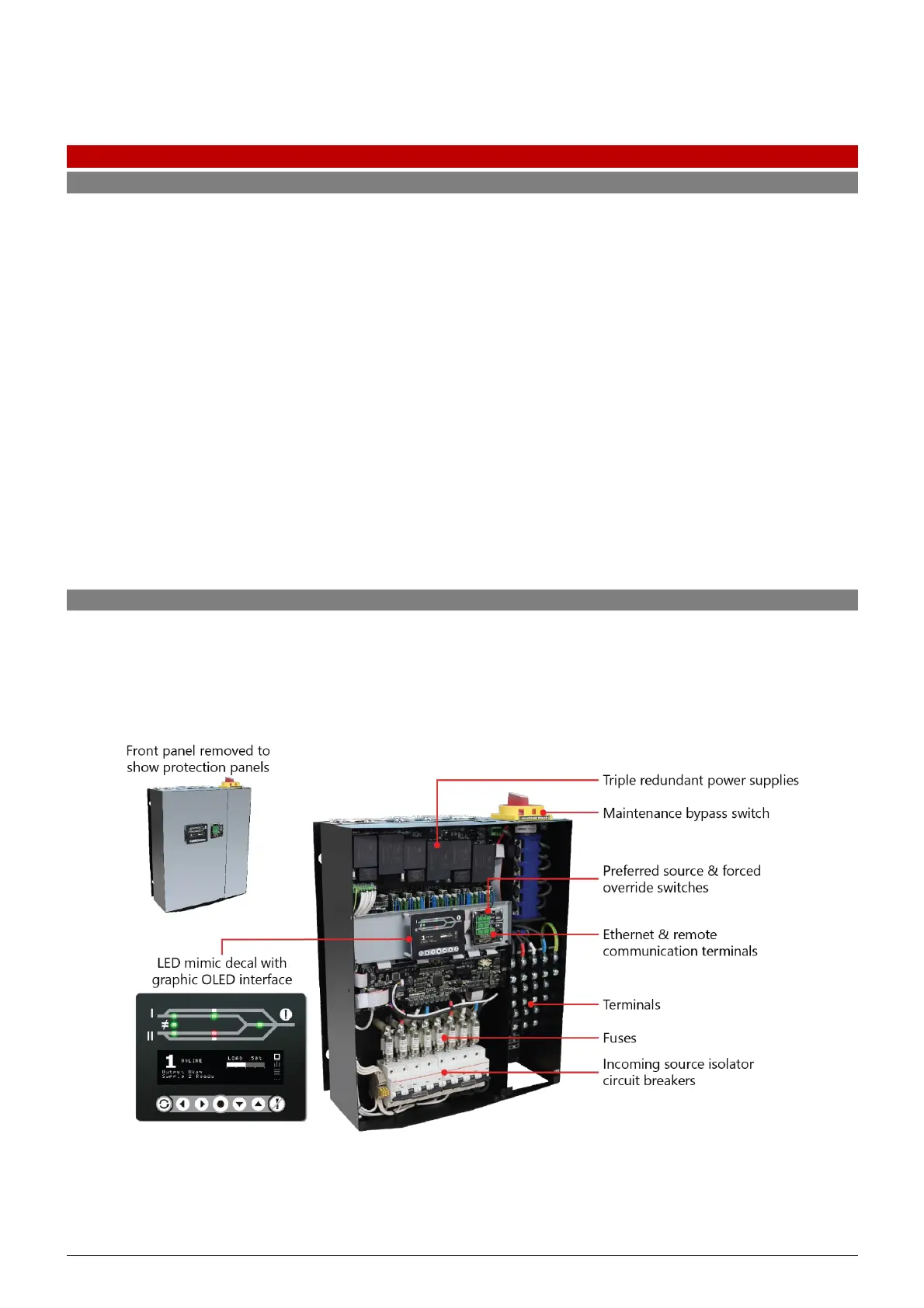
picture shows a bottom cable entry iSTS W.
maintenance bypass switch and terminal arrangement is reversed for top cable entry models.



 To Next Page