19-38 C D/B O’ M
C .
To remove head:
Unplug sander. Loosen two set screws in motor
coupler half. Loosen two set screws in outboard (left)
bearing. Loosen two set screws in inboard (right)
bearing. Remove two bolts from outboard bearing.
and two bolts from inboard bearing. Lift and pivot
brush or drum from outboard side and pull from
motor coupler. Use gloves when handling wire brush.
To install head:
Install bearings on shaft with set screws loose. Install
coupler with key on inboard side. Tighten set screws
in coupler half of head. Install rubber spider in coupler
half of head. Make certain no spider is in coupler half
on motor. Pivot new head into place by rst aligning
couplers. When pivoting new head in place, lower
head. Tapping on the outboard end of the shaft with
a rubber hammer can help seat coupler. Caution, do
not damage bearing when tapping. When head is
in place install bolts into both bearings and tighten.
Make sure head is centered in housing and couplers
seated. If needed, slide motor coupler half into new
head and tighten set screws. Tighten two set screws
in each bearing, inboard and outboard. Make sure all
bolts and screws are tight.
M M
For best results, perform the following recommended
maintenance procedures on a monthly basis:
• Lubricate conveyor bushings and check for
wear.
• Lubricate all moving parts, such as threaded
rods and washers
• Clean dust from the conveyor belt.
• Blow dust from the motors.
• Check all set screws for tightness.
• Clean brush or drum and abrasives, if
applicable.
T F M P
e versatility designed into the 19-38 Combo allows
it to be used for a wide-ranging variety of tasks that
will boost the return on your investment. Learning to
use its multiple adjustments and controls will allow
you to ne-tune the machine for maximum results,
regardless of the job to be done. e best results
come from experimenting with di erent machine
adjustments to t the job at hand. Following is a
listing of useful tips which can help you improve
performance of your brush sander.
Dust Collection. When connecting dust collectors,
remember that straight pipe will not restrict air ow
as much as exible tubing. Also, Ys and elbows will
restrict air ow less than Ts.
Brushing Multiple Pieces At Once. When brushing
multiple pieces simultaneously, make sure to stagger
(step) the pieces across the width of the conveyor
belt. is provides better contact with the tension
rollers. Try to only process multiple pieces of similar
thickness. If there is a signi cant thickness di erence,
the thinner pieces can slip on the conveyor belt if they
do not contact the tension rollers. When brushing
high stock, special care is needed to prevent tipping.
Brushing Imperfect Stock. To avoid personal injury,
take special care when sanding/brushing stock that
is twisted, bowed, or otherwise varies in thickness
from end to end. If possible, support such stock as it
is being brushed to keep it from slipping or tipping.
Use extra roller stands, help from another person, or
hand pressure on the stock, to minimize potentially
hazardous situations.
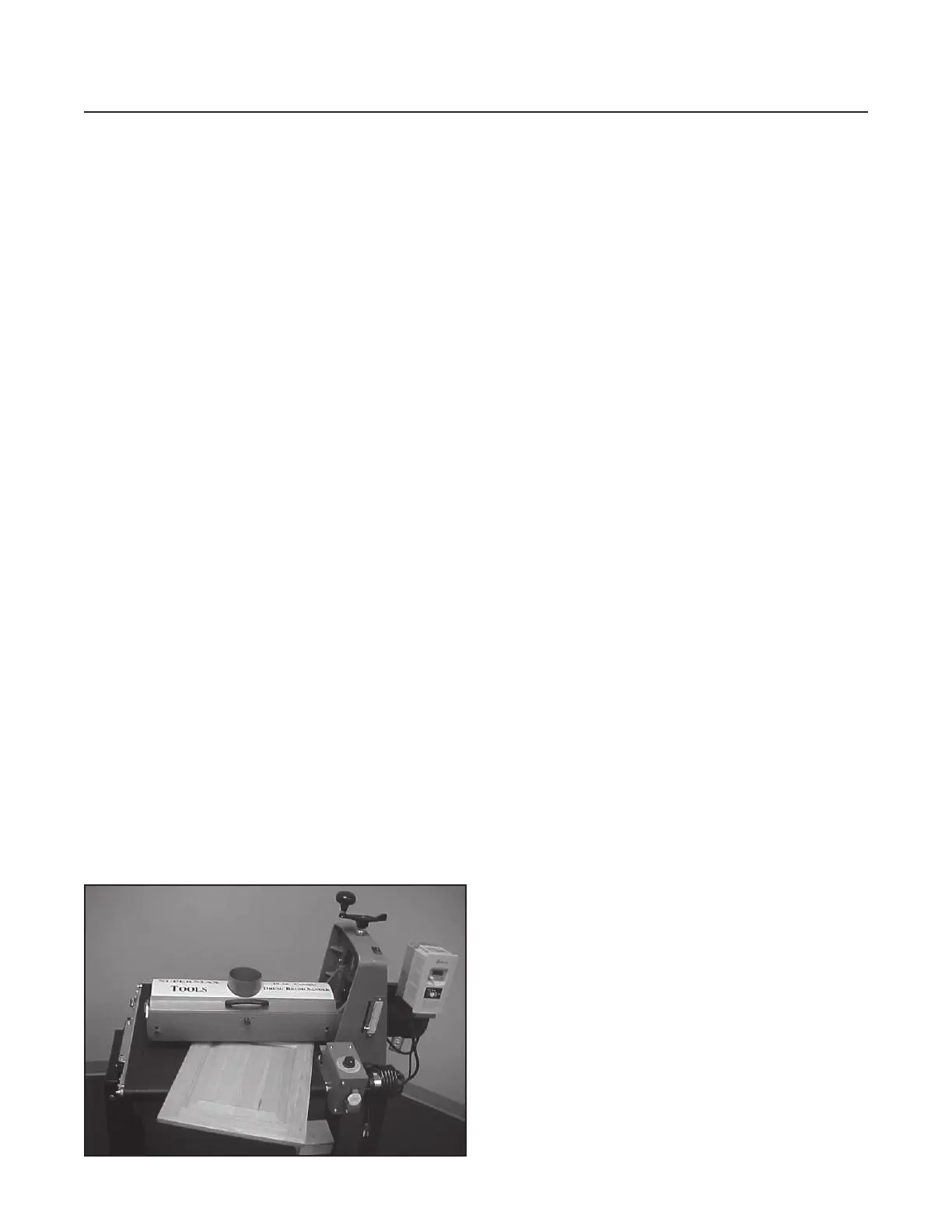
Fig. 13 O set stock feeding angle.


 To Next Page