19-38 C D/B O’ M
IMPORTANT! When using the sanding drum
accessory, adjust RPM Gauge to “drum sanding”
highest setting, turned fully clockwise. Only use
drum sander at this setting!
RPM G
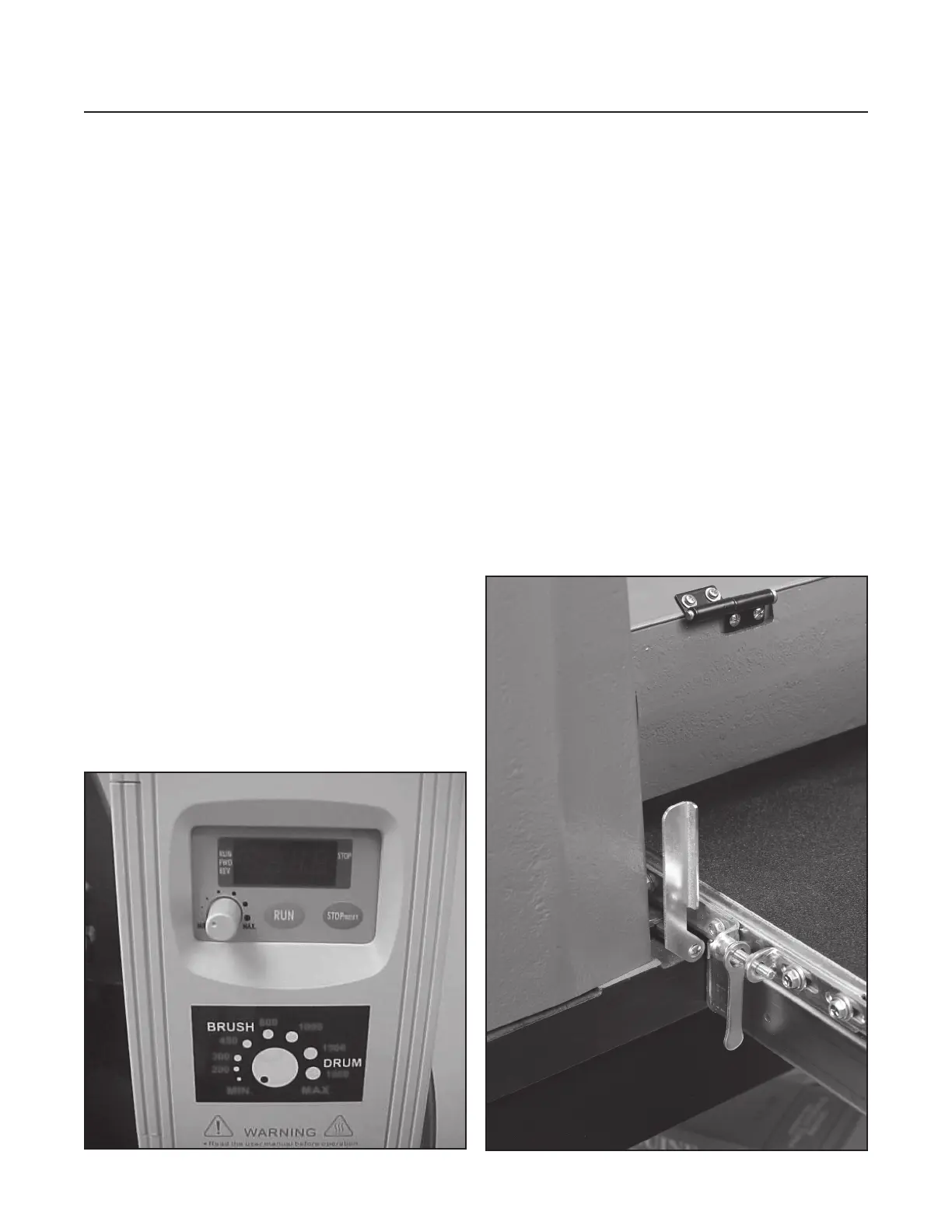
e RPM gauge or readout (Fig. 8) displays the brush
speed or rotation. e label under the control knob
is a guide. IMPORTANT: e brush heads are to
be run between 200-1000 RPM only! e sanding
drum is to be run at max (1750) RPM only! Damage
to the machine, brush or drum can result from not
following this guide. Choose proper brush RPM for
the best results and type of brush.
C C B T
Conveyor belt tracking adjustments may occasionally
be necessary during break-in and normal operation
to compensate for belt stretching. If adjustments
are necessary, follow the instructions below: Belt
tracking adjustments are made while the conveyor
belt is running. With the conveyor unit on and set
at the fastest speed setting, watch for a tendency of
the conveyor belt to drift to one side of the conveyor.
To adjust the belt tracking, tighten the take-up screw
nut (Fig. 9) on the side the belt is drifting toward,
and loosen the take-up screw nut on the opposite
side. Adjusting the take-up screw nuts on both sides
of the conveyor allows belt tracking adjustments to
be made without a ecting belt tension. Adjust the
takeup screw nuts only 1/4 turn at a time. en allow
time for the belt to react to the adjustments before
proceeding further. Try to avoid over-adjustments.
NOTE: Make sure wrench is below surface when
brushing or sanding.
Fig. 9 Hanging wrench 1 of 2, for tracking conveyorFig. 8 Brush RPM gauge.


 To Next Page