8 | Section 2
Using a production-style console
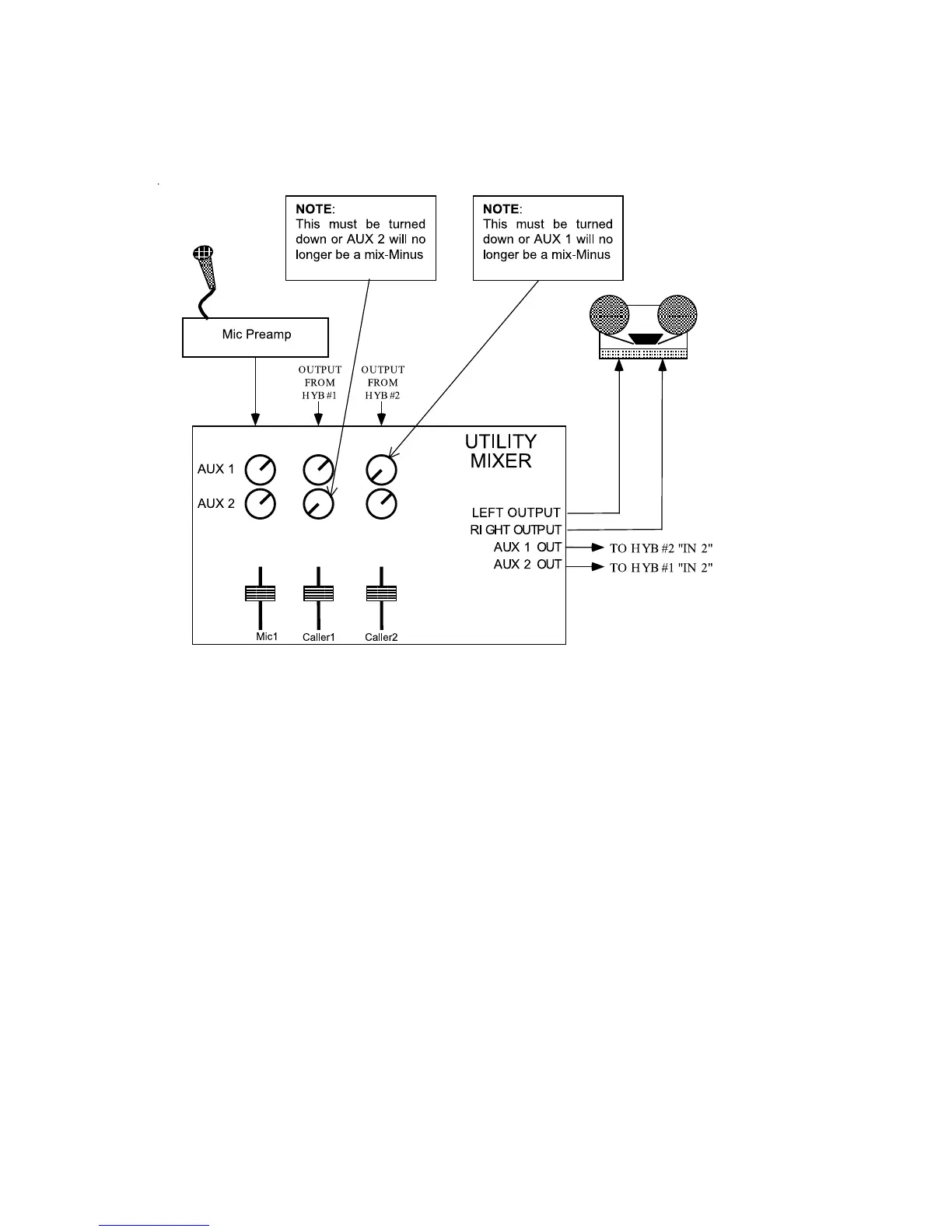
e Production-style consoles often used for TV audio will have multiple Aux send busses that
can be used in a similar way to the small mixer example above. Each hybrid is sent from an Aux
bus and everything the caller needs to hear is mixed into that bus, taking care to keep the hybrid
itself o the bus.
Phones and Remotes
When on remote, to save money and hassle, calls are usually received at the studio, rather than
at the remote site. In this situation, caller audio must be fed to the remote talent so that they
can hear and respond to callers. Moreover, the callers need to hear the talent. In many cases, the
remotes are suciently distant that talent cannot monitor the station for the caller feed. Even
if they could, the profanity delay would be a problem, since the talent needs to hear the callers
pre-delay.
All perceptual codecs (such as the Telos Zephyr or X-Stream) or any IP codec, have too much
delay for talent at remote locations to hear themselves via a round-trip loop. erefore, another
mix-minus is required to feed a codec.
e talent hears callers via the codec return path. As before, you feed this return with mix-
minus: a mix of everything on the program bus minus the remote audio. As for the second half
of the equation, the callers hear the talent because the remote feed is added to the telephone
mix-minus bus. is is no problem if you have a set-up that permits selective assignment to the
hybrid mix-minus.


 To Next Page