System Components | 2-2
System Components
The interfacility link (IFL) between the ODUs and the L-band modem uses 950 MHz
to 2.0 GHz (L-band) as the interface frequency. This approach enables transmission
and reception over the entire satellite band as opposed to a single transponder. The L-
band IFL can also carry associated signals such as 10 MHz and DC voltage which
simplify installation and reduce costs. Terrasat IBUC systems can be used for single
channel per carrier/multiple channels per carrier (SCPC/MCPC), point-to-point, or
point-to-multiple point network applications (such as voice, data, video, or IP
services). The integrated RJ45 connector enables both SNMPv3 and the Embedded
Web Pages for monitor and control purposes. Its smaller form factor and lighter
weight make the Cyber Hardened IBUC 2
, IBUC 2e, and IBUC 2G ideal for situations
where mobility is key. These smaller models can be carried in a backpack/case or
mounted on antennas that can be quickly assembled and disassembled. See Figure 2.9
on page 2-25
through Figure 2.11 on page 2-27 for typical equipment configurations.
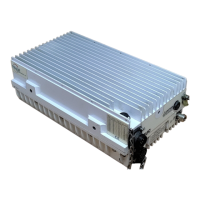
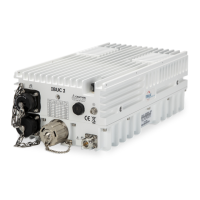
The Cyber Hardened IBUC 2, IBUC 2e, IBUC 2G, IBUC R and IBUC G are
available in a variety of frequency bands as listed in Table 2.1 through Table 2.5. The
IBUC houses the IF interface (demux), the upconverter, the monitor and control
(M&C) card, a DC-to-DC converter (if DC powered) and associated circuitry, an AC-
to-DC converter (if AC powered), and a solid state power amplifier (SSPA) assembly.
The IBUC can also house an optional internal 10 MHz reference signal module.
Higher-power IBUCs also have an external cooling fan assembly. The input interface
to the IBUC connects to a 50
or an optional 75 coaxial cable that carries the L-
Band transmit signal. This IFL (interfacility link cable) interface can also carry an
external 10 MHz reference for the oscillator signal band and DC power.


 To Next Page