Page 12
length, pull and cable laying speed corresponding to the final alarm conditions
max pull value reported during the alarm conditions and corresponding cable laying
distance
cable laying length corresponding to the inverted direction conditions
date and time monitoring ends
ATTENTION: Should the paper finish while printing in real time, the device will save
the samples to print them when the paper will be replaced.
The pull limit value L can be modified during the data monitoring process by an amount equal to
that pre-set in the LIMIT CHANGE item (Chap 4.1.3.3); to do so:
& Press: or to increase or decrease the control limit.
Clearly, if the pre-set value in the LIMIT CHANGE item is equal to “0” (zero) there will be no
change in the control limit value.
To end the monitoring process:
& Press: twice and fast
and the current date and time will appear on the display once again.
If the instrument should be unintentionally switched off during the monitoring process, perform the
following steps after switching it back on and when the current date and time appear on the
display:
& Press: twice and fast
and the instrument will continue recording the cable laying operations as from when the
instrument was switched off.
3.8 FULL MEMORY
If the memory available for an individual cable laying process should be less than 10% during the
monitoring process, the message: REC. : xxx % will appear on the display instead of the
recording number where xxx indicates the amount of memory actually used.
In this case, it is recommended to complete the cable laying operations as soon as possible and
start a new recording, deleting the recordings of unnecessary cable laying operations.
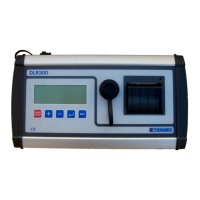
The instrument saves 64 cable laying operations and when this value is reached, the DLR300 will
write the subsequent operations restarting from the first, overwriting the data saved previously. It
is therefore recommended to print or download the saved cable laying operations on a daily basis,
deleting them from the memory so as to prevent unpleasant management problems.
3.9 MANAGING SAVED AND PRINTED CABLE LAYING OPERATIONS
To access the management procedure of the saved and printed cable laying operations, access
the main menu, then:
& Press: or to navigate the menu and select the RECORDINGS
MANAGEMENT function
♦ Select: RECORDINGS MANAGEMENT
& Press: to access the recorded cable laying management page
The following appears: DISPLAY RECORDING
PRINT RECORDING
SAVE RECORDING
SAVE ALL RECORDINGS
DELETE RECORDING
DELETE ALL RECORDINGS
12
1
1


 To Next Page