34
Electrical Maintenance
Prestolite Alternator
SERVICE PRECAUTIONS
ALTERNATOR WITH INTEGRAL
REGULATOR
NOTE: Alternators with integral regulators and alterna-
tors with remote regulators are not interchangeable on
units equipped with CYCLE-SENTRY operation. CYCLE-
SENTRY units using alternators with integral regulators
also use a Battery Sentry module that will not operate cor-
rectly if used on CYCLE-SENTRY units using alternators
with external regulators. See TK Bulletin 300 for correct
Battery Sentry module to use.
NOTE: Units manufactured with CYCLE-SENTRY and
alternators with integral regulators MUST use replace-
ment alternators with integral regulators.
CAUTION: “Full Fielding” alternators with the integral
regulator is accomplished by installing a jumper from ter-
minal F2 to ground. Attempting to full-field the alternator
by applying battery voltage to terminal F2 will cause regu-
lator failure.
Charging System Diagnostic Procedures
Complete the following checkout procedure before replac-
ing the voltage regulator or the alternator.
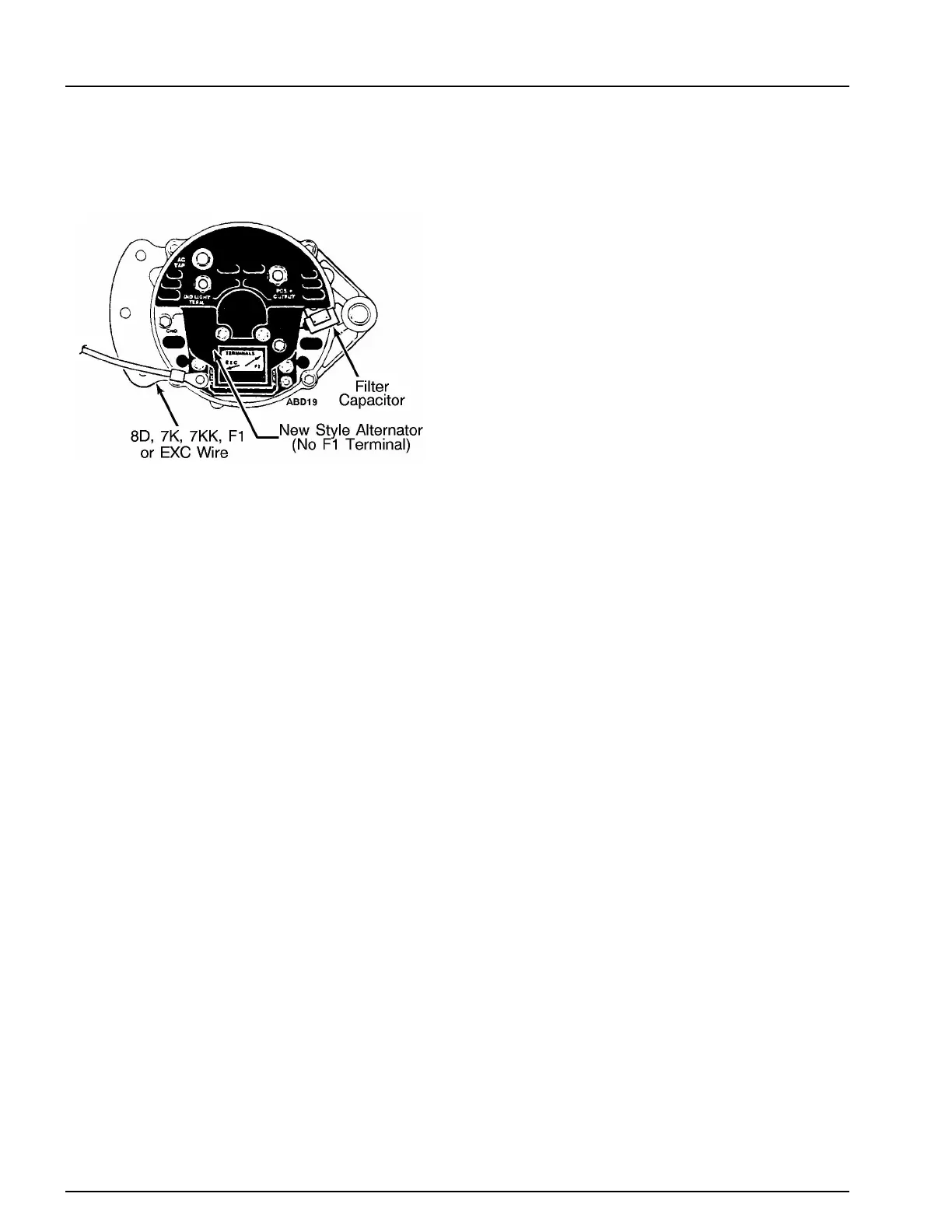
1. With the unit switch OFF, attach a voltmeter to termi-
nal SENSE and the alternator chassis. Voltmeter should
indicate battery voltage.
2. With the unit switch ON, attach a voltmeter to terminal
EXC and the alternator chassis. Voltmeter should indi-
cate battery voltage.
3. To determine whether the alternator or regulator is
faulty, attach a test lead between terminal F2 and
chassis ground. Run the engine on high speed.
CAUTION: Never apply battery voltage to terminal
F2.
a. Full alternator output indicates the alternator is
good but the voltage regulator needs replacement.
b. If there is LOW or NO output, the alternator is
probably faulty. However, the following items are
potential causes for not charging.
— Check the alternator brushes
— Check the 2A circuit from the alternator to the
battery
— Properly tension the alternator belt
— Check the battery cable connections and the
alternator ground. They must be clean and
tight.
— The battery must be in good condition and must
accept a charge.
— Check for excessive or unusual amperage draw
by the unit control circuits.



 To Next Page