5. Service and Maintenance
520
Tires
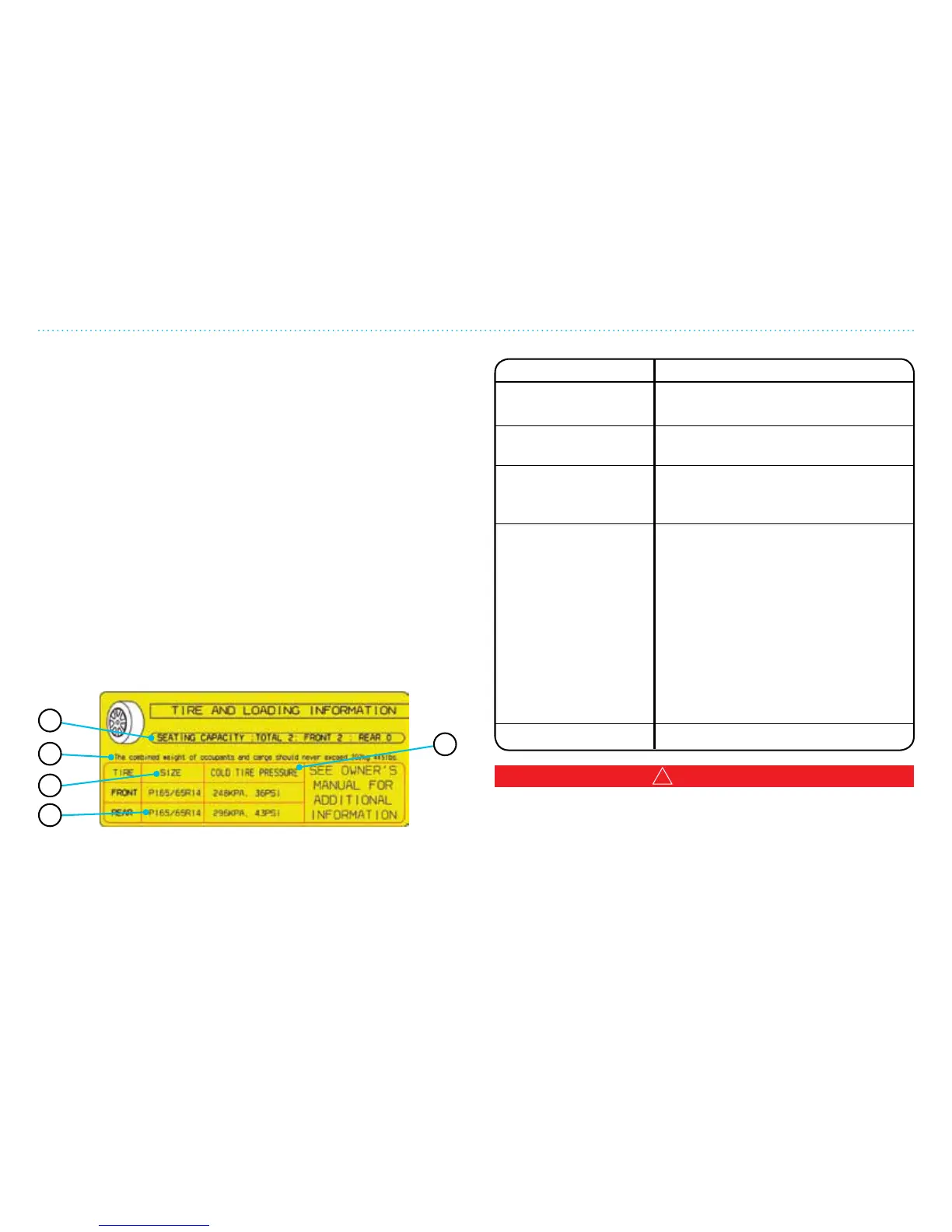
ITEM DESCRIPTION
1. Seating capacity The maximum number of occupants
that can be seated in the vehicle.
2. Vehicle load limit See “Vehicle Loading Information” in
this section.
3. Original tire size The size of the tires originally
installed on the vehicle at the
factory.
4. Cold tire pressure Inflate the tires to this pressure
when the tires are cold. Tires are
considered COLD after the vehicle
has been parked for 3 or more
hours, or driven less than 1 mile
(1.6 km) at moderate speeds. The
recommended cold tire inflation is
set by the manufacturer to provide
the best balance of tire wear,
vehicle handling, drivability, tire
noise, etc., up to the vehicle’s gross
vehicle weight rating (GVWR).
5. Tire size Refer to “Tire Marking” section.
Tires
General Information
THINK City comes with tires designed for low road resistance
in order to maximize the driving distance. If you change the
tires, be sure new ones have the same specications. Check that
the tires have the legally required tread depth — too little tread
increases the chances of hydroplaning under wet conditions.
See also specications and technical information as well as the
purchase contract regarding wheels and tires. Be sure that all
four tires are the same type and dimension and have the same
rating for speed and load. If these precautions are not followed,
it can aect/reduce the car’s performance, the speedometer’s
accuracy, safety and braking capacity.
Tire Placard/ Label
The tire information label is located on the on the pillar behind
the driver’s door.
1
2
3
5
4
!
WARNING
Under-inflated tires can cause tire failure and increase the
risk of loss of vehicle control and possible injury or death
in the event of a collision. Refer to the tire manual for more
information on how to measure tire inflation pressure and
instructions on proper tire maintenance.


 To Next Page