4. Driving and Safety
49
mph
10
0
100
80
60
40
20
0
20
30
40
50
60
70
80
0
90
100
110
120
Economical Driving and Energy Tips
Economical Driving and Energy Tips
To achieve maximum driving distance you should:
• Use position E (eciency) on the gear selector when
possible.
• Use the recommended tire air pressure.
• Keep the vehicle weight as light as possible.
• Avoid driving constantly with roof racks (if equipped).
• Do not accelerate quickly.
• Maintain a moderate speed.
• Drive as smoothly as possible.
• Limit the use of the heating system.
• Remember to connect the charge cable to the electrical
outlet when the vehicle is not in use. The battery will then be
fully charged for your next trip.
See the Battery Manual for information on the battery. Both
driving style and use of heating and other electrical equipment
aects the distance the vehicle can go. Instruments in the
vehicle provide information about the driving distance and
energy usage. See Chapter 2 for more information.
Regenerative Brakes
THINK City is equipped with a motor brake that feeds energy
to the battery for recharging, and at the same time slows the
vehicle down. When the accelerator is released, this goes into
operation.
WARNING
Note that if you are not careful when releasing the accelerator,
the motor brake can lock the front wheels during extremely
slippery road conditions. This could happen, especially when
the gear shier is in E (EFFICIENT DRIVING). So use extreme
caution when driving on slippery road conditions.
If the battery is fully charged, the regenerative braking eect
will be reduced to avoid over charging. This eect will also
disengage if the ABS is activated.
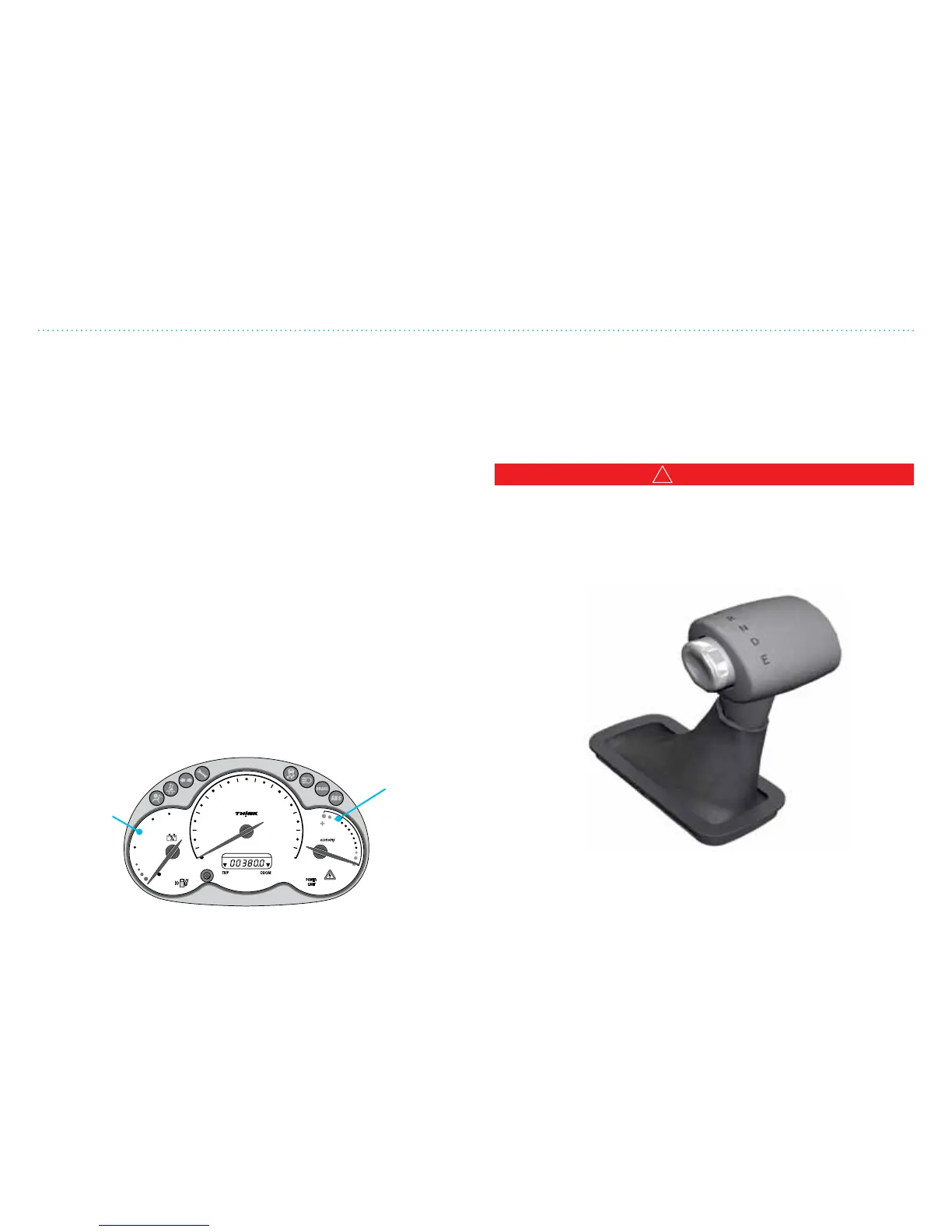
Power
gauge.
Displays
the energy
level of the
traction
battery.
Economy
gauge
(energy
usage)


 To Next Page