4. Driving and Safety
411
Antilock Brake System (ABS)
The vehicle’s power brakes produce a vacuum when the
brakes are applied. This is done with the help of an electric
pump. When the brake pedal is applied, the electric pump will
make a sound – this is normal.
Warning Lamp for ABS Brakes
This warning lamp will illuminate briey when
the ignition is started, before the motor starts. It
should then go out. If there is a fault in the ABS,
the warning lamp will be lit continuously. Even
if there is a problem in the ABS,
the normal braking system
will work (including the
regenerative braking system).
Antilock Brake System (ABS)
!
WARNING
• The antilock brake system (ABS) cannot prevent the natural
laws of physics from acting on the vehicle, nor can it increase
braking or steering efficiency beyond that afforded by the
condition of the vehicle brakes and tires or the traction. The
ABS cannot prevent all accidents, including those resulting
from excessive speed in turns, following another vehicle
too closely, or hydroplaning. Only safe, attentive and skillful
driving can prevent accidents. The capabilities of an ABS-
equipped vehicle must never be exploited in a reckless or
dangerous manner which could jeopardize the user’s safety
or the safety of others.
• Do not take driving risks and hope that ABS will correct
judgment errors. It is always your responsibility to drive
with due care and attention.
!
CAUTION
Moisture and road salt can reduce the efficiency of the
brakes. When driving in wet conditions or aer washing the
vehicle, the brake discs can get wet and the efficiency of the
brakes could be reduced temporarily. Test the brakes aer
such conditions by pressing the brake pedal lightly. This
will produce heat which reduces the moisture. This test is
especially important aer washing the vehicle in winter at or
below freezing conditions.
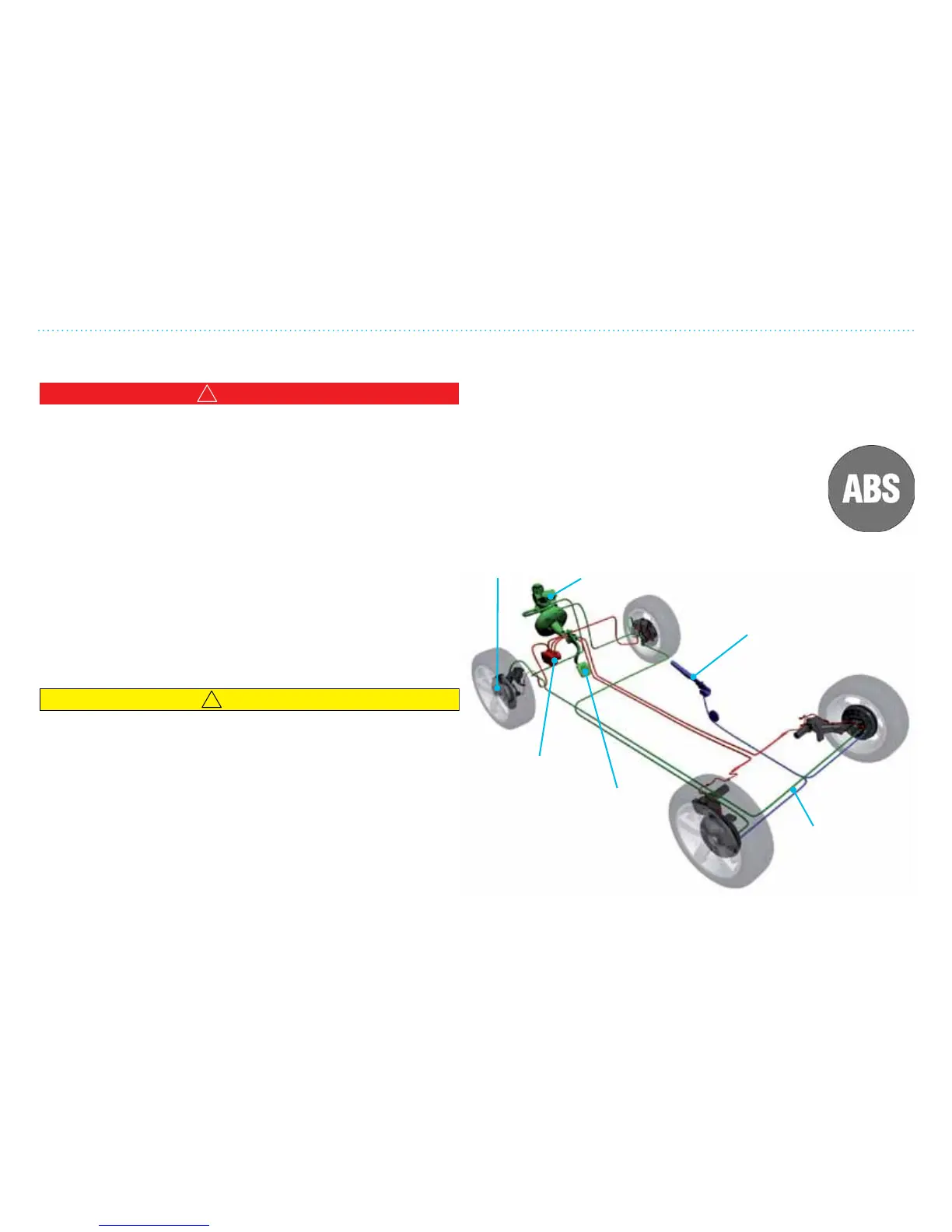
Brake
discs
ABS control
unit
Brake pedal
Electric power
brake
Parking brake
Electronic
control signals


 To Next Page