4. Driving and Safety
425
Driving in Water, Winter Conditions and Using Snow Chains
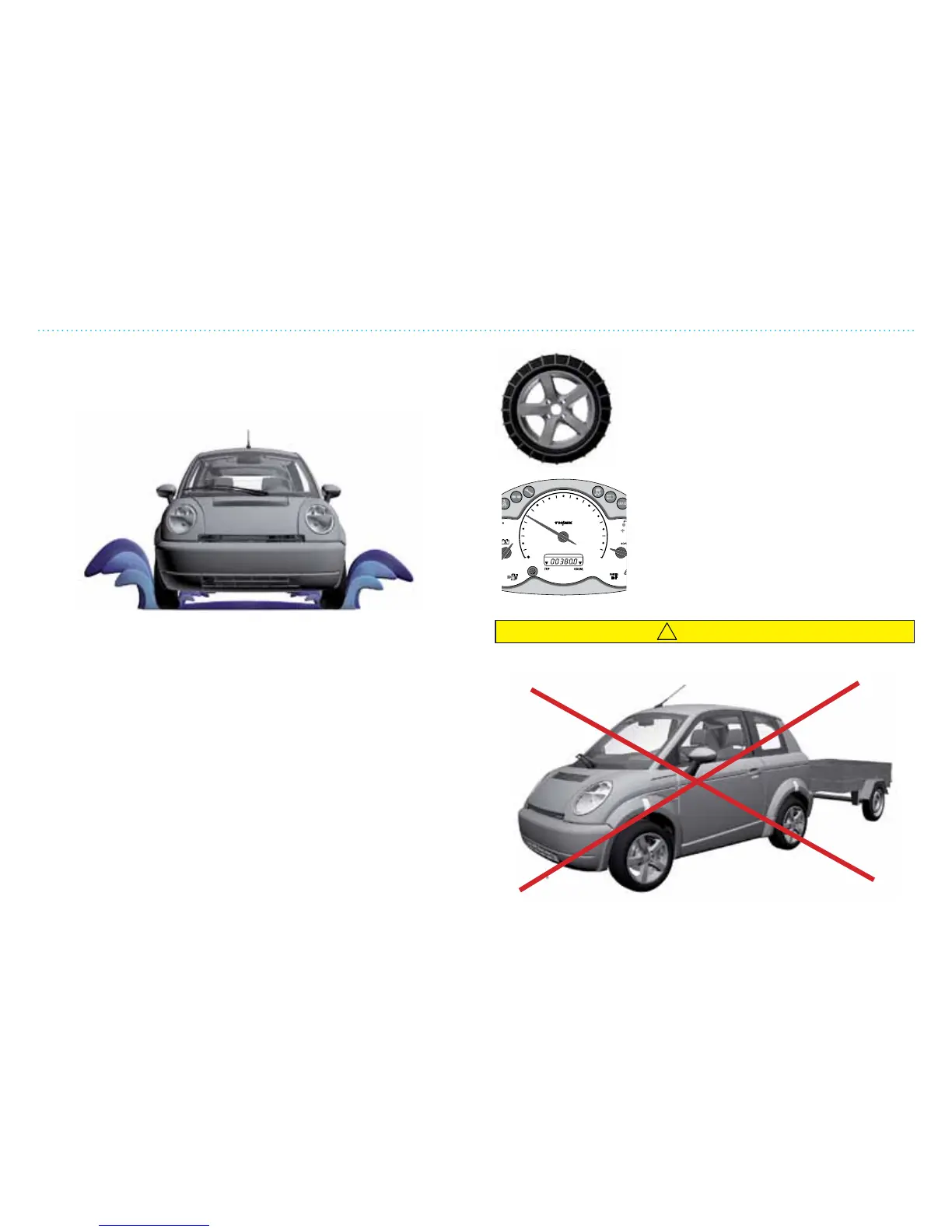
Driving in Water
To avoid hydroplaning, which can make steering of the vehicle
unstable, do not drive fast through deep water. Aer driving
through puddles, check your brakes – wet brakes are less
eective than when dry.
Driving on Snow and Ice
• Reduce your speed and allow for increased safe distances
when driving on snow and ice. Avoid fast acceleration, hard
braking and sharp turns as much as possible.
• Use good quality snow tires on all 4 wheels with sucient
tread, or studded tires as needed.
• Use the same type and size of snow tires on all 4 wheels;
do not mix dierent brands and tread.
• Studded tires should be “driven in” carefully the rst 300-
400 miles to assure the studs are worked well into the
rubber.
• The regenerative brakes and ABS brakes communicate such
that if the ABS brakes are applied, the regenerative braking
function disengages.
• Use of snow chains is only possible when using tires that are
165/65 R14 on steel rims (if equipped).
• Snow chains should only be used on
the front wheels; make sure that no
part of the chain sticks out or is loose
which could damage the brakes, shock
absorbers or other parts of the vehicle.
• Never drive faster than 30 mph with
snow chains.
• Do not drive with snow chains on bare
ground. This puts heavy wear on the
chains, tires and vehicle.
• Consult your dealer for advice on
purchasing snow chains for your
vehicle.


 To Next Page