y Perform cleaning and maintenance procedures as described on pages 30 to 32. Any other servicing should be
performed by an authorized service representative.
y To maintain cleanliness, always clean the rice cooker on the same day it is used. You should also clean the rice
cooker at regular intervals.
y The rice cooker should also be cleaned on the day that it is used in order to remove any odors that remain from
cooking. (See p.32)
Note
Be sure to disconnect the power plug and the plug, and allow the main body, inner pot, inner lid, and
cooking plate to cool down before cleaning.
y When cleaning the product, use only dishwashing liquid or detergent.
Ú Rinse the parts thoroughly since detergent remaining on them may result in deterioration and discoloration of
materials such as resin.
y Clean with a soft sponge or cloth.
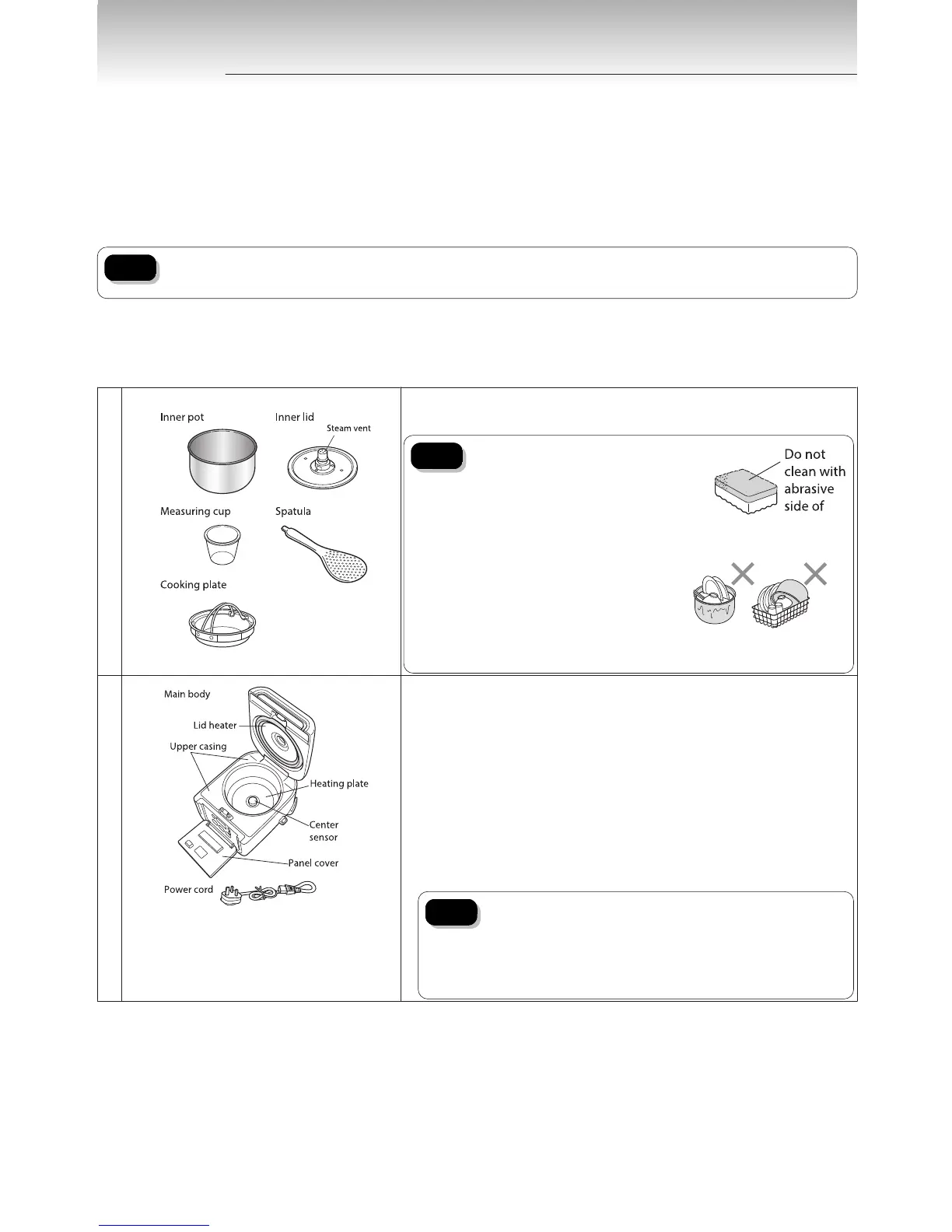
Parts to wash after every use
❶Clean with a soft sponge and with tap or lukewarm water.
❷Wipe off the water with a dry cloth to dry the parts thoroughly.
Note
y Do not clean the inner pot with
the abrasive side of a
heavy-duty scrubbing sponge.
Doing so may damage the
fluorocarbon resin coating.
y Do not wash dishes, etc., inside the inner pot. Doing
so may damage the
fluorocarbon resin coating or
cause it to peel. Also, do not
place the inner pot upside
down on top of dishes, etc., to
dry.
Parts to clean when dirty
y Wet a towel or cloth, wring out the excess water, and then wipe the
inside and outside of the main body and the panel cover.
y Wipe the power cord with a dry cloth.
y Remove burned rice and any other adhering grains of rice that have
adhered to the heating plate and center sensor.
Ú If adhering objects are hard to remove, use commercially available
sandpaper (around #320), then wet a towel or cloth, wring out
excess water, and wipe.
y Remove any grains of rice that have adhered to the upper casing.
y If the inside of the light hole on the Panel cover is dirty, wipe it with
a cotton swab.
Note
y Do not allow water to get inside the main body.
y Do not immerse the power cord in water, or splash
it with water.
Doing so may result in short-circuiting or electric
shock.
12
Cleaning and Maintenance
30


 To Next Page