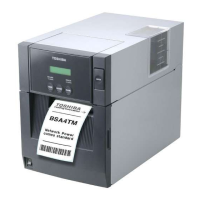
How to fix 'FLASH CARD FULL' error on Toshiba B-SA4TP Printer?
- MMelissa EvansAug 31, 2025
A 'FLASH CARD FULL' error on your Toshiba printer means saving failed due to insufficient capacity in the flash ROM. Turn the printer off, and then on again.

How to fix 'FLASH CARD FULL' error on Toshiba B-SA4TP Printer?
A 'FLASH CARD FULL' error on your Toshiba printer means saving failed due to insufficient capacity in the flash ROM. Turn the printer off, and then on again.
Why is my Toshiba Barcode Reader showing NO PAPER?
The 'NO PAPER' error on your Toshiba Barcode Reader typically means one of three things: 1. The media has run out. 2. The media is not loaded properly. 3. The media is slack. To resolve this: 1. Load new media and press the [RESTART] key. 2. Reload the media correctly and press the [RESTART] key. 3. Take up any slack in the media.
What does 'FLASH WRITE ERR.' mean on my Toshiba B-SA4TP and how to fix it?
A 'FLASH WRITE ERR.' on your Toshiba printer indicates an error occurred while writing to the flash ROM. Turn the printer off, and then on again.
What does HEAD OPEN mean on Toshiba Barcode Reader?
The 'HEAD OPEN' error on your Toshiba Barcode Reader means that a feed or an issue was attempted with the Top Cover opened. To resolve this, close the Top Cover and then press the [RESTART] key.
How to fix the Toshiba Barcode Reader when nothing is printed on the media?
If your Toshiba Barcode Reader is not printing anything on the media, here are a few possible causes: 1. The media is not loaded properly. 2. The ribbon is not loaded properly. 3. The ribbon and media are not matched. To solve this: 1. Load the media properly. 2. Load the ribbon properly. 3. Select an appropriate ribbon for the media type being used.
What does FLASH WRITE ERR mean on my Toshiba Barcode Reader and how to fix it?
A 'FLASH WRITE ERR.' message on your Toshiba Barcode Reader indicates an error occurred while writing to the flash ROM. To resolve this, turn the printer off, and then on again.
What does LOW BATTERY mean on my Toshiba Barcode Reader?
The 'LOW BATTERY' message on your Toshiba Barcode Reader indicates that the voltage of the Real Time Clock Battery is low. Hold down the [RESTART] key until “RESET” is displayed. If you want to continue using the same battery, set the Low battery check function to OFF and set the date and time. Note that the date and time will reset once the power is turned off. Contact a TOSHIBA TEC authorized service representative for battery replacement.
What does COMMS ERROR mean on my Toshiba B-SA4TP and how to fix it?
A 'COMMS ERROR' on your Toshiba printer indicates a communication error. Ensure the interface cable is correctly connected to both the printer and the host, and verify that the host is turned on.
What does SYNTAX ERROR mean on my Toshiba Barcode Reader and how do I fix it?
A 'SYNTAX ERROR' on your Toshiba Barcode Reader means that while the printer is in Download mode for upgrading the firmware, it received an improper command. To resolve this, turn the printer off, and then on again.
What to do if Toshiba Barcode Reader shows RIBBON ERROR?
A RIBBON ERROR on your Toshiba Barcode Reader can occur due to: 1. The ribbon not being fed properly. 2. The ribbon running out. To fix this: 1. Remove the ribbon, check its status, and replace it if necessary. If the problem persists, turn off the printer and contact a TOSHIBA TEC authorized service representative. 2. Load a new ribbon and press the [RESTART] key.
| Print Method | Thermal Transfer / Direct Thermal |
|---|---|
| Max Print Width | 104 mm |
| Weight | 15 kg |
| Ribbon Core | 25.4 mm |
| Resolution | 203 dpi |
| Interfaces | USB 2.0, LAN |
| Optional Interfaces | Wireless LAN |
| Memory | 4 MB Flash |
| Barcodes | Code 39, Code 128, ITF |
| 2D Codes | Data Matrix, PDF417, QR Code, MaxiCode |
| Dimensions | 238 mm (W) x 402 mm (D) x 332 mm (H) |
| Media Type | Roll, fan-fold |
| Media Thickness | 0.06 – 0.19 mm |
| Media Roll Diameter | 200 mm |
| Ribbon Length | 450 m |
| Media Width | 25.4 – 112 mm |
Explains the meaning of symbols used for warnings, prohibitions, and mandatory actions.
Covers critical safety instructions like using correct voltage, avoiding wet hands, and electrical hazards.
Lists environmental considerations and general handling advice to ensure correct machine function.
Outlines initial steps for setting up the printer safely and securely.
Provides instructions on how to properly connect the printer to a power source.
Guides the user through the process of loading labels or tags into the printer.
Explains the procedure for installing a ribbon for thermal transfer printing.
Details how to establish a connection between the printer and a computer.
Describes the steps to power on the printer and verify its status.
Covers configuring printer parameters via the system mode for optimal performance.
Details how to adjust various printer parameters like character code, baud rate, and language.
Explains how to activate automatic calibration for media detection.
Guides on configuring LAN communication and SNMP settings.
Details how to set the printer's internal clock and battery check.
Covers setting up network parameters like IP address, gateway, and subnet mask.
Provides step-by-step instructions for installing printer drivers on Windows.
Explains how to perform a print test to verify setup and print quality.
Details how to fine-tune print start position, cut/strip position, and print tone.
Guides on setting sensor thresholds for accurate print positioning.
Details the procedure for resetting the printer to clear data and return to idle state.
Provides instructions for routine cleaning to maintain printer performance and print quality.
Explains how to clean critical internal components like the print head and sensors.
Lists common error messages, their causes, and solutions for troubleshooting.
Identifies potential issues like the printer not turning on or media not feeding, with causes and solutions.
Provides detailed steps for safely removing jammed media from the printer.
Describes the default interface options like Parallel, USB, and LAN.
Provides details on media types, sizes, and specifications for labels and tags.
Classifies media into label or tag types and lists dimensions.
Details cautions and guidelines for using RFID tags with the printer.
Specifies ribbon types, widths, lengths, and compatibility with media.