EasyManua.ls Logo

Toshiba V Series - User Manual

Toshiba V Series
264 pages
Print Icon
To Next Page IconTo Next Page
Loading...
6F8C0903
Integrated Controller V Series
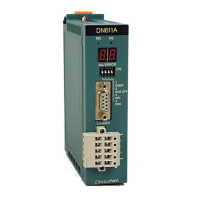
model 3000 DeviceNet
Module Manual (DN311/DN311A)
Mar 26, 2001
TOSHIBA CORPORATION

Table of Contents

Other manuals for Toshiba V Series

Questions and Answers

  • C
    Charles McclainSep 14, 2025
    What to do if SOFT LED is OFF and USER TASK STOP ARITHMETIC STACK ERROR on Toshiba V Series Controller?
    • C
      Crystal NavarroSep 14, 2025
      If the SOFT LED is off and the USER TASK STOP ARITHMETIC STACK ERROR on your Toshiba Controller, after normal compile, download the program again.
  • C
    Christina MooreAug 25, 2025
    What to do if error rundown (ERROR) occurs on Toshiba Controller?
    • M
      melody25Aug 25, 2025
      If an error rundown occurs, remove the cause of the error and reset the error status using the engineering tool. Then, change the operation mode to "RUN", or turn the power on again.
  • E
    Ebony GonzalezAug 25, 2025
    What to do if memory is lost on Toshiba Controller?
    • J
      John FrancisAug 26, 2025
      If memory is lost, clear the memory, download the program from the engineering tool, and restart the controller.
  • M
    Marissa JonesAug 26, 2025
    What to do if exception interruption is detected on Toshiba V Series?
    • C
      Catherine WhiteAug 26, 2025
      If an exception interruption is detected, turn the power on again to restart the controller. If the error persists, replace the L3 CPU module.
  • T
    Tonya FernandezSep 14, 2025
    What to do if HARD LED shows ALL INTELLIGENT I/O STATIONS FAILED on Toshiba V Series Controller?
    • L
      Logan NavarroSep 14, 2025
      If the HARD LED indicates ALL INTELLIGENT I/O STATIONS FAILED on your Toshiba Controller, check the IO bus cable connections.
  • C
    Cassandra GarciaSep 23, 2025
    What to do if Toshiba Control Unit is down?
    • B
      Bonnie VazquezSep 23, 2025
      If your Toshiba Control Unit module is faulty and the system is down, the suggested solution is to replace the module. Contact Toshiba service office concerned.
  • C
    csanfordSep 7, 2025
    How to fix RUN LED OFF on Toshiba V Series Controller?
    • L
      Laura EvansSep 7, 2025
      If the RUN LED is off on your Toshiba Controller, download applications from the Tool. To initiate control, select RUN mode from the Tool or try turning the power off and then back on. After repairs, you can also execute Error Reset from the Tool, or turn the power back on.
  • F
    fandrewsSep 8, 2025
    What to do if HARD LED is OFF on Toshiba V Series?
    • R
      ronaldzavalaSep 8, 2025
      If the HARD LED is off on your Toshiba Controller, try turning the power off and then back on to restart the system. If that doesn't work, replace the CPU and restart the system.
  • A
    Abigail HollandSep 23, 2025
    How to fix Toshiba Control Unit WDT inhibit?
    • C
      Cole RuizSep 23, 2025
      If the WDT (Watchdog Timer) is inhibited on your Toshiba Control Unit due to a wrong setting, enable WDT with internal jumper pin. Contact Toshiba service office concerned.
  • J
    Jonathan WolfeAug 31, 2025
    What to do if disconnected fan cable is suspected in Toshiba Controller?
    • S
      shawn74Aug 31, 2025
      If a disconnected fan cable is suspected, check the cable connection. If necessary, replace the fan unit.

Summary

Safety Precautions

Precautions on Installation

Provides guidelines for safe and proper installation of the module.

Precautions on Maintenance and Inspection

Outlines essential safety measures for maintenance and inspection tasks.

Precautions During Parts Replacement

Details safety procedures to follow when replacing module components.

Be Sure To Observe The Following

Key safety points for ensuring safe operation and equipment condition.

Chapter 1 Overview of the Devicenet Module

1.2 Network Configuration of DeviceNet

Details the structure of DeviceNet networks, including trunk and drop lines.

Chapter 3 Preparations for Operation (Hardware)

3.2 Setting the Switches

Details how to configure DIP and rotary switches for operation.

Chapter 4 Operating Procedures for the DN311 (Software)

4.1 Registering the DN311

Steps for registering the module in the configuration software.

4.2 S Controller Interface Buffer Memory Configuration

Explains the structure and use of the controller's buffer memory.

4.3 Requests to the DN311

Details various requests the controller can issue to the module.

Chapter 5 Example of Use of the DN311

5.3 Slave Data Input;Output

Covers structure declarations and sample programs for data transfer.

Chapter 6 RAS Information (Except for RAS Area in Communication Memory)

Chapter 7 Troubleshooting

7.1 At Module Start

Guides on diagnosing issues when the module fails to start.

7.2 Reset Request (Scan List Clear)

Troubleshooting steps for reset issues and scan list clearing.

7.3 No Run Mode

Addresses problems related to the module not entering run mode.

7.4 Data Communication with Slave Devices

Diagnoses and resolves issues with slave device communication.

Chapter 8 Installation and Wiring

8.1 Installation Environment and Mounting the Base Unit

Specifies environmental requirements and base unit mounting.

8.3 Power Cable Wiring;Grounding

Covers proper methods for power cabling and grounding.

8.4 Network Installation

Details procedures for cabling trunk and drop lines.

Appendix C Definition of Each Request Function Block

C.2 Parameter Setting Request (Local Node) Function Block

Details variables and programs for local node parameter settings.

C.3 Parameter Setting Request (Slave) Function Block

Defines variables and programs for slave device parameter settings.

Appendix D Definitions of the Function Block for Slave Data Input;Output

D.2 Slave Output (Asynchronous Mode) Function Block

Details variables and programs for asynchronous slave data output.

Toshiba V Series Specifications

General IconGeneral
TypePLC
Communication PortsRS-232, RS-485, Ethernet
Programming LanguageLadder Logic
Power Supply24V DC, 100-240V AC
Operating Temperature0-55°C

Related product manuals