49
Cooling System
NOTE: Debris in front of the
engine or packed between the cool-
ing fins of the radiator can reduce
cooling capability. Using a garden
hose, wash the radiator to remove
any debris preventing air flow.
The cooling system capacity is approxi-
mately 1.4 L (1.5 U.S. qt). The cooling
system should be inspected daily for
leakage and damage. If leakage or dam-
age is detected, take the ATV to an autho-
rized dealer for service. Also, the coolant
level should be checked periodically.
NOTE: High engine RPM, low vehi-
cle speed, or heavy load can raise
engine temperature. Decreasing
engine RPM, reducing load, and
selecting an appropriate transmission
gear can lower the temperature.
The engine coolant will expand in the
radiator as the temperature increases.
Excessive coolant will flow to the cool-
ant overflow tank; then as the system
cools, coolant will be drawn back into the
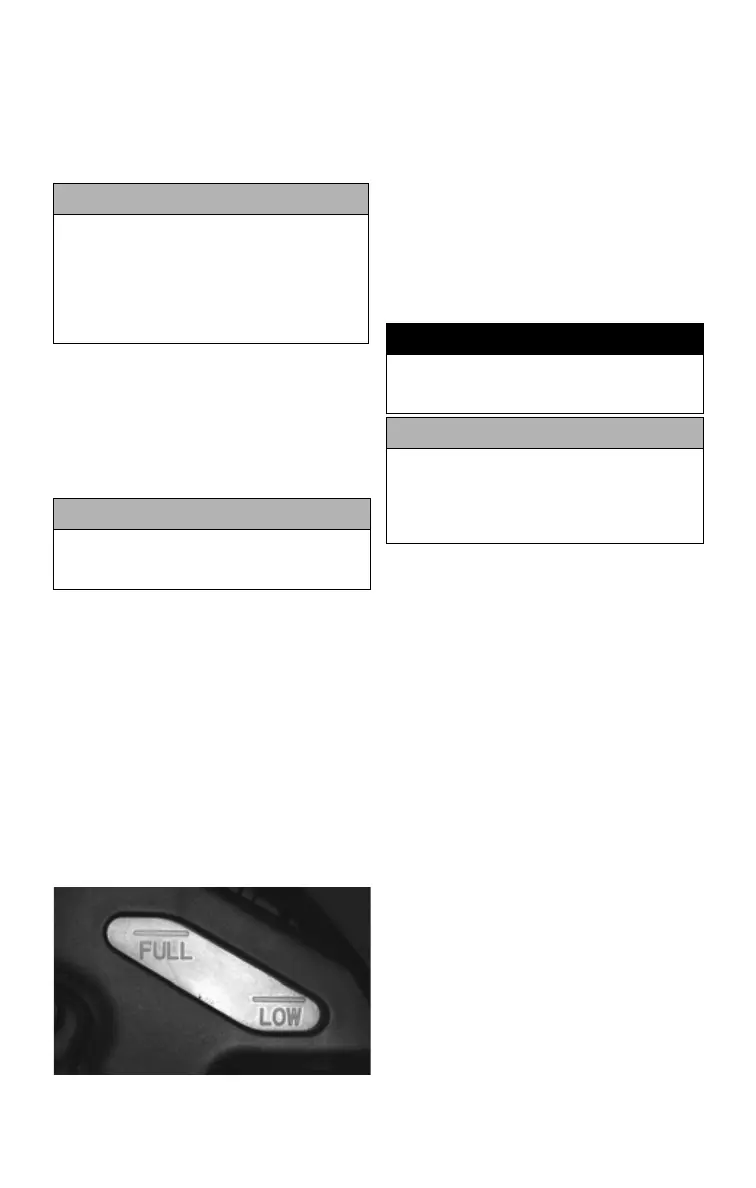
radiator. The coolant level in the over-
flow tank should be maintained between
low and full marks on the tank.
KM136
When filling the cooling system, use a
coolant/water mixture of 60/40 or one
which will satisfy the coldest anticipated
weather conditions of the area in accor-
dance with the coolant manufacturer’s
recommendations. While the cooling sys-
tem is being filled, air pockets may
develop; therefore, run the engine for
five minutes after the initial fill, shut the
engine off, and then fill the cooling sys-
tem.
NOTE: Use a good quality, biode-
gradable glycol-based, automotive-
type antifreeze.
Shock Absorbers
Each shock absorber should be visibly
checked weekly for excessive fluid leak-
age (some seal leakage may be observed
but it does not indicate the shock is in
need of replacement), cracks or breaks in
the lower case, or a bent shock rod. If any
one of these conditions is detected,
replacement is necessary.
NOTE: When the ATV is operated
in extremely cold weather (-23°C/
-10°F or colder), a small amount of
leakage may be present. Unless the
leakage is excessive, replacement is
not necessary.
The shock absorbers have a spring force
adjustment sleeve with five adjustment
positions to allow the spring to be
adjusted for different riding and loading
conditions. If the spring action is too soft
or too stiff, adjust it according to the
chart.
CAUTION
Do not use a pressure washer to clean
the radiator core. The pressure may
bend or flatten the fins causing
restricted air flow, and electrical com-
ponents on the radiator could be dam-
aged. Use only a garden hose with
spray nozzle at normal tap pressure.
CAUTION
Continued operation of the ATV with
high engine temperature may result in
engine damage or premature wear.
! WARNING
Never check the coolant level when
the engine is hot or the cooling sys-
tem is under pressure.
CAUTION
After operating the ATV for the initial
5-10 minutes, stop the engine, allow
the engine to cool down, and check
the coolant level. Add coolant as nec-
essary.


 To Next Page