- 13 -
11 TROUBLESHOOTING
This chapter lists the probable faults and malfunctions that could occur while the machine is being used and
suggests possible remedies for solving them.
The first paragraph provides diagnosis for TOOLS and CUTS the second for ELECTRICAL COMPONENTS.
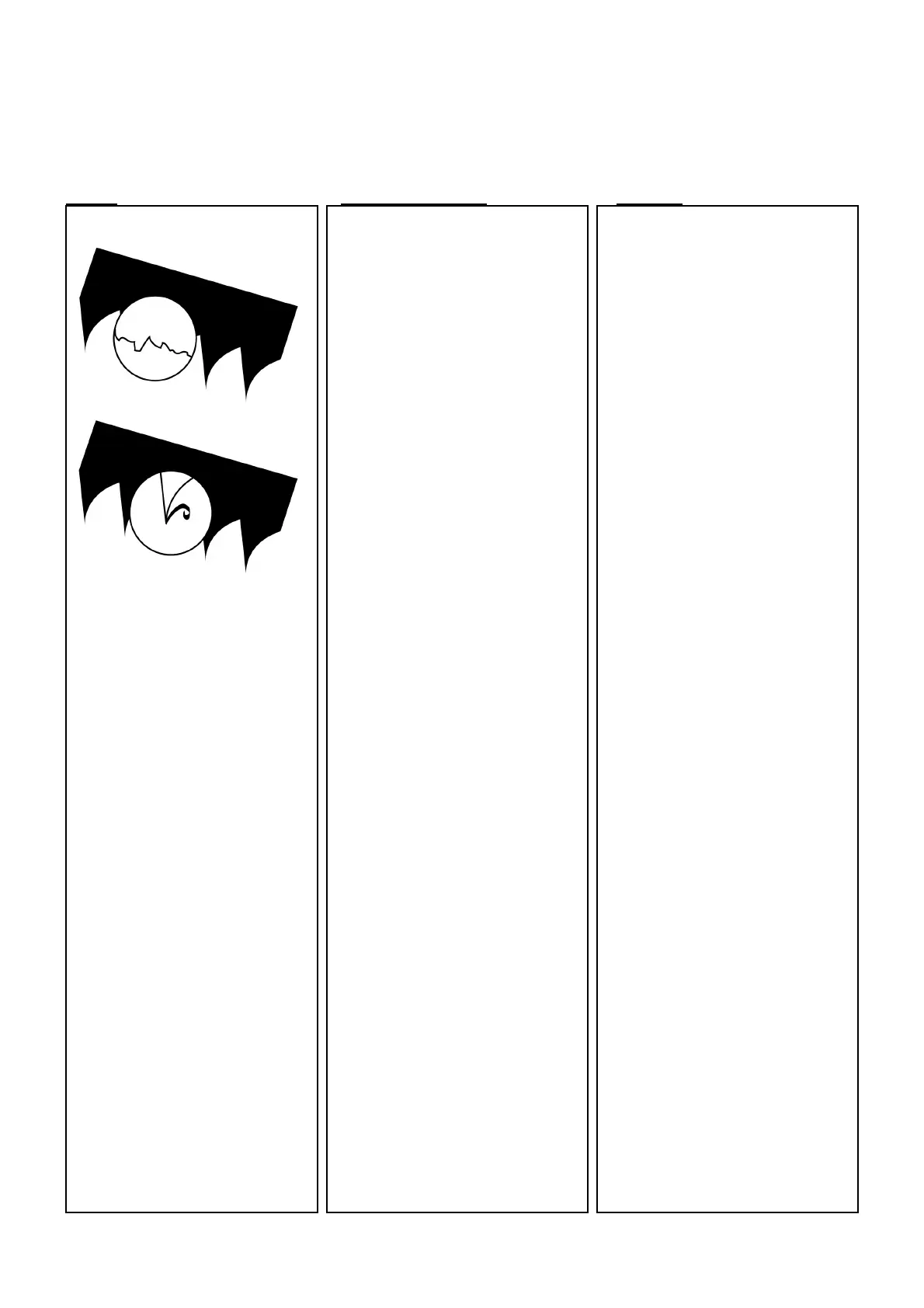
11.1 - Blade and cut diagnosis
FAULT
PROBABLE CAUSE REMEDY
Too fast advance
Wrong cutting speed
Wrong tooth pitch
Chips sticking onto teeth and in the
gullets or material that gums
Defects on the material or material too
hard
Ineffective gripping of the part in the
vice
The blade gets stuck in the material
Starting cut on sharp or irregular
section bars
Poor quality blade
Previously broken tooth left in the cut
Cutting resumed on a groove made
previously
Vibrations
Wrong tooth pitch or shape
Insufficient lubricating, refrigerant, or
wrong emulsion
Decrease advance, exerting less
cutting pressure. Adjust the braking
device.
Change speed and/or type of blade.
See chapter on "Material
classification and blade selection",
in the section Blade selection table
according to cutting and feed speed.
Choose a suitable blade. See Chapter
"Material classification and blade
selection".
Check for clogging of coolant drain
holes on the blade-guide blocks and
that flow is plentiful in order to
facilitate the removal of chips from the
blade.
Material surfaces can be oxidized or
covered with impurities making them,
at the beginning of the cut, harder that
the blade itself, or have hardened
areas or inclusions inside the section
due to productive agents used such
as casting sand, welding wastes, etc.
Avoid cutting these materials or in a
situation a cut has to be made use
extreme care, cleaning and remove
any such impurities as quickly as
possible.
Check the gripping of the part.
Reduce feed and exert less cutting
pressure.
Pay more attention when you start
cutting.
Use a superior quality blade.
Accurately remove all the parts left in.
Make the cut elsewhere, turning the
part.
Check gripping of the part.
Replace blade with a more suitable
one. See "Material classification
and blade selection" in the Blade
Types section. Adjust blade guide
pads.
Check level of liquid in the tank.
Increase the flow of lubricating
refrigerant, checking that the hole and
the liquid outlet pipe are not blocked.
Check the emulsion
ercenta
e.
TOOTH BREAKAGE



 To Next Page