- 3 -
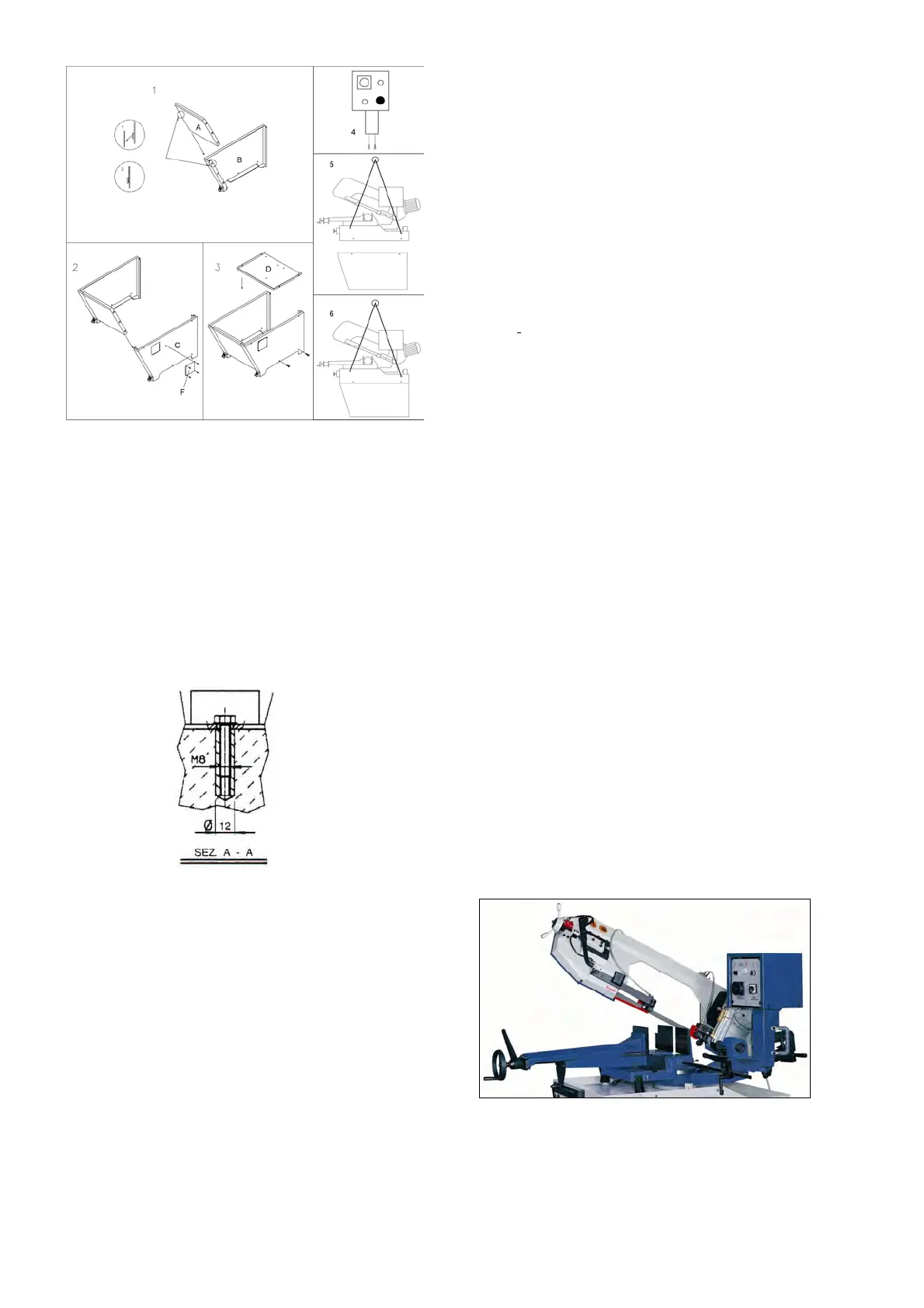
If the machine needs to be moved in its own packing,
use a forklift truck or sling it with straps as illustrated in
drawing 6 above.
2.3 Minimum requirements for housing the
machine
- Main voltage and frequency must comply with the
machine’s motor requirements.
- Environment temperature should fall within –10 ºC to
+50 ºC.
- Relative humidity cannot be over 90%.
2.4 Anchoring the machine
Position the machine on a firm cement floor,
maintaining, at the rear, a minimum distance of 800
mm from the wall; anchor it to the ground as shown in
the diagram, using screws and expansion plugs or tie
rods sunk In cement, ensuring that it is sitting level.
2.5 Instructions for assembly of the loose parts
and accessories
Fit the components supplied:
Detail 1 Mount bar-stop rod
Detail 2 Mount and align the roll-supporting arm as per
the counter-vice table.
2.6 Disactivation of machine
- If the sawing machine is to be out of use for a long
period, it is advisable to proceed as follows:
I) Detach the plug from the electric supply panel
2) Loosen blade
3) Release the arch return spring
4) Empty the coolant tank
5) Carefully clean and grease the machine
6) If necessary, cover the machine.
2.7 Dismantling (due to deterioration and/or
(obsolescence)
General rules
If the machine is to be permanently demolished and/or
scrapped, divide the material to be disposed of
according to type and composition, as follows:
1) Cast iron or ferrous materials, composed of metal
alone,
are secondary raw materials, so they may be
taken to an iron foundry for re-smelting after having
removed the contents (classified in point 3).
2) Electrical components, including the cable and
electronic material (magnetic cards, etc.), fall within the
category of material classified as being assimilated to
urban waste according to the laws of your local, state,
or federal government, so they may be set aside for
collection by the public waste disposal service;
3) Old mineral and synthetic and/or mixed oils,
emulsified oils and greases are considered hazardous
or special refuse, so they must be collected,
transported and disposed of at a special waste
disposal service.
NOTE: The standards and legislation concerning
refuse is in a constant state of evolution, therefore is
subject to changes. The user must keep informed of
the regulations at the time of disposal as these may
differ from those described above.
3 THE MACHINE’S FUNCTIONAL
PARTS
3.1 The saw arm
Machine part consisting of drive members (gear motor
or variable speed motor, flywheels), tightening and
guide (blade tightening slide, blade guide blocks) of
tool.



 To Next Page