3-2
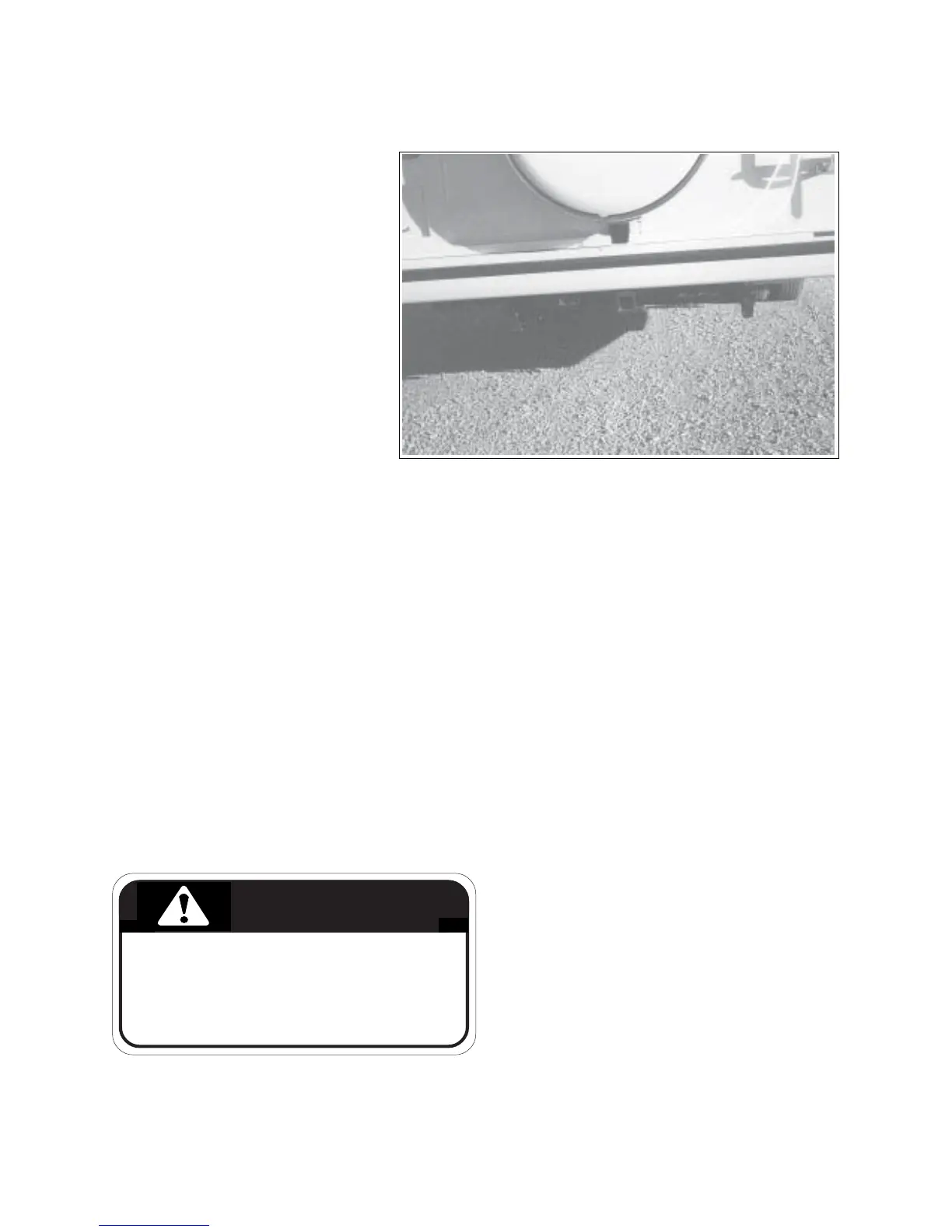
3.1.3 TRAILER TOWING
Towing a trailer can affect the handling,
durability, performance and economy of
your motorhome. The factory installed
towing hitch is rated for:
a. 500 lb. - maximum hitch or
tongue weight.
b. 5000 lb. - maximum trailer
weight.
The combined weight of the motorhome
and the towed vehicle should not exceed
the Gross Combined Weight Rating
(GCWR). Also, the combined weight of
the motorhome and towed vehicle should
not exceed the motorhome's Gross
Vehicle Weight Rating (GVWR) or its rear
Gross Axle Weight Rating (GAWR) as
listed on the Vehicle Certification label.
To be sure of the correct balance in weight, it is
advised that you take your loaded vehicle to a
weigh-scale to determine the actual weight distribu-
tion. After you have done this once, you will have a
better idea on how to load in the future.
Remember, your motorhome will handle differently
with a trailer in tow. Stopping distances will
change. Make sure your trailer is equipped and
connected to your motorhome with the proper brake
system. When descending a steep or long grade,
reduce speed and shift to a lower gear to control
vehicle speed. Avoid prolonged or frequent applica-
tion of brakes if at all possible to prevent overheat-
ing and possible failure of the braking system.
If you are planning to pull a vehicle or a trailer with
your motorhome, your dealer or Triple E will provide
you with the information, advice and direction you
will require.
3.1.4 AUXILIARY VEHICLE TOWING
CAUTION
Exceeding any of the recommended
gross vehicle weight ratings may result
in vehicle damage.
Do not install a weight equalizing type
of hitch on your motorhome.
CLASS C MOTORHOME
Fig. 3-1 TRAILER HITCH
For safety towing and vehicle handling, maintain
proper vehicle and trailer weight distribution.
The total weight of the motorhome and the vehicle
towed must not exceed the GCVW rating as
stated on the Vehicle Certification label.
WARNING



 To Next Page