EMPRESS
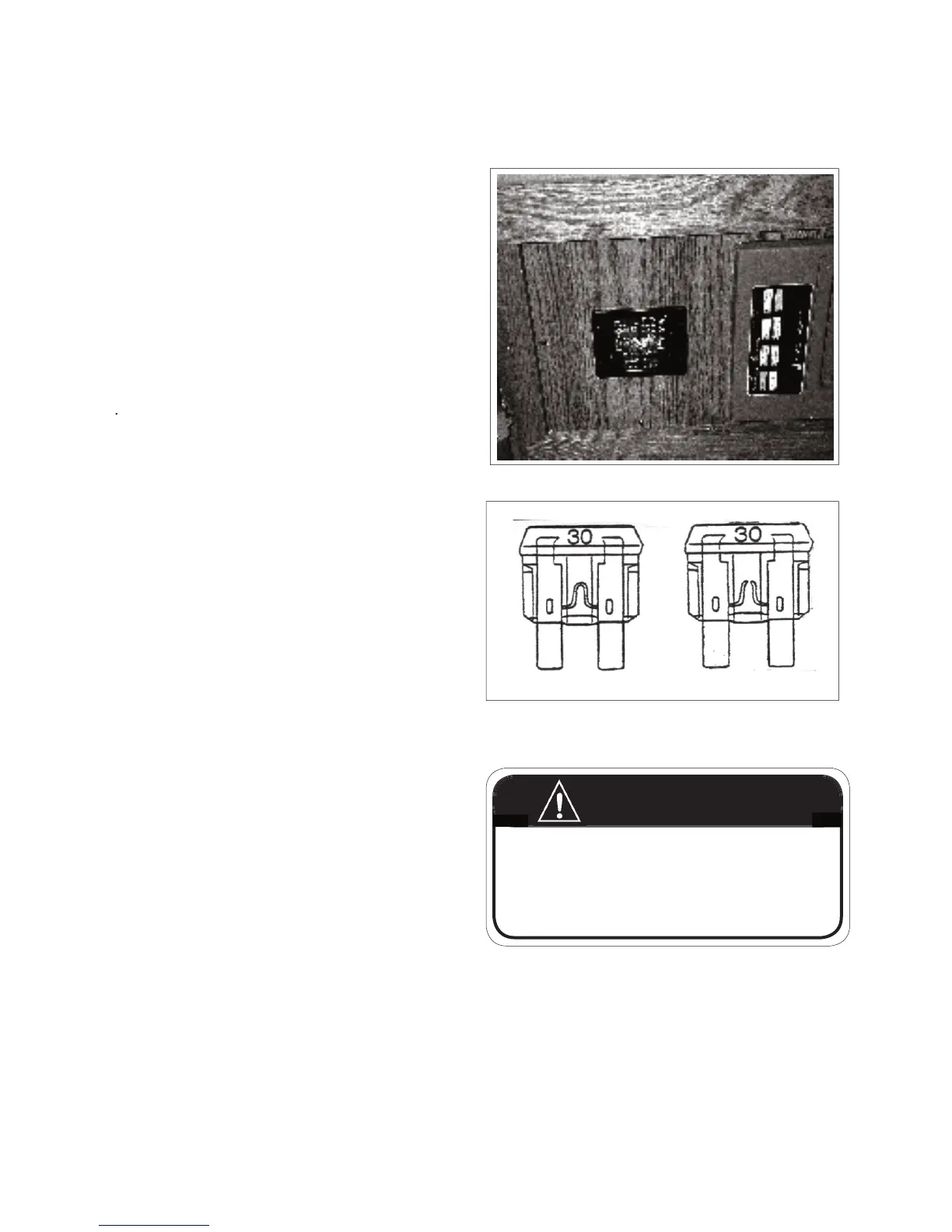
10.3.3 12 VOLT COACH FUSES
All 12-volt circuits are protected by either a circuit
breaker or a fuse in the control panel. When a
breaker trips or a fuse blows shut off all appliances
or lights on the affected circuit and reset the breaker
or replace the fuse with a new one of the same
amperage. The label on the panel identifi es both the
fuse amperage and the applicable circuit.
The fuse panel is located next to the circuit-breaker
panel, below the refrigerator.
10.3.4 BATTERY MAINTENANCE
Your batteries are reservoirs of 12-volt electrical
energy. Whenever energy is removed from the
battery it has to be replaced in order for the battery
to continue functioning. This energy is restored by
the engine alternator whenever the engine is running
or by the RV charging system when plugged into a
Two conditions can destroy the function of a
battery. One is called sulphating in which a layer
of sulphate crystals collects on the lead plates
inside the battery. This can happen when a
battery is not used for a long period of time (30
days or more) especially during warm weather.
This situation requires replacement of the
battery. The second is freezing. A battery must
be kept at almost full charge to prevent the liquid
electrolyte inside the battery from freezing.
a. Disconnect the battery cables during long
b. Hook up a battery charger at least once a
month during long periods of storage.
If you do not intend to use your motorhome for
a longer period of time it might be a good idea
to remove the batteries from the motorhome
and store them in a cool dry location on a wood
or rubber pad. The batteries shoud be charged
once a month in order to prolong their life.
Do not allow battery electrolyte to contact skin,
eyes, fabrics, or painted surfaces. The elec-
trolyte is a sulphuric acid solution which could
cause serious personal injury or property dam-
age. Wear eye protection when working with
WARNING
4. Additional maintenance suggestions:
a. Check the external condition of the battery
monthly. Look for cracks in the cover and
b. Make sure batteries are always securely
c. Make sure battery clamps are tight and





 To Next Page