General information
43
Warning
For reasons of security and safety,
always turn the ignition to the OFF or
PARK position and remove the key
when leaving the motorcycle
unattended.
Any unauthorized use of the
motorcycle may cause injury to the
user, other road users and pedestrians
and may also cause damage to the
motorcycle.
Warning
With the key in the LOCK or P position
the steering will become locked.
Never turn the key to the LOCK or P
positions while the motorcycle is
moving as this will cause the steering
to lock. Locked steering will cause loss
of motorcycle control and an accident.
Caution
Additional keys or key rings attached
to the ignition key may cause damage
to the motorcycle’s painted or polished
components. Remove any such item
from the ignition key to prevent
damage to painted or polished
components when the motorcycle is
ridden.
Engine Immobiliser
The ignition switch housing acts as the
antenna for the engine immobilizer.
When the ignition switch is turned to
the OFF position and the ignition key is
removed, the engine immobilizer is on
(see
page 28
). The engine immobilizer is
turned off when the ignition key is in
the ignition switch and it is turned to
the ON position.
Ignition Key
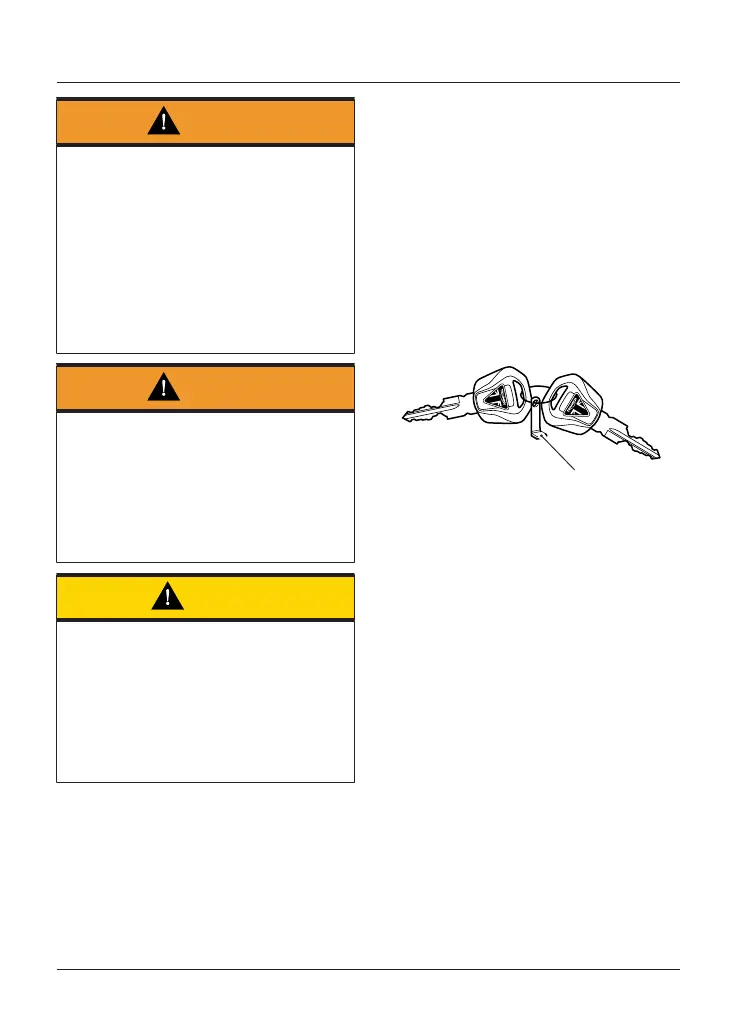
1. Key number tag
In addition to operating the ignition
switch/steering lock, the ignition key is
required to operate the seat lock and
fuel tank cap.
When the motorcycle is delivered from
the factory, two ignition keys are
supplied together with a small tag
bearing the key number. Make a note of
the key number and store the spare key
and key number tag in a safe place
away from the motorcycle.
A transponder is equipped within the
ignition keys to turn off the engine
immobilizer. To make sure the
immobilizer functions correctly, always
have only one of the ignition keys near
the ignition switch. Having two ignition








 To Next Page