52 53
CARRIER INSTALLATION WITH VEHICLE SEAT BELT
Aircraft Installation
THIS CHILD SEAT IS CERTIFIED FOR AIRCRAFT USE.
UPPAbaby and The FAA recommend that a child weighing up to 40 lbs (18 kg) use a certified harnessed
child seat while traveling on an aircraft. Contact the airline about their policy prior to traveling.
AIRCRAFT INSTALLATION
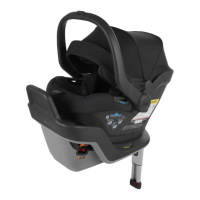
When installing this child restraint on an airplane, install the same
way as CARRIER INSTALLATION WITH VEHICLE SEAT BELT/LAP
BELT ONLY ROUTING METHOD (PAGE 50).
NOTE: Make sure that the aircraft buckle does not interfere with
the belt guides on the infant carrier.
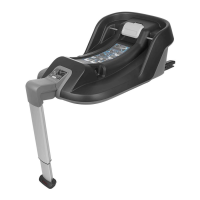
WARNING! DO NOT use base with
aircraft installation. Only the carrier is
certified for aircraft use. Inflatable seat
belts are not compatible with this child
restraint.
SAFETY REMINDERS AND TIPS
• Notify the airline ahead of time that you’ll be
traveling with a child restraint.
• Install this carrier in a window seat to avoid blocking
the aisle.
• Ask for a seat belt extender if the lap belt is too short.
• Use only on a forward-facing aircraft seat.
• DO NOT use this restraint if a secure installation cannot
be achieved.
• Carry handle should be in the 4th (rebound) position.
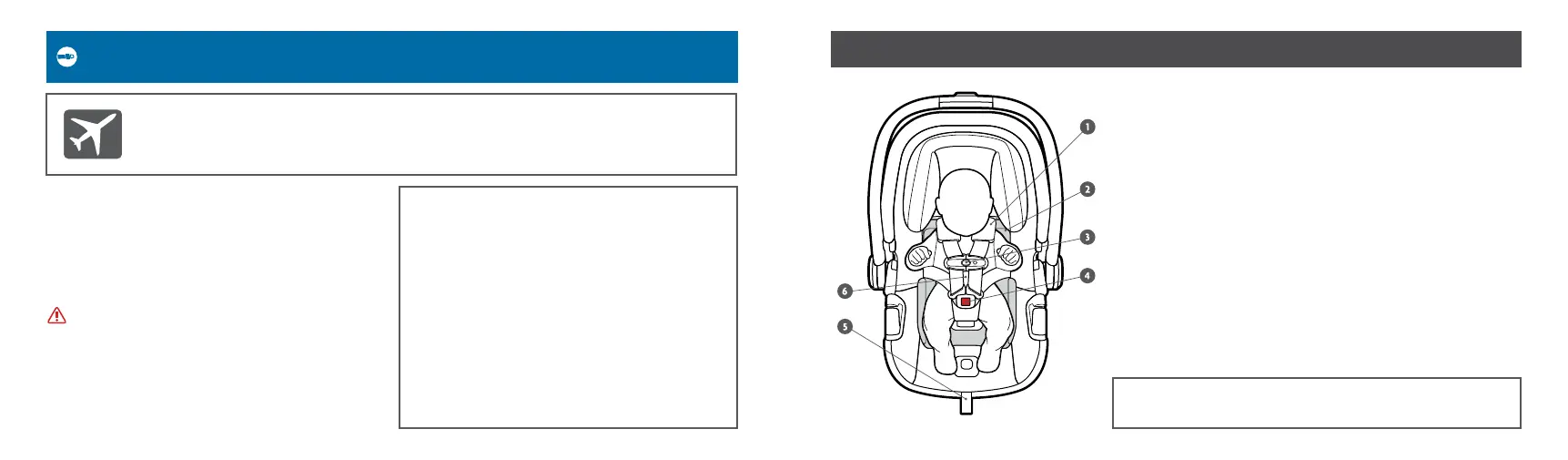
GENERAL USE – Infant Insert
To ensure a better fit for smaller infants, use the Infant Insert (included) between
4 and 11 lbs.
This Infant Insert was designed to optimize fit and body positioning for your
child. When you can achieve all fit criteria without the insert, it can be removed.
NOTE: You may continue use beyond 11 lbs until all criteria are being met.
1 Harness straps are at or slightly below shoulders
NOTE: Harness pads are optional. They must be removed when securing
a preemie.
2 Bottom of the headrest is positioned at or 1" above shoulders
3 Chest clip is at armpit level
4 Crotch buckle rests securely against child with no gaps and child is not
sitting on top of the buckle
5 Room to tighten harness properly
6 Child is not slouching
NEVER use non-regulated products with this child restraint,
unless approved by UPPAbaby.


 To Next Page