143142
SAFETY
If your hearing device happens to be vulnerable to interference, you
may not be able to use a rated phone successfully. Trying out the phone
with your hearing device is the best way to evaluate it for your personal
needs.
M-Ratings:
Phones rated M3 or M4 meet FCC requirements and are
likely to generate less interference to hearing devices than phones that
are not labeled. M4 is the better/higher of the two ratings.
Hearing devices may also be rated. Your hearing
device manufacturer or hearing health professional
may help you find this rating. Higher ratings mean
that the aring device is relatively immune to
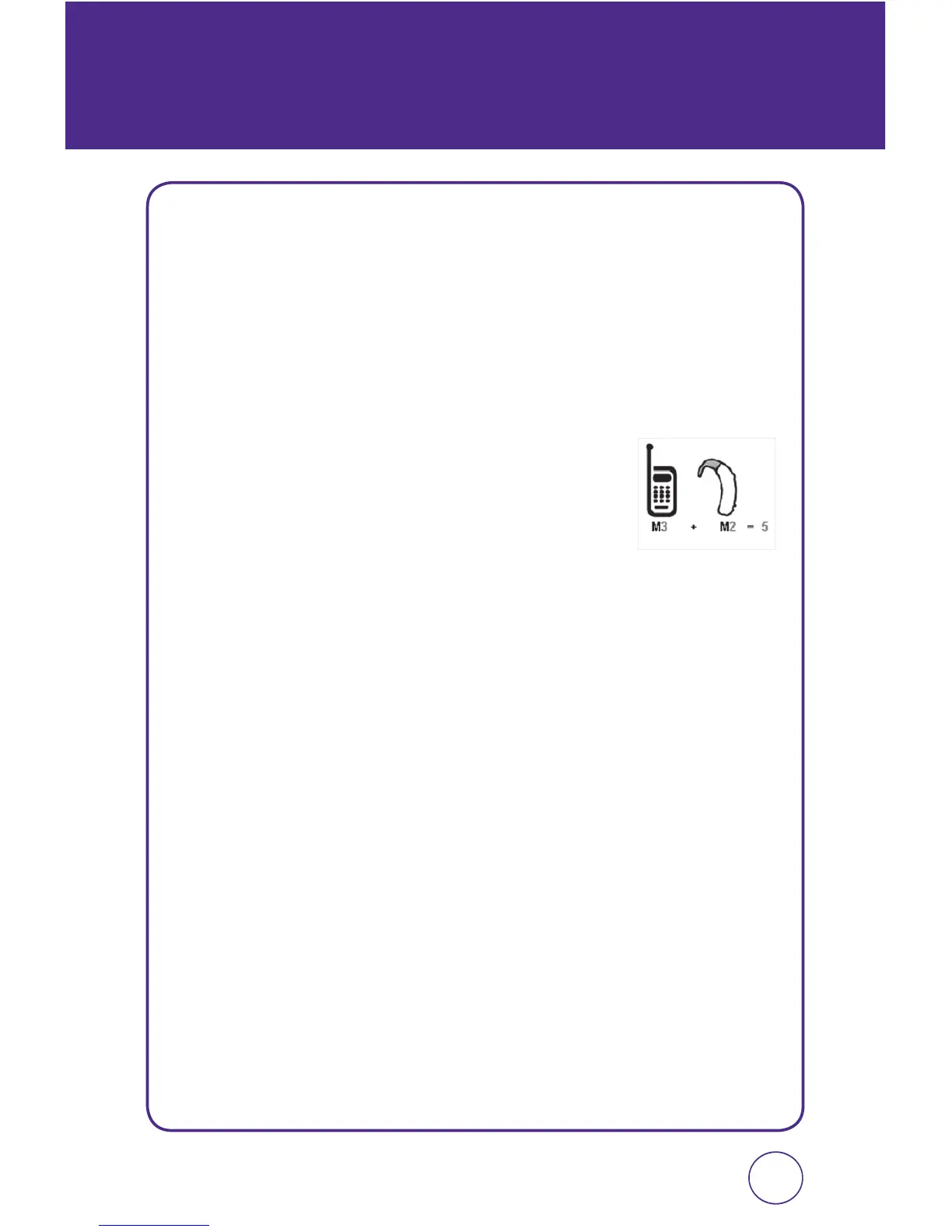
interference noise. The hearing aid and wireless phone rating values are
then added together.
A sum of 5 is considered acceptable for normal use. A sum of 6 is
considered for best use. In the above example, if a hearing aid meets
the M2 level rating and the wireless phone meets the M3 level rating,
the sum of the two values equal M5. This should provide the hearing
aid user with “normal usage” while using their hearing aid with the
particular wireless phone. “Normal usage” in this context is defined as
a signal quality that is acceptable for normal operation. The M mark is
intended to be synonymous with the U mark. The T mark is intended to
be synonymous with the UT mark. The M and T marks are recommended
by the Alliance for Telecommunications Industries Solutions (ATIS). The
U and UT marks are referenced in Section 20.19 of the FCC Rules. The
HAC rating and measurement procedure are described in the American
National Standards Institute (ANSI) C63.19 standard.


 To Next Page