UTT Technologies Application
http://www.uttglobal.com Page 69
For PPTP and L2TP, tunneling protocols operate at the data link layer (Layer 2) of the OSI model.
They use frames as their unit of exchange, and encapsulate the original packets inside PPP frames
before sending them through a VPN tunnel over the Internet.
PPTP and L2TP are based on client/server model. The client initiates a connection to the server,
while the server accepts the incoming connection from the client. PPTP and L2TP is often used to
implement remote access VPNs over an IP network (such as a broadband network), to extend the
reach of your Intranet. The Device can only act as the client.
4.29.1 Typical Application
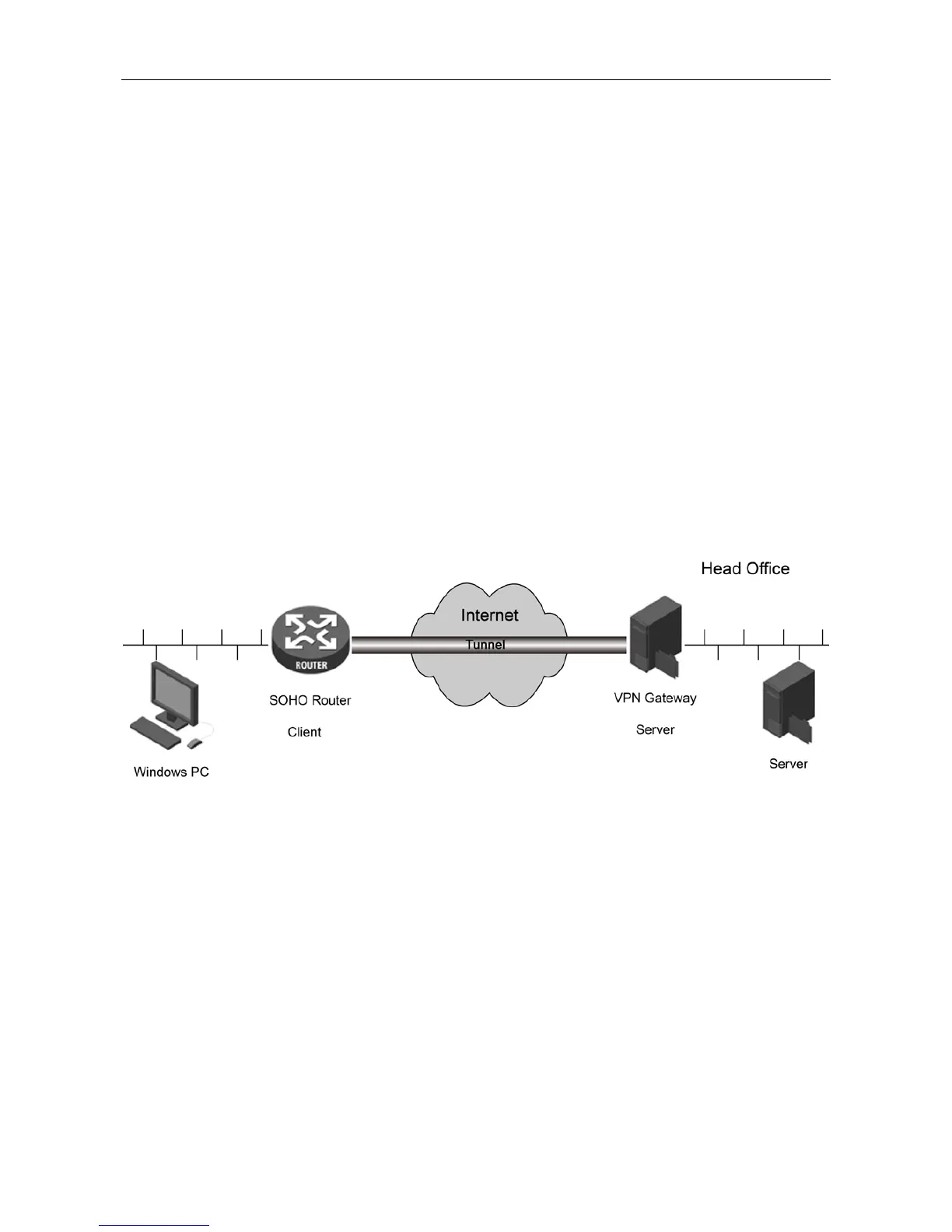
As shown in the following figure, to securely connect an enterprise’s head office, the Device acts as
the client. The VPN gateway deployed at the head office acts as the server. Once the client
receives a packet destined for the remote LAN, it will initiate the tunnel setup request to the server;
the server will authenticate the connection.
If the user authentication succeeds (such as username and password match), the server will accept
the incoming connection; at this point, a tunnel between the client and the server is established. And
the server will forward the original packets to the intended destinations.
If the user authentication fails, the server will reject the incoming tunnel setup request. Thus the
tunnel cannot be established due to user authentication failure, and any packets destined for the
remote LAN will be discarded by the client.
Figure 4-45 Typical Application



 To Next Page