SECTION 2
GETTING STARTED
2.3 Setting Up the Osmometer
21
While the instrument compensates for small chang-
es that occur over time, moving the instrument to a
different area or exposing it to too much air circula-
tion will shift the osmometer’s reading and calibra-
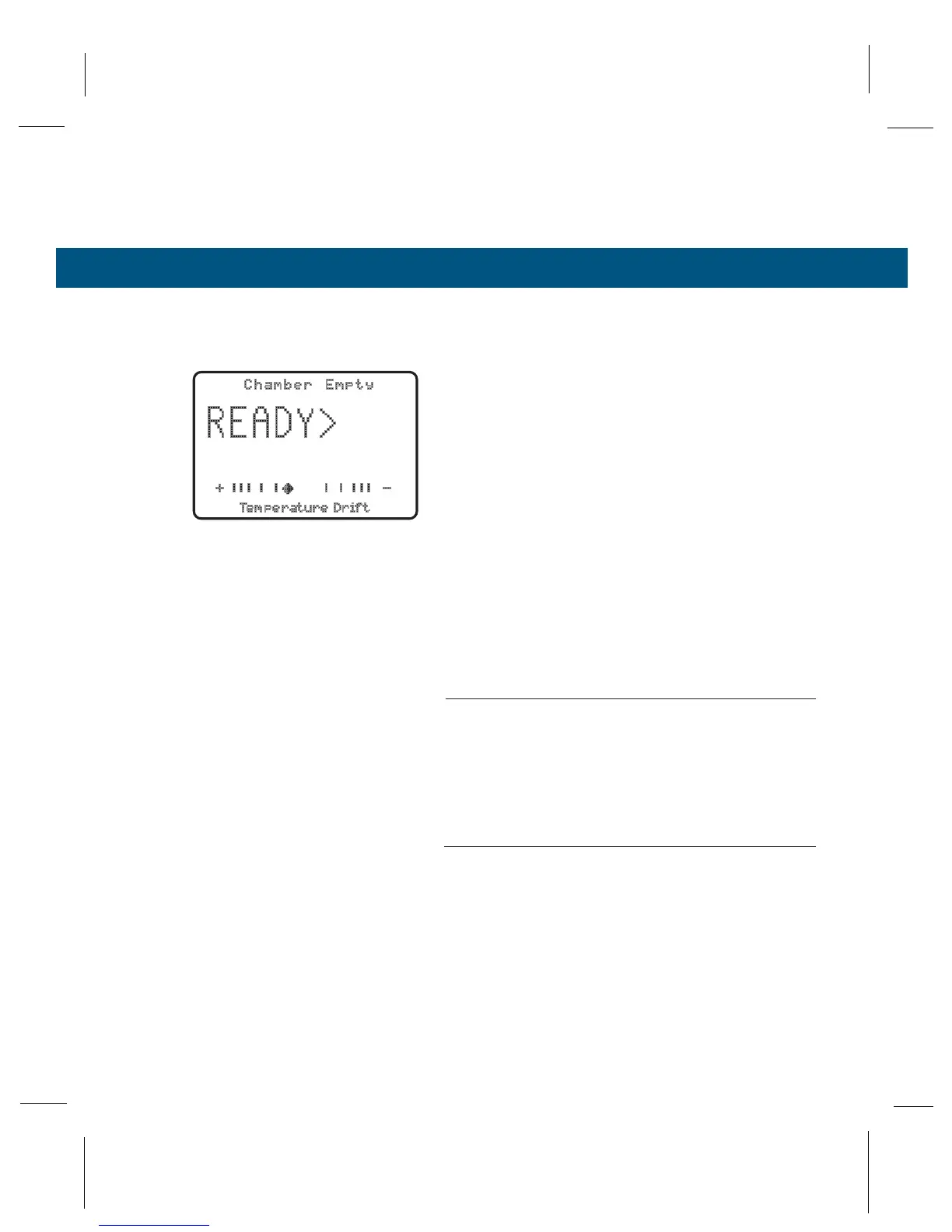
tion points. The Temperature Drift scale allows you
to determine when internal temperature has stabi-
lized.
The Temperature Drift scale appears on the screen
whenever the instrument is in the “standby” mode,
and it has completed two cycles. The instrument is
considered stable and ready to operate unless the
indicator is against the + or - marks on the scale,
indicating a changing internal temperature that can
affect instrument calibration. See Note below:
NOTE:
It is normal for the osmometer to undergo a significant
temperature drift during the first few minutes of equilibra-
tion. The time required to achieve temperature stability
depends on the initial instrument temperature, (typically
10 to 30 minutes) but may be longer if initial temperature
varies more than 5 degrees from room temperature.
NOTE:
Under normal circumstances, leave power on to keep the
instrument in a ready state and to maintain stability. (See
Section 3.6)



 To Next Page