VESDA-E VEA Commissioning Guide
2 32407_01
2 The Commissioning Process
The commissioning process is a step-by-step process designed to systematically check and validate all the
operational aspects of the VESDA-E VEA detector. The process benchmarks the performance levels tailored
for each site and generates the necessary documentation for the effective management and maintenance of
the detector. The following sections describe the steps required in typical commissioning.
2.1 Pre-Commissioning (before going to site)
Prior to starting the commissioning process, the commissioning engineer should study any design and
installation considerations for the site. Properly maintained tube network design and installation records should
assist in providing most of the information. Ensure that the following documents are available:
• The site layout plans
• The "as installed" drawings for the site
• Tube network design records
• Tube network installation record
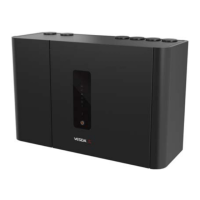
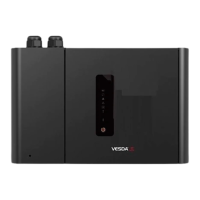
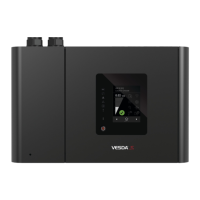
• Relevant product and installation guides (VEA-040-A00 and VEA-040-A10 product guides (documents #
27034 and 27035 respectively), VESDA-E VEA Installation Sheet (Document # 27679))
• VESDA-E VEA commissioning form
• Other forms as required by the local codes and standards
• A USB cable and PC/Laptop with Xtralis VSC software to configure and commission the detector
• Material for conducting acceptable smoke test
You must be aware of the local codes and standards as applicable to the customer site.
2.2 Pre-Commissioning (on site)
Before commencing with the commissioning, check the electrical and interface cabling for the detector. Ensure
that all electrical wiring is securely terminated maintaining the correct polarity. The product guides contain the
details on how to correctly wire the detector. The detector should be connected to a power source supplying
24 VDC.
Please check that all electrical installations meet the requirements of local electrical codes and standards.
• Ensure that actual installed tubes match the design and the installation records including the
combination of 6mm and 4mm tubes designed using Microbore Tube Length Calculator (document
#29261).
• Please follow the instructions mentioned in VESDA-E VEA Installation Sheet, document #27679, for VEA
detector mounting.
• Ensure that you have at least 0.5m distance from the detector to any object around it allowing for smooth
access for tubes.
• Ensure that all tube ends at the VEA detector inlets are properly cut using the VEA tube cutter supplied
with the VEA detector with cutter blade held perpendicular to the tube.
• Insert tubes one by one into the VEA inlets while keeping a record of the mapping between the tube
sampling point location and the tube number. Ensure that each tube is fully secured inside the inlet to
avoid any leakage.
• Power up the VEA detector and carry out the initial system checks as described in the relevant product
guide.





 To Next Page