
 Need help?
Do you have a question about the Vivotek FD8335H and is the answer not in the manual?
Connecting camera to network and power, including PoE.
Guides on router connectivity, port forwarding, and static IP.
Steps for connecting via a DSL line using PPPoE.
Steps to access the camera and view live video.
Details on adjusting zoom and focus using software controls.
Guide to accessing the camera's interface via web browsers.
Explains focus assist and global view for camera adjustments.
Information on digital and mechanical pan/tilt/zoom control.
Accessing client settings, configuration, and language options.
Options for resizing the homepage view and hiding control panels.
Options for streaming media types and transmission protocols.
Explains functions in Advanced Mode and the Navigation Area.
Configuration of camera host name and system time.
Configuring the camera to send system logs to a remote server for backup.
Steps to download and upgrade the camera's firmware.
Restoring the network camera to factory default settings.
Setting up the root account password and managing user privileges.
Adding, editing, and deleting user accounts with specific privileges.
Steps to enable secure communication using SSL certificates.
Enabling HTTPS communication and selecting connection options.
Controlling access by IP and viewing connection status.
Explains the roles of Supplicant, Authenticator, and Authentication Server.
Information on EAP-PEAP and EAP-TLS authentication methods.
Configuring RTSP streaming authentication and access names.
Configuring measurement window, exposure level, mode, iris, time, and gain.
Setting video resolution and limiting the maximum refresh frame rate.
Controlling e-PTZ operations for camera movement and zoom.
Configuring server and media settings for event triggers and actions.
Configuring motion detection windows and sensitivity for normal conditions.
Configuring motion detection windows and sensitivity for special conditions.
Configuring adaptive recording, source, schedule, and capacity.
Selecting SD card or network storage (NAS) for recorded video files.
Setting up a NAS server for storing recorded video files.
Viewing the status and available space of the SD card.
Enabling cyclic storage and automatic disk cleanup for SD cards.
Setting search criteria to find recorded videos and viewing search results.
Configuring RTSP port, authentication mode, and access names.
Defining event parameters like name, priority, delay, trigger conditions, and weekday schedules.
Managing local storage (SD, CF card) settings like cyclic enabled and auto cleanup.
Upgrading camera firmware via POST request.
Searching recorded data based on various criteria like trigger type and media type.
 General
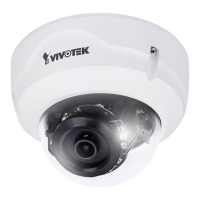
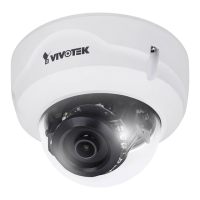
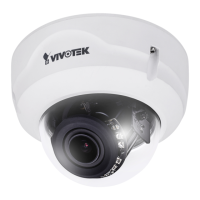
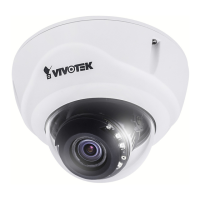
| Brand | Vivotek |
|---|---|
| Model | FD8335H |
| Category | Security Camera |
| Language | English |


 To Next Page


