Load cycle
A load cycle consists of a loaded phase and an unloaded phase.
A new load cycle starts and the previous load cycle ends when the
machine changes from loaded phase to unloaded phase.
For a load cycle and load weight to be registered, the machine
must first be loaded so that the load weight has increased by
trigger weight 1, and later unloaded so that the load weight has
decreased by trigger weight 2.
Trigger weight 1 and 2:
- A25 = 8 tonnes (8.96 short tonnes)
- A30 = 10 tonnes (11.2 short tonnes)
To change the trigger weight, contact a qualified workshop.
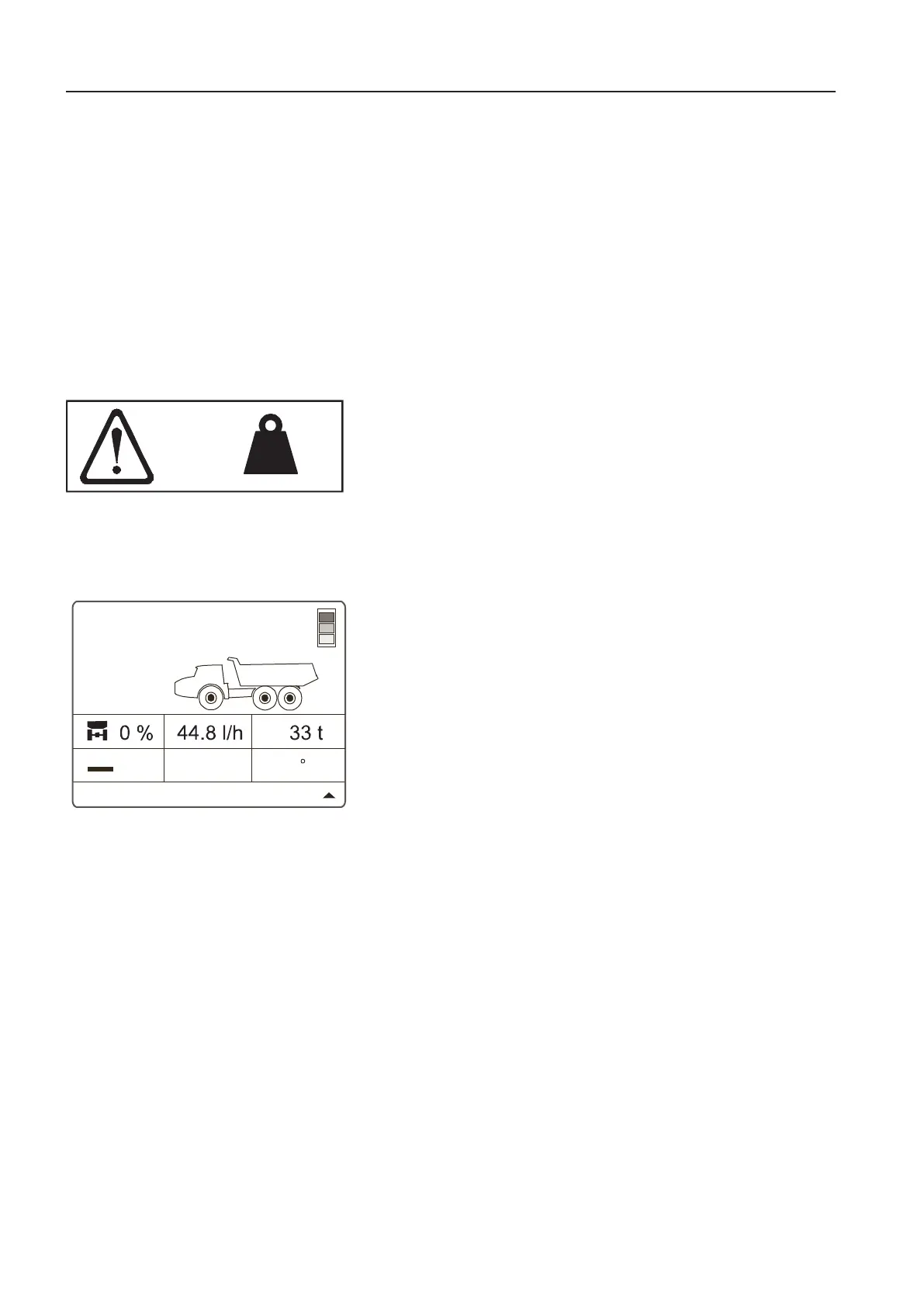
Alarm in case of overloaded machine
The following reactions to overload appear depending on which
setting has been selected with the authorized service tool:
- No alarm or speed limitation in case of overload.
- Amber alarm figure on the information panel (factory setting).
- Amber alarm figure on information display and speed limitation
8 km/h.
To change the alternative for your machine, contact a qualified
workshop.
Incorrect display of load weight
In order for load weighing to be as accurate as possible, the trailer
should be placed on level ground when loading and the load
should be evenly distributed in the load body. Under such
conditions the weighing system can attain an accuracy of ±5% for
a load cycle and ±2% for a day's load cycles.
If all load indicator lights are on, this may be due to:
- The machine's trailer is standing on uneven ground. Try
moving the machine.
- The load is distributed unevenly. The display will work better
when the load gets bigger and heavier, and is distributed more
evenly.
The operator can run a load calibration if the machine or ground
surface on which the machine is operated changes, and the load
weight on the information display unit no longer matches the
load's weight, see page
371
.
Amber alarm figure: Machine overloaded
Conditions for load weighing are not fulfilled
262
Operating techniques
Loading



 To Next Page