Fire prevention
There is always a risk of fire. Find out which type fire extinguisher
that is used at your place of work and how it is used.
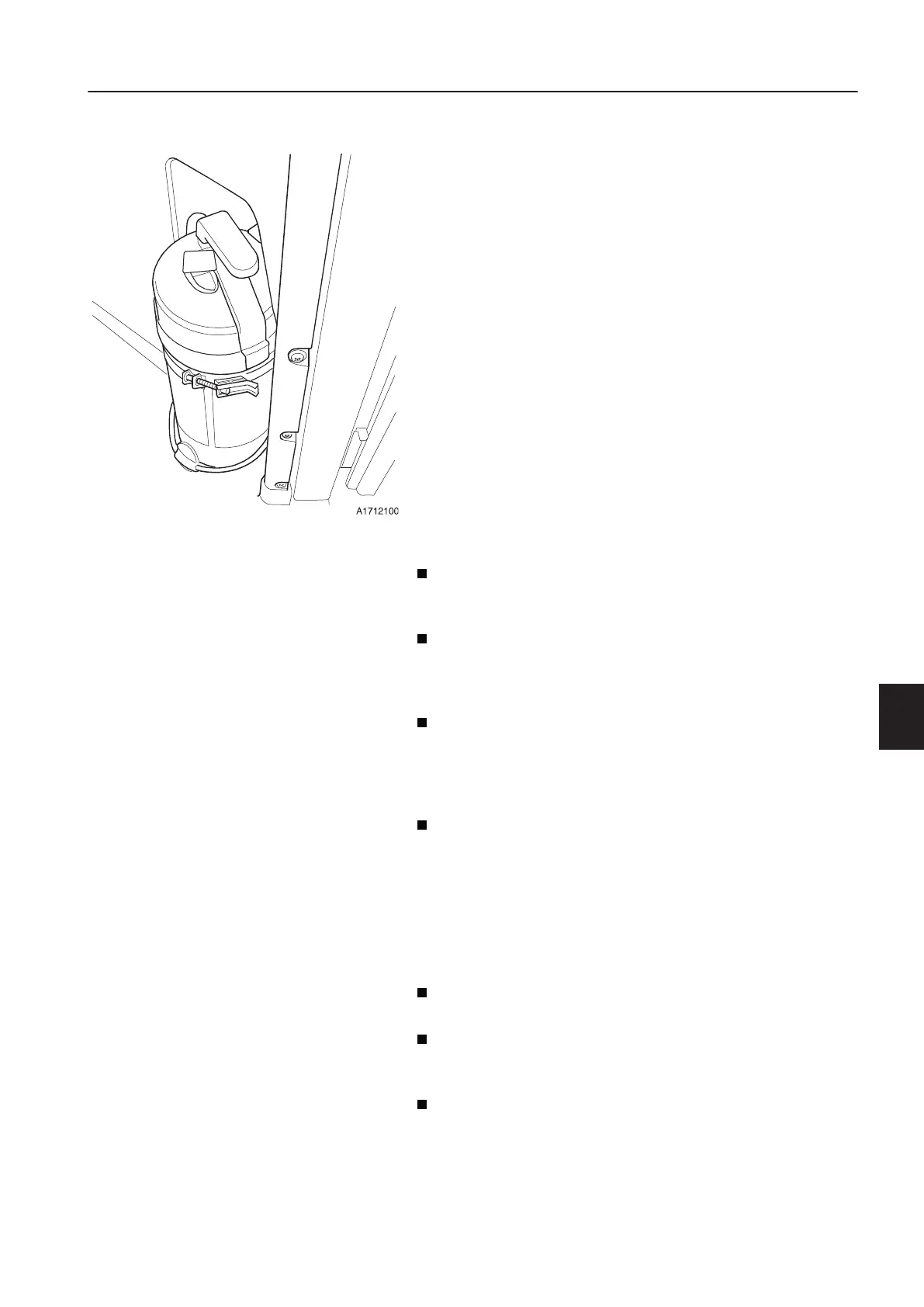
If the machine is equipped with a portable fire extinguisher it
should be of the type ABE (ABC in North America). The
designation ABE means that it can be used to put out fires in both
solid organic materials and fluids, and that the fire extinguishing
agent does not conduct electricity. Efficiency class I means that
the fire extinguisher must operate effectively for at least 8
seconds, efficiency class II at least 11 seconds, efficiency class III
at least 15 seconds.
In general, a portable fire extinguisher ABE I corresponds to an
effective content of 4 kg (8.8 lbs) (EN-class 13A89BC), standard
EN 3-1995 part 1, 2, 4, and 5.
Fire prevention
Smoking or open flames are forbidden near a machine when
filling with fuel or when the fuel system has been opened and
has contact with the surrounding air.
Diesel fuel is flammable and must not be used for cleaning.
Instead use car care products intended for cleaning or
degreasing. Remember that certain solvents may cause skin
rashes and may be flammable.
Keep the place clean where service work is to be done. Oil and
water can make floors and steps slippery. This may also be
dangerous in connection with using electrical equipment or
electrically powered tools. Oily clothes are a serious fire
hazard.
Check daily that the machine and equipment are free from dust
and oil. This reduces the risk of fire and also makes it easier to
detect loose or damaged parts.
NOTE!
Be very careful when using a high-pressure washer for cleaning
since electrical components and cable insulation may be
damaged at relatively low pressure and temperature. Protect
electrical components and cables in an appropriate way.
Be extra thorough when cleaning a machine that is operated in
fire-hazardous environments, e.g., sawmill and landfill sites.
The fire extinguisher must be maintained so that it works when
it is needed. Shake the fire extinguisher to stir up the powder at
least once a month.
Check that fuel lines, hydraulic hoses, brake hoses, and
electrical cables have not been damaged by chafing or are not
at risk of being damaged in that way due to incorrect installation
or clamping. This applies particularly to unfused cables, which
are red and marked R (B+) and routed:
- between the batteries
- between battery and starter motor
Safety when servicing
Fire prevention
285



 To Next Page