39
Installing a Vent (For common vent installation only)
Installing a Vent (For common vent installation only)
Install the Venting
Venting installation Sequence
• Listed below is the sequence for installing PVC/CPVC common
venting.
1
Choose the Installation Location.
2
Install the Backflow damper
3
Assemble the Header
4
Connect the Venting
5
Terminate the Venting
6
Set DIP Switches
7
Connect the Cables
8
Post Installation Checklist
Connecting Pipes with Cement
Warning
Do not mix components from different systems. The vent
system may fail and harmful flue products may leak into the
living space. Mixing of venting materials will void the warranty
and certification of the appliance.
Caution
The vapors from primers and solvent cements can make you
dizzy and are dangerous to your health. Ensure that the work
area is well ventilated, or wear an approved organic vapour
respirator when working with primers and solvent cements.
• Listed below is the sequence for installing PVC/CPVC common
venting.
1
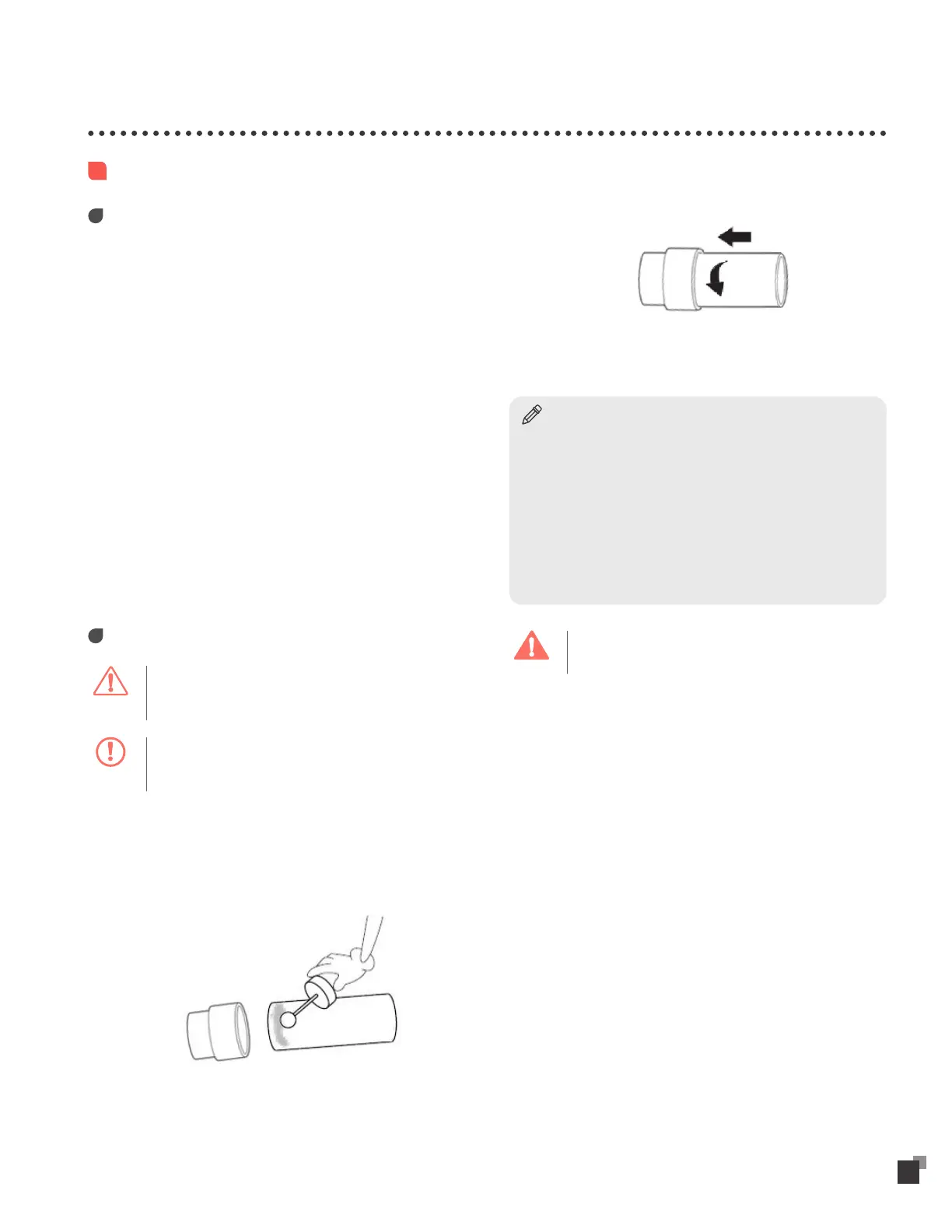
Spread an even layer of solvent cement on the
inside of the pipe fitting and the outside of the pipe.
2
Align the pipe with the pipe fitting and twist the pipe a
quarter turn as you insert it into the fitting. Twisting the pipe
spreads the solvent cement evenly to ensure a solid joint.
3
Hold the pipe and pipe fitting together for about 15 seconds
until the cement sets.
Notice
• Use approved solvent type cement for the proper vent materials.
• Use solvent type cement only.
• Check the date of manufacture before using the cement. Ensure that
cement was not manufactured more than 2 years prior to using it.
• Ensure that the inside of the pipe fitting and the outside of the pipe,
where cement will be applied, is clean.
• Apply an even layer of cement over all mating surfaces.
• Use solvent cement in room temperatures higher than 32°F.
• Installing vent pipe with cement in cold ambient temperatures can
result in longer cure times.
Danger
Be careful not to apply force or impact to pipes after making
connections. An may break the bond and harmful gas might
leak inside the room.


 To Next Page