11.2 Overhaul maintenance
• After a long period of service, wear will occur in parts of
the pump, necessitating the renewal of a few
components. Logbook records will indicate wear as
gradual deterioration of performance is noticed. Once
this is known, pumps should be taken for overhaul. It is
recommended that yearly stripping & checking of wear
& tear and clearances should be done and overhauling
where required.
• If related pair of components show a marked degree of
wear in relation to the rest of the unit, then it may be
sufficient to renew only the heavily worn components.
If the wear is uniform throughout the pump, then all
wearable components may require renewal.
• Measurements should be taken and recorded of all
wearable components at the first, and every subsequent
overhaul period. Reference to these records will enable
an accurate assessment of the rate of wear to be made,
and a reasonably accurate forecast regarding when a
particular component may require renewal can be made.
• Information regarding original design dimensions and
clearances is furnished in data sheet. Any other
information, if needed, can be requested from Service
Department, WILO Mather Platt. Such requests must
quote name plate number and type of the pump in
question.
The parts most likely to be affected are:
• Impeller
• Mechanical seal
• Neck Rings
• Sleeves
• Stuffing Box Bush
• Bearings
• Coupling Bushes/ membrane set
Before commencing dismantling operations, ensure that the
following tools and tackles are available:
• A crane / chain pulley block suitable for handling the weight
of pumping unit.
• A selection of ring and open-ended spanners in
• British and Metric sizes.
• Eyebolts in British and Metric sizes.
• Cotton rope, wire rope and slings.
• Hardwood and metal packing blocks.
• Miscellaneous tools including a set of Allen keys, drills, pin
drivers, files etc.
• Extractor / puller for bearing and coupling.
• The torque value to be set for a particular size of screw is
dependent upon:
• Material of screw
• Parent metal
• Whether the screw is untreated or plated
• Whether the screw is dry or lubricated
• The depth of the thread
Tightening torques – Untreated Screw.
Coefficient of Friction 0.14
Property
cla
ss Torque
Nominal diameter-Coarse threads
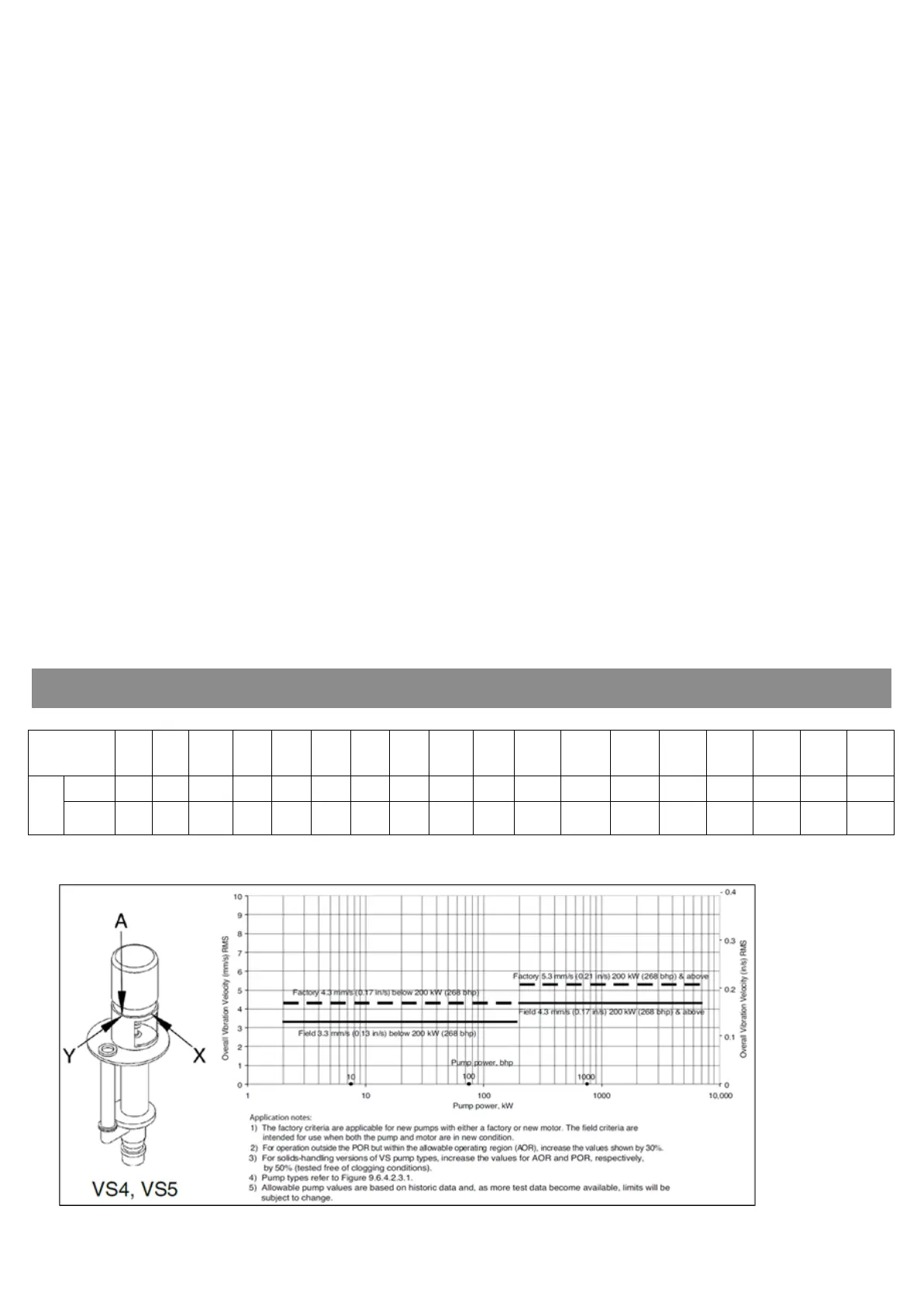
Hydraulic Institute Standard (HIS) ANSI/HI 9.6.4-2016
Acceptable field vibration limit chart (9.6.4.13)




 To Next Page