20
3064458_201811
Before commissioning, carry out a tightness
test on all hydraulic pipework:
Test pressure on the DHW water side max.
10 bar
Test pressure on the heating water side max.
4.5 bar
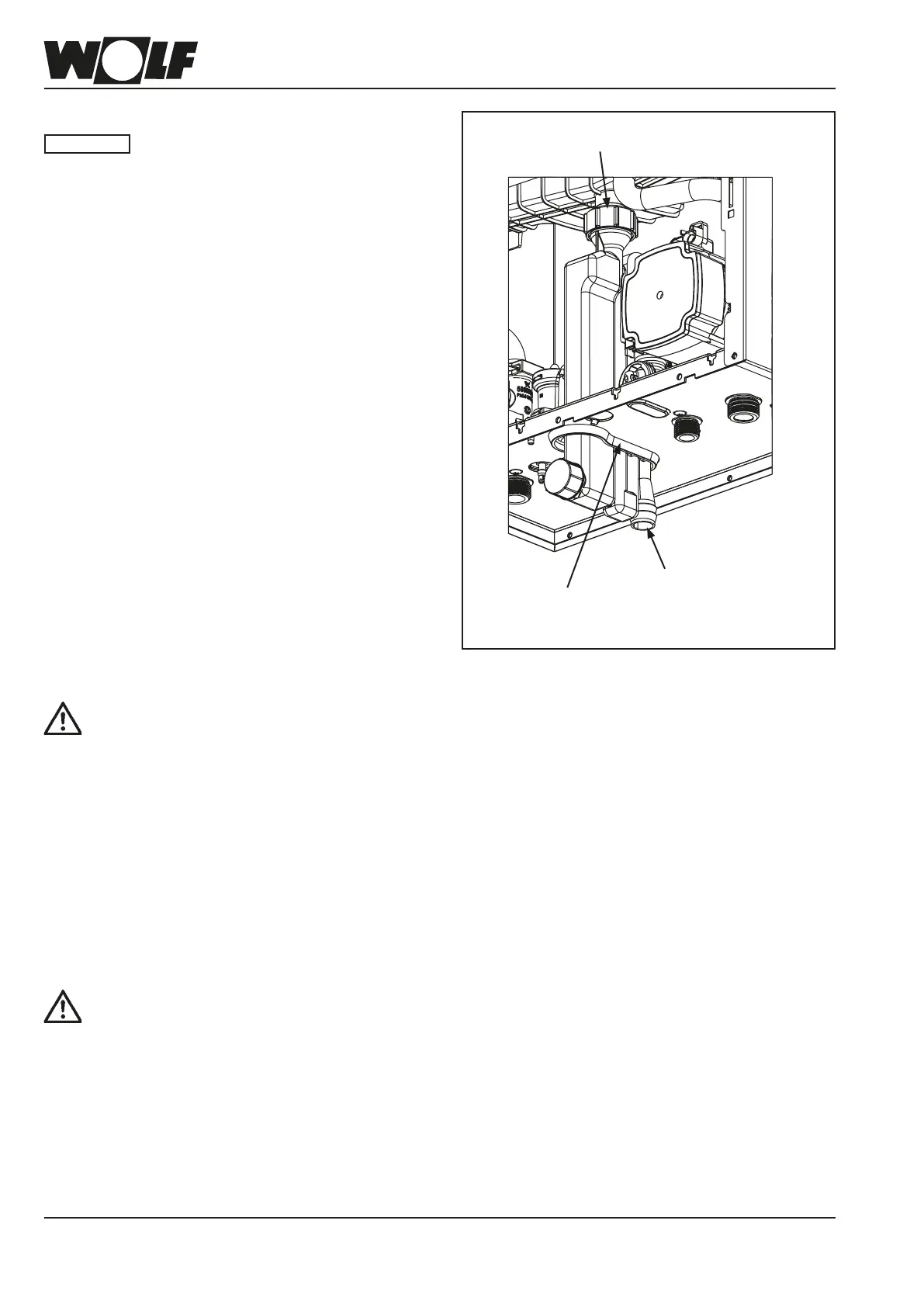
Fig: Trap
Note:
The condensate hose attached to the trap must not form a
loop or roll up, as this could lead to impaired operation.
12. Fitting the trap
Condensate drain connection
The trap must be tted before commissioning the appliance.
The trap included in the standard delivery must be tted
from underneath the appliance. Before installing, apply
silicone grease to the sealing collar. After insertion, secure
the screw tting of the trap to the connector and check the
connection is rm. Secure the sealing collar.
Ensure that the sealing collar seals the casing base.
The drain hose must be safely secured above the tundish
(trap).
If the condensate is directly routed to the sewer pipe, provide
a ventilation facility. This is to prevent retroactive effects from
the sewer pipe to the gas condensing boiler.
If installing a neutralising system (accessories), observe the
instructions supplied.
According to Code of Practice ATV-DVWK- A251, no
neutralising system is required for condensing boilers up to
200 kW.
If a neutralising system is used, the national regulations
regarding the disposal of residues from such systems apply.
The trap is lled via the ue; see chapter 18 "Filling the
heating system / trap".
Please note
Sealing collar
Tundish for drain hose
Condensate pan connector
Thetrapmustbelledwithwaterpriorto
commissioning. Operating the appliance with
an empty trap presents a risk of poisoning
orasphyxiationduetouegasesescaping.
Unscrewthetrap,removeandlluntilwater
runsoutofthedrainholeontheside.Ret
the trap and ensure the gasket seals tightly.



 To Next Page