RANGES && RRANGETOPS
Theory of Operation
2-6
Gas Cooking Appliance Simple
Theory of Operation:
Gas arrives at the house through pipes
(usually under ground) in the form of natu-
ral gas or liquid propane gas. This gas
supply can be from a local utility source or
a tank source.
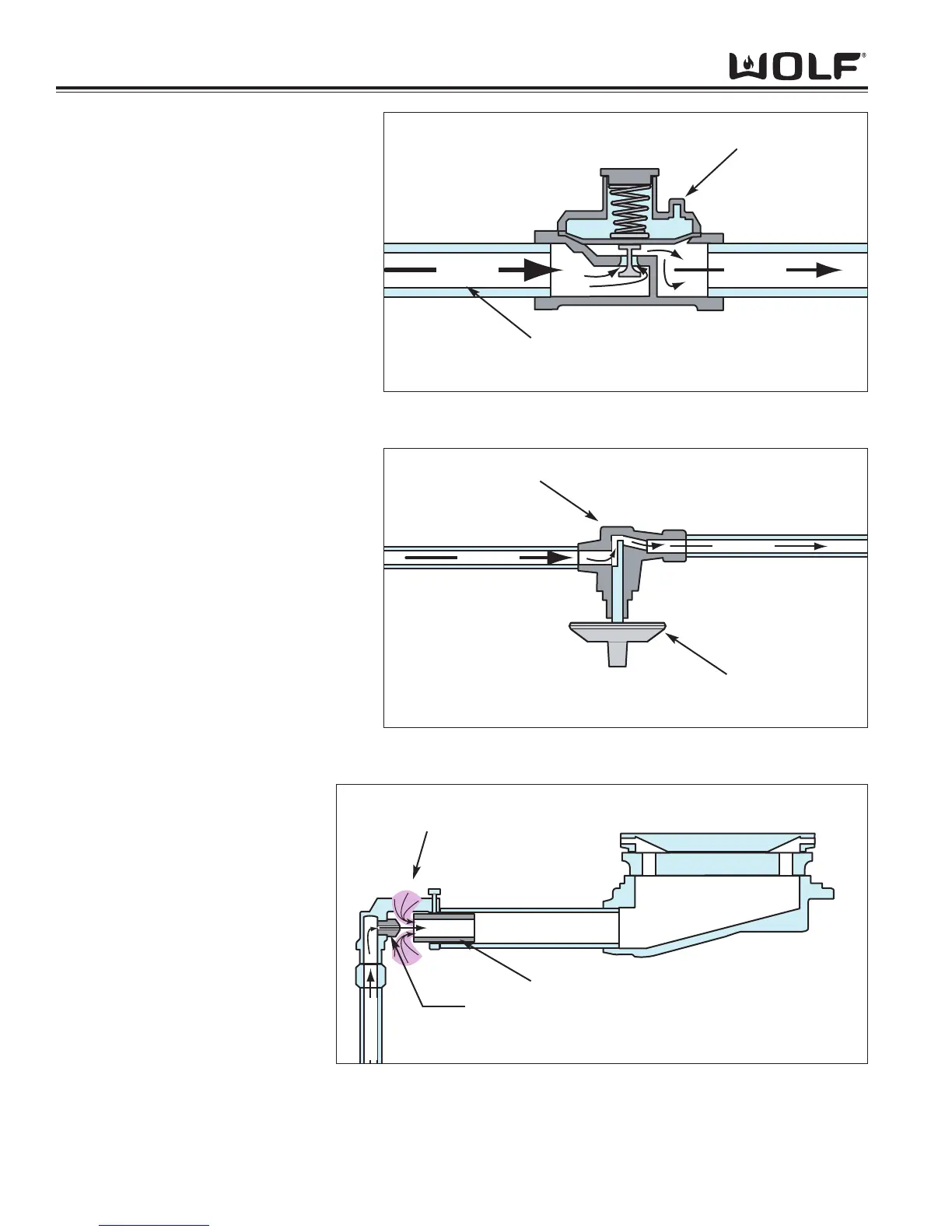
A "Gas Pressure Regulator" on the appli-
ance is connected to the gas supply line of
the house. The regulator maintains the
gas pressure in the appliance at a given
point below the house gas pressure.
(See Figure 2-3)
The gas passes through the regulator and
is piped to a valve. This valve can be
opened in varying amounts, to allow a spe-
cific quantity of gas to pass through. This
is how the size of the flame is adjusted.
(See Figure 2-4)
After the valve, the gas is piped to a “gas
orifice,” which is an opening of very small
diameter. The gas is pushed through the
small diameter of the gas orifice, so when
it exits it is under high velocity. This high
velocity stream of gas causes a drop in
pressure around itself. The low pressure
around the stream of gas draws the
nearby air, referred to as "primary
air," with it into the venturi tube.
(See Figure 2-5)
(Continued on next page)


 To Next Page