EVOM3
World Precision Instruments 29
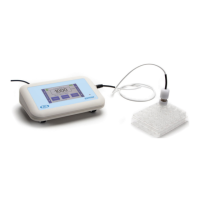
ENDOHM-12G EndOhm for 12 mm culture cup (12 wells per plate)
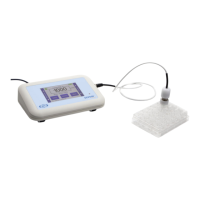
ENDOHM-24G-SNAP
EndOhm for 24 mm and Costar Snapwell cup (6 wells per plate)
ndhm hame eie EVOM3 cable 99916.
Electrode Adapter (WPI# 3993) converts into four independent 2 mm jack. It allows
the user to utilize the EVOM3 meter with another four-electrode system.
STX2-PLUS is the standard electrode for use with the EVOM3 and is designed to
facilitate measurements of membrane voltage and resistance (TEER) of cultured
eithelia dietl in tie lte ell he eletde inate a fied ai
probes, 5 mm tall, 3 mm wide and 1 mm in thickness. Each probe has an inner (voltage)
and an outer (current) electrode.
STX3 is an alternative electrode to the STX2 that can be used with the EVOM3 for
shallower inserts (5–9 mm inserts). t die m the STX2 in that the vertical distance
between the probes of the STX3 can be adjusted for up to an additional 10 mm of
separation.
STX100C96 and STX100M are optional 96-well electrodes for use with the EVOM3.
hee eletde hae a malle m at eifiall deigned high thght
screening (HTS) plates with higher well counts. The shape of the STX100 electrode is
keyed to the access ports of the well plate. This results in consistent spatial positioning
leading to superior reproducibility from well to well.
NOTE: The STX100C96 and STX100M eie the 99672 EVOM2 electrode adaptor
for use with the EVOM3.
Endohms are is an optional electrode chambers for the EVOM3 that may be used
when working with well cups that are individually removable. It can also be used
for studying the tight junction changes induced by chemicals and other factors.
Concentric pairs of electrodes above and below the insert membrane results in
excellent stability and reproducibility. (See "APPENDIX E: Improving the Accuracy
and Repeatability of the System" on page 39.) Unlike the STX2-PLUS, the inserts
must be transferred from the culture plate to the Endohm chamber to make a
measurement.
TROUBLESHOOTING
EVOM3 Meter: Most of the time, system problems are related to the electrode, not
the meter itself.
STX2 Electrodes: Some issues you may encounter include:
• UNSTABLE OR HIGH READING: If the electrode fails, the most common symptom
is an unstable or unusually high reading.
• LOW RESISTANCE: When the meter displays a lower than expected resistance,
but is stable and reproducible, the most likely cause is related to the cell culture,
not necessarily the meter or the electrodes. Refer to Troubleshooting Chart
"Resistance reading unusually low" on page 31 and the note on page 6. See
"Testing the EVOM3 Meter (Resistance) and Calibration" on page 21 or "Testing
the STX2-PLUS Electrodes" on page 28.



 To Next Page