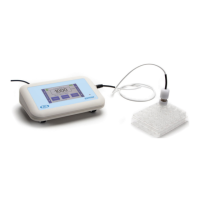
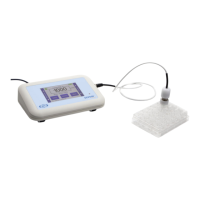
EVOM3
World Precision Instruments 33
Issue
Possible Cause Solution
STX2-PLUS
electrode tips over
when released
The cable is heavy
and can cause the
electrode to tip over
if too much cable is
in the air.
Lay the cable on the tabletop as close to the electrode head as
possible.
The reading appears to be drifting*
(ee the dit definitin el)
The electrodes are
coated with depos-
its from the use of
DMEM.
he eletde eie enmati leaning
he id temea-
ture in the plate is
changing.
Use a plate warmer.
In a 5% CO
2
envi-
ronment, a loss of
CO
2
causes the me-
dia pH to change,
and the resistance
reading may in-
crease sharply.
A 5% CO
2
environment can help in reducing pH media
changes.
The electrode read-
ing is unstable. (see
the tailit defini-
tion below).
The electrodes are
coated.
he eletde eie enmati leaning
The electrodes
need to be
chlorided.
he eletde eie hliding ee Rehliding the le-
trodes" on page 27.
Radi een
interference
n me an ellla hne athe aa m the
experimental setup.
---- appears
on the screen
Resistance reading
is out of range
An out of resistance range will display ---- on the screen. Adjust
the range to correct the error. A saved well will read a space
(“ “) if the display is out of range. Go to
Setup
,
Mode Units
and
increase the resistance range. See page 11.
NOTE: The EVOM3 ill ead nl at ae K Ω
NOTE hae a lemie ith that all tide the definitin thi
troubleshooting section, contact the WPI Technical Support team at 941.371.1003 or
technicalsupport@wpiinc.com.
itReading that ntinl ineae deeae a ignifiant ale (eithe
voltage or resistance) over time. Example 1: At 10 mV the PD reading is increasing
mVminte ( dit mVminte i aetale) amle t Ω the
eading i ineaing Ωminte ( dit Ωminte i aetale) eie
drift may be caused by a coated electrode, pH or temperature changes. See the
Troubleshooting entry on drifting above. Also see "Instrument Diagnostics and
Calibration" on page 21 or "Testing the STX2-PLUS Electrodes" on page 28.



 To Next Page