40 World Precision Instruments
For measuring low-resistance tissue culture or for more precise measurement, you
should consider using the EndOhm chamber, STX2-PLUS or the STX100 electrodes
instead of standard STX2 or STX3 electrodes. In some cases where the insert height is
shorter than 9 mm the STX3 must be used. The 99672 EVOM3 adaptor must be used
for the STX3, STX2, STX100 electrodes.
Although cells must be transferred from their culture wells to the EndOhm chamber
for measurement, more accurate measurement of membrane resistance can be
achieved. By introducing concentric pairs of electrodes above and beneath the
membrane, the EndOhm reduces background resistance (with a blank cup inserted)
from 150 Ω to less than 2 Ω. (ENDOHM-6G is higher). The shape of the current
eletde all a me nim ent denit t a the memane
Fig. 52 demonstrates how the STX electrode measures TEER, and Fig. 53 shows how
the ndhm hame meae R ith a fied enteed eletde gemet,
the variation of readings on the same sample is 1-2 Ω, as compared to 5% of the
total reading using the STX2 electrodes. An EndOhm, together with the EVOM3,
e the mt aate, nenient and enmial ltin tan memane
electrical resistance measurement. For automation of TEER measurements, consider
the REMS AutoSampler that integrates a robotic system and computer interface to
automatically measure tissue resistance in 24- and 96-well plates. The ability of the
REMS AutoSampler to precisely locate the electrode results in highly reproducible
TEER measurement.
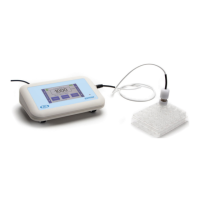
Fig. 52—(Left) The STX2 electrode measure TEER.
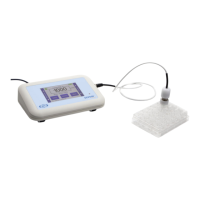
Fig. 53—(Right) The EndOhm electrode measure TEER.



 To Next Page