7 MAINTENANCE
86
7.17 Radiator / Oil Cooler Cleaning
The radiator and oil cooler must be clean to
ensure proper operation. Engine and
hydraulic system overheating, damage and
even failure can result if the radiator/oil
cooler is not kept clean. A pressure washer
or compressed air both work well to blow
debris clear of the fins in the coolers.
To clean radiator / oil cooler:
1. Shut the machine down as described in section 5.12. Allow the machine to
cool thoroughly.
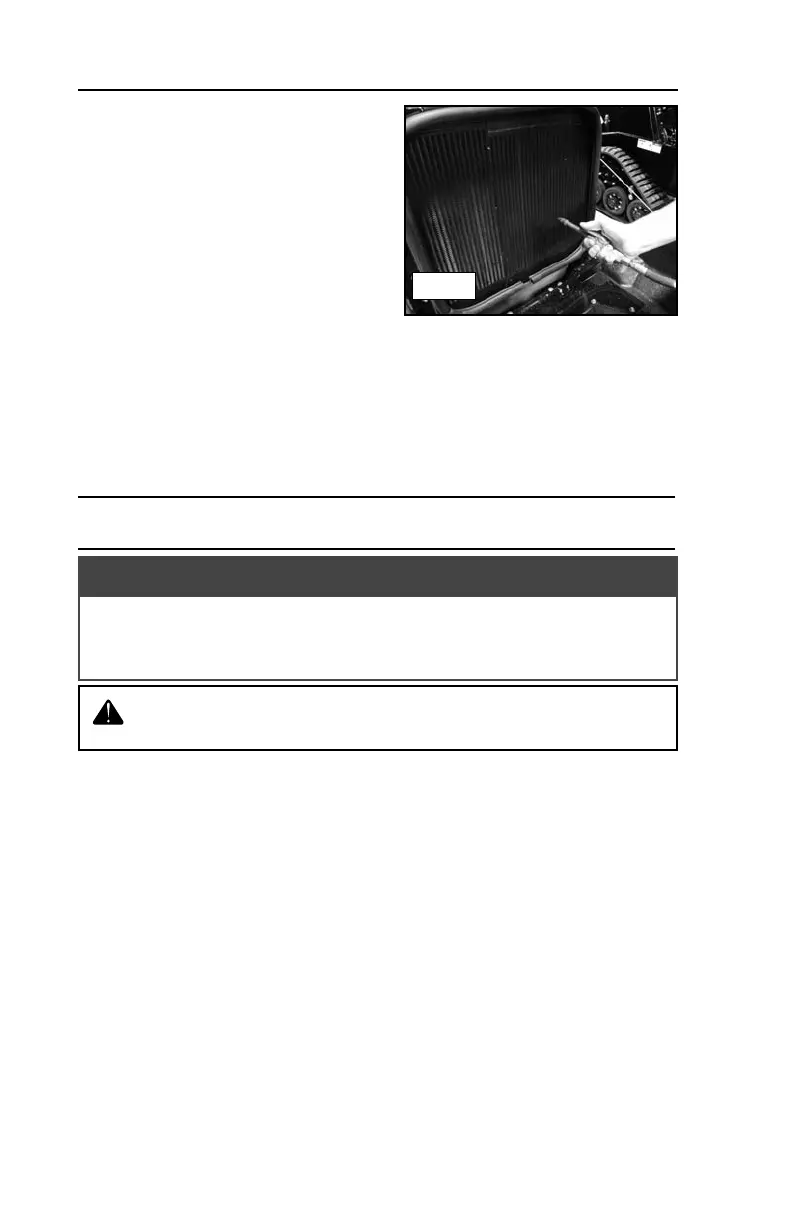
2. Open the hood to access the cooler (fig. 7.17-1).
3. Thoroughly clean all coolers with a pressure washer or compressed
air. Wear any appropriate safety clothing. Direct spray through the cooler as
shown. (fig. 7.17-1).
Note: If hydraulic oil or engine coolant temperature warnings occur during
operation, clean coolers more often.
7.18 Engine Coolant Change
1. Shut the machine down as described in section 5.12 and allow it to cool
thoroughly, then open the hood to access the cooler assembly.
2. Open the drain valve (item 1, fig. 7.18-1) and drain the old coolant into a
suitable catch container. Dispose according to mandates.
3. Close the drain valve and tighten, then add coolant (with SCA additive,
see engine manual) into the radiator through the fill neck until full.
4. Warm the engine to operating temperature, then turn the engine off, remove
the key and allow the machine to cool.
5. Check the coolant level, and top off (repeat steps 4 and 5 until all air has
been purged and the level is full when cold).
In dusty applications check and clean the coolers and chassis often to
avoid overheating and prevent fires.
Make sure water nozzle is at least 12 in. (30.5 cm), for air 8 in. (20.3 cm) from
the cooler and that the spray is directed straight through the cooler or the cool-
ing fins may be damaged (bent over) which will decrease cooling performance.
NOTICE
RT-40 US O&M
0404-766 2019-05
7.17-1


 To Next Page