GB Double Sound Speed Controller SFR-1-D
46 BEIER-Electronic 01.03.2020
Some battery types (e.g. LiPo-batteries) should not be subjected to deep discharge,
because this can damage the battery! With the help of the integrated voltage
monitoring, it is now possible to warn the user.
There are two thresholds in the Sound-Teacher:
• Threshold for charging battery
• Threshold for undervoltage
The thresholds of the voltage monitoring are freely adjustable and lies between 4,5
and 14,0 V.
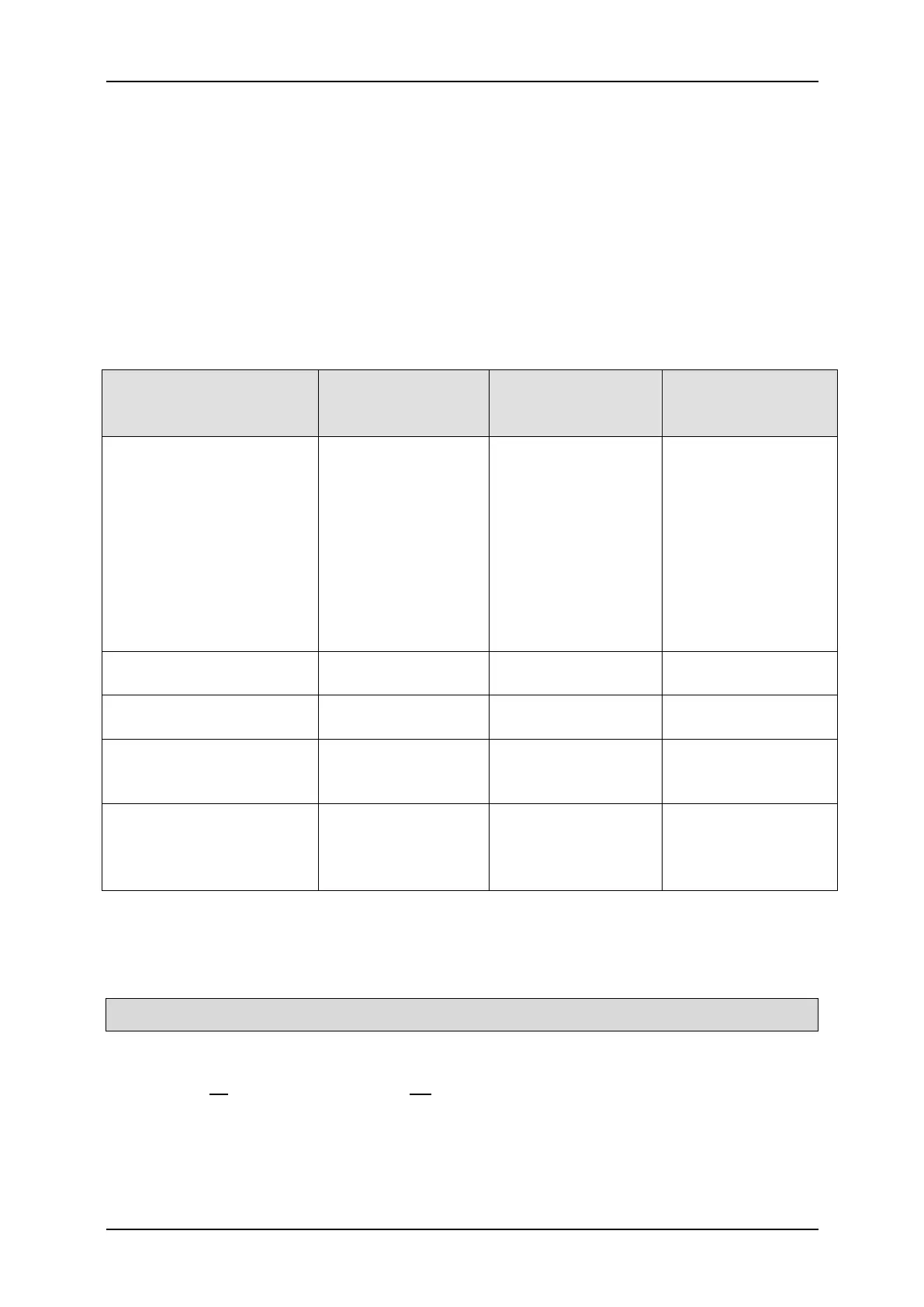
Here is a list with usual values for different battery types:
charging battery
voltage
and
nickel-metallhydrid
7,2 V (6 cells)
8,4 V (7 cells)
9,6 V (8 cells)
10,8 V (9 cells)
12,0 V (10 cells)
13,2 V (10 cells)
14,4 V (12 cells)
15,6 V (13 cells)
6,2 V
7,2 V
8,2 V
9,2 V
10,2 V
11,2 V
12,2 V
13,2 V
6,0 V
7,0 V
8,0 V
9,0 V
10,0 V
11,0 V
12,0 V
13,0 V
6,0 V (3 cells)
12,0 V (6 cells)
7,2 V (2 cells)
10,8 V (3 cells)
11,1 V (3 cells)
9,9 V
9,6 V
phosphate (LiFe)
9,9 V (3 cells)
13,2 V (4 cells)
7,5 V
10,0 V
6,6 V
8,8 V
These values are only guidelines, the best is to read the user manual of the battery,
to find out the exact deep-discharge voltage.
Current monitoring
The current is monitored of all 16 switching-outputs. In case of a detected
overcurrent all outputs are switched off in order to protect them from damage.
Nevertheless, the outputs are not completely short circuit proof! Therefore you have
to avoid short circuits at the outputs!


 To Next Page