1
Chapter 1 Introduction
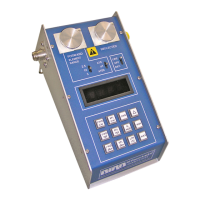
The Model 4391A is a multi-purpose Radio Frequency wattmeter designed around
a microcomputer. A program stored in permanent memory controls the operation
of the instrument at all times, permitting the detection and correction of various
error sources and the refinement of the raw data produced by the directional
detectors. The instrument can compute VSWR, amplitude modulation, and
various decibel variables reducing the odds of error and making such
measurements consistent or repeatable regardless of who makes the
measurement.
Other benefits include extended range using standard elements in some modes
of operation, continuous monitoring of maximum and minimum readings, a
peaking aid, and error messages.
Because of its complexity, the proper use of the 4391A is not always obvious.
For this reason it is strongly advised that this manual be read in its entirety
before using the device.
Purpose and Function
The 4391A RF Power Analyst is an insertion type digital RF Directional Thruline®
Wattmeter designed to measure peak or average power flow, load match, and
amplitude modulation in 50 ohm coaxial transmission lines. It is intended for
use with CW, AM, FM, SSB, TV, and Pulse modulation envelopes. The instrument
directly reads PEP or CW power in watts, milliwatts, or kilowatts in 9 ranges
from 2.5 to 1000 full scale forward power and 0.25 to 100 full scale reflected
power depending on the Plug-in Element. In addition it reads SWR directly over
the range of 1.00 to 99.99, percent modulation directly over the range of 0.0 to
99.9, and return loss over the range of 0 to 36.1 dB. For convenience, forward
and reflected CW power can be displayed in dBm (dB above 1 milliwatt) from 6
dB above to 24 dB below nominal element range.
Power range and frequency band are determined by the Plug-in Elements used.
Two switches on the front panel of the instrument are set by the user to
correspond to the nominal power range of the forward element. The reflected
element is assumed to have a nominal range one tenth that of the forward
element.
In any mode of operation, the instrument can recall from memory the lowest or
highest reading taken or tell the operator whether the newest reading is less
than, equal to, or greater than the previous reading.


 To Next Page