– 12 – – 13 –
Also avoid touching or handling the antenna sections with
your hands, placing them in contact with the ground or with
water, or immersing them in water.
Once activated, the beacon will broadcast at least during
18 hours. For special situations when the beacon is at tempe-
ratures below 0°C/32°F, the 121.5 MHz signal is automatically
switched off in order to guarantee the broadcast duration
for the 406 MHz signal.
5.2 Where to place the transmitter
In order to ensure that the 406 MHz distress signal will be
picked up by a satellite and that the 121.5 MHz signal will
be spotted by rescuers (such as in a helicopter or plane), the
activated beacon must be used outdoors, and operates at its
best in conditions affording a clear view of the sky.
Do not activate the beacon inside a plane or a car. The signal will
be weakened or even blocked by the metal parts.
Avoid ravines, caves and canyons. Trees also disturb the quality
of the signal, so the aim is to always attempt to have a maxi
-
mum of clear sky, and where possible to seek a high location
from which to transmit.
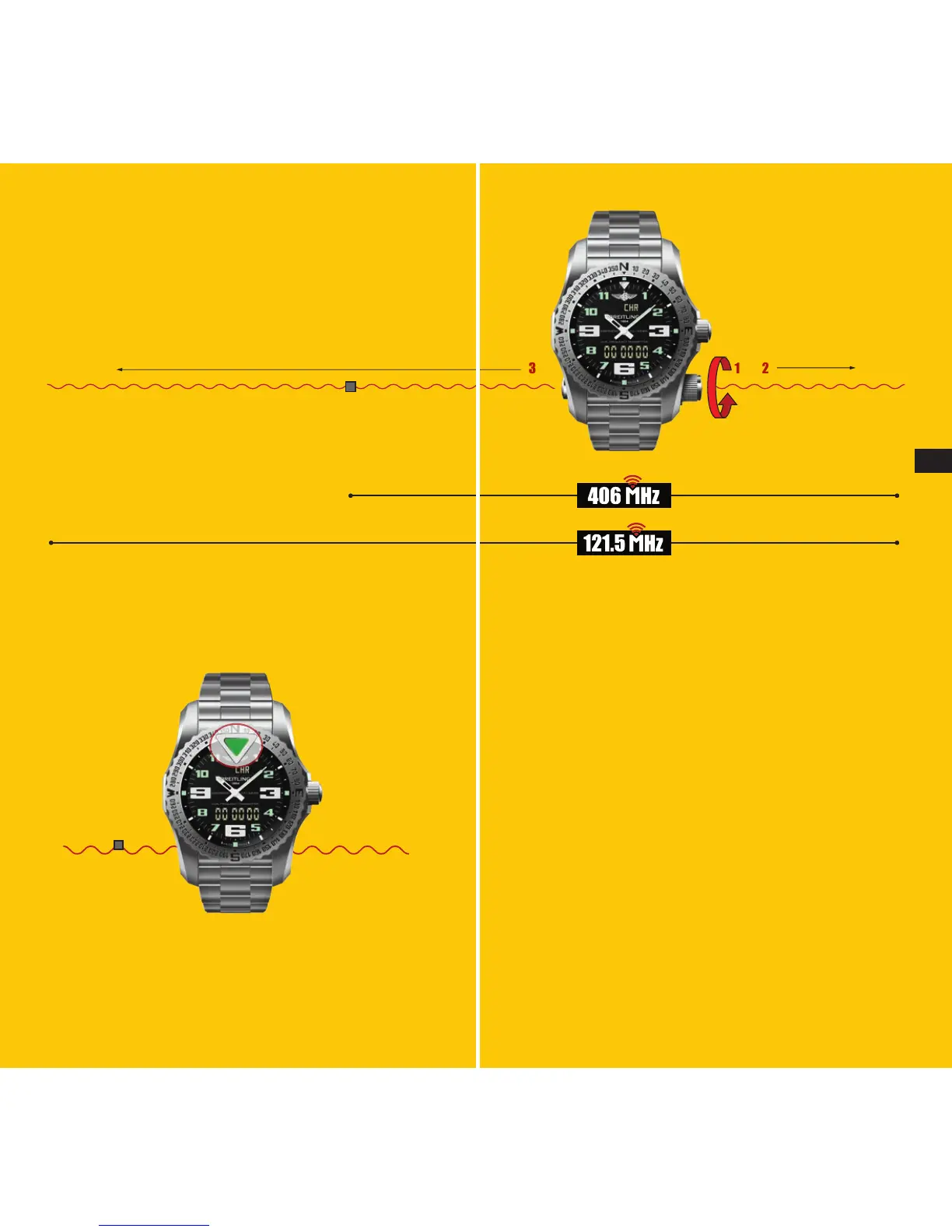
4. Alert transmission confirmation: as soon as the short
antenna section A is deployed, a green indicator starts to
blink at 12 o’clock on the dial, and continues doing so for the
entire duration of the transmission.
IMPORTANT: To enable effective and proper transmission,
avoid any contact between the two sections of the antenna
and any metal elements.
1 23








 To Next Page