CAR BATTERY (B1) RECHARGING
W nominal current 2hen the battery charger is charging, an electronic device allows a recharging ( A) of the
car battery (B1), the system gives priority to the leisure battery (B2).
An electronic device controlled by the “+ key” ON switches on the D+ functions (batteries parallel, OUT D+
simulated output, awning light etc.) when the car battery voltage is > 13.5V and switches them off with the “+ key”
OFF or with voltage < 12.5V.
D+ FUNCTIONS
a) by alternator: through the separating relais, when the engine i started. s
For vehicles equipped with SMART ALTERNATOR n electronic device switches on the D+ functions (batteries
parallel, OUT D+ simulated output, awning light etc.) when the engine is running. The D+ functions are activated
in presence of at least one of following conditions:
, a
c) by solar panel: through solar regulator.
Condition B: with “+ key” ON signal and “D+” negative signal (-). The functions are deactivated in absence
of one of those two signals.
b) by 230V net: . buffer system through battery charger
LEISURE BATTERY (B2) RECHARGING
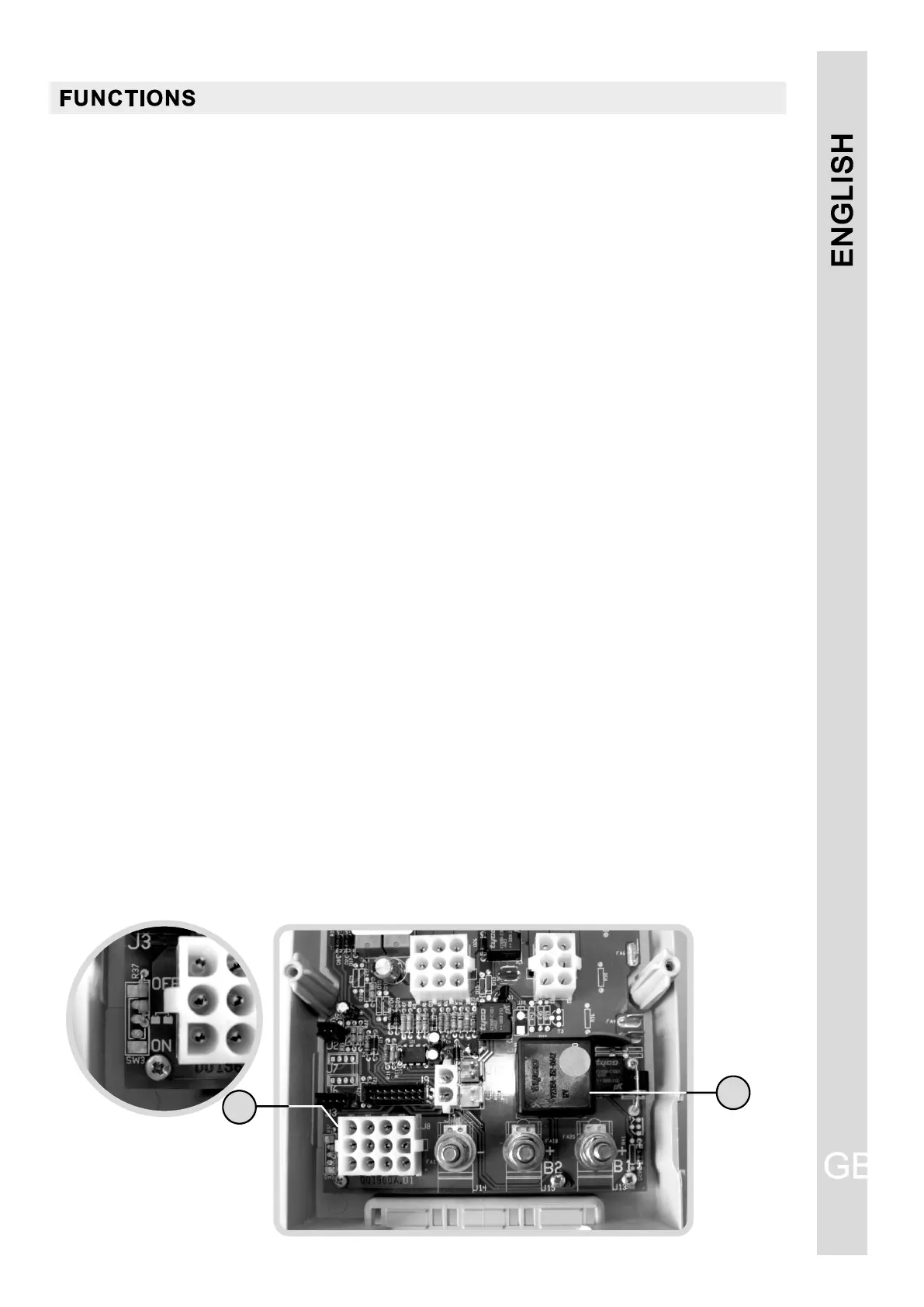
IMPORTANT: in the case of installation of equipment that needs permanent exclusion of the battery parallel
relay (ref. 1), you must remove the R37 resistor (ref. 2). The resistor can be removed using a
wire cutter, being careful not to damage the PCB traces below.
Operation without SMART ALTERNATOR:
Operation with SMART ALTERNATOR (present on all DS300 distribution boxes manufactured since
September 2019):
The D+ functions can be activated only if the B2 leisure battery is connected.
The D+ functions can be activated only if the B2 leisure battery is connected.d only if the B2 leisure battery
is connected.
Condition A: with “+ key” ON signal and car battery voltage > 13,5V. The functions are deactivated with “+
key” OFF or with voltage < 12,5V.
N.B.: In presence of both conditions, the functions are deactivated in absence of the “+ key” signal.
GB
17
1
2



 To Next Page